Nov 14 - Nov 19, 2023 S812-01
Civic and Civil Education: Identity, Belonging and Education in the 21st Century
OVERVIEW
Democracy is stagnating or declining in many parts of the world and conflict is increasing. The spread of misinformation continues to rise, leading to an erosion of trust, which was particularly egregious during the COVID-19 pandemic. Many societies and communities are becoming increasingly polarized and fractured, with new fault lines emerging along identity lines.
K-12 and higher education has an important role to play in addressing these issues. Schools can normalize democratic practices, help young people develop the skills and the mindset to understand the difference between fact and opinion, and help them learn how to disagree agreeably, or find points of contact and empathy. As momentum around a global education transformation agenda continues to build there is a unique opportunity to rethink the role education can play in supporting citizens with the skills and behaviors to thrive and live harmoniously in our complex 21st century societies.
People
Partners
PROGRAM INFO
Citizenship Forum
STATEMENT
Related News
Participants
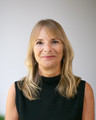
Jennifer Adams
Chair of the Board of Governors, University of Ottawa, Canada
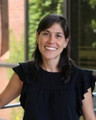
Paulina Arango
Learning and Reserach Leader, San José de Las Vegas School, Colombia

Sungyou Bae
Innovation Advisor, Innovation Centre Denmark, South Korea
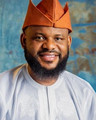
Seun Bakare
Chief Executive Officer, The Leicester LGBT Centre, United Kingdom

Barbara Bullard
President and CEO, Shirley Chisholm Cultural Institute, USA

Catalina Chacon
Future Rising Prgram Manager, Girl Rising, Nicaragua
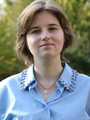
Valeriia Chernysh
Program Associate, Salzburg Global, Austria

Utak Chung
Representative of Korea, Global Partnership for Education, South Korea
Julie Colligan
Educator, Noroton Presbyterian Nursery School, USA
Felix Dade
Former Student, University of Jyväskylä, Finland

Jack Davies
Senior Manager, World's Largest Lesson, United Kingdom

Sue Egersdorff
Charity Founder, Ready Generations. United Kingdom

Linda Exenberger
COO, YEP - Youth Empowerment & Participation, Austria

Gloria Figueroa
General Director, San Jose de las Vegas School, Colombia

Daniela Graf
High School Teacher, SALIS (Salzburg International School), Austria
Ulrike Greiner
University Professor, University of Salzburg, Austria
Philipp Harnik
Programs Officer, Ban Ki-moon Centre for Global Citizens, Austria

Simone Jordan
Advisor, Division for Democracy Education, Parliamentary Administration of the Austrian Parliament, Austria
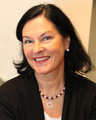
Kristina Kaihari
Counsellor of Education, Finnish National Agency for Education, Finland
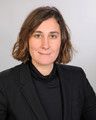
Tamara Kamatovic
Postdoctoral Research Fellow, CEU, Austria

Mahawa Koroma
Radical Inclusion Consultant, Ministry of Basic and Senior Secondary School, Sierra Leone

Fredrik Lindencrona
Head of Research Co-Creation, Inner Development Goals, Sweden
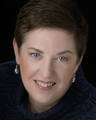
Catherine Millett
Director of the ETS Global Academy, Senior Research Scientist and Strategic Advisor, ETS, USA
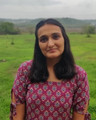
Shevika Mishra
Founder, Kuviraa India, India
Liz Moorse
Chief Executive, Association for Citizenship Teaching, United Kingdom

Haydar Muntadhar
Countering Violent Extremism Expert, UK
Corinna Nawatzky
Program Manager, Salzburg Global, Austria
Marlon Julian Nombrado
Co-founder, Out of The Box Media Literacy Initiative, Philippines
Julia Pataky
Education Outreach Coordinator, US Embassy Vienna, Austria
Shaireen Rasheed
Professor of Philosophy, Education and Social Justice, Long Island University, USA
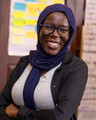
Amisa Rashid
Founder and Executive Director, Nivishe Foundation, Kenya
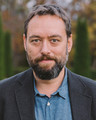
Dominic Regester
Director of Education, Salzburg Global, Austria

Jessica Roberts
Assistant Professor, Universidade Católica Portuguesa, Portugal
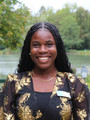
Sophiyat Sadiq
Program Intern, Salzburg Global Seminar, Austria

Nina Schnider
Co-Founder, Demokratie21 & relevant.news, Austria
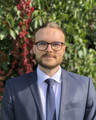
Stephan Schweighofer
Research Associate, University of Salzburg, Austria
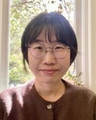
Hyeyoung Shin
PhD Candidate, National Centre for Peace and Conflict Studies, University of Otago, New Zealand
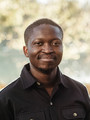
Litha Sokutu
Cultural Analyst; Director, SLC Associates, Cape Town, South Africa
Samantha Stanley
Associate Director of Research and Program Managem
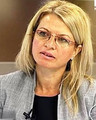
Aferdita Sylaj Sehu
Executive Director, Community Building Mitrovica, Kosovo
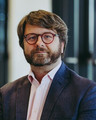
Marcin Szala
Co-Founder, Liceum Artes Liberales, Poland
Teresa Torzicky
Head of Unit, Innovationsstiftung für Bildung, Austria

Chisom Udeze
Founder, Diversify, Norway

Mario Vasilescu
CEO & Co-Founder, Readocracy, Canada

Martha Wambui
Executive Director, She's Afrique Hub, Kenya
Joel Westheimer
University Research Chair in Democracy and Education, University of Ottawa, Canada
Penelope Ögüt
Associate Director, Operations and Organizational Development, Salzburg Global, Austria
OVERVIEW
Democracy is stagnating or declining in many parts of the world and conflict is increasing. The spread of misinformation continues to rise, leading to an erosion of trust, which was particularly egregious during the COVID-19 pandemic. Many societies and communities are becoming increasingly polarized and fractured, with new fault lines emerging along identity lines.
K-12 and higher education has an important role to play in addressing these issues. Schools can normalize democratic practices, help young people develop the skills and the mindset to understand the difference between fact and opinion, and help them learn how to disagree agreeably, or find points of contact and empathy. As momentum around a global education transformation agenda continues to build there is a unique opportunity to rethink the role education can play in supporting citizens with the skills and behaviors to thrive and live harmoniously in our complex 21st century societies.
PROGRAM STRUCTURE
The hybrid program built new insights and aggregated perspectives and experiences from relevant sectors, areas of expertise, and regions. Thematic working groups prepared recommendations for action. Participants:
EXPERIENCED
- A candid, safe and open exchange with peers under the Chatham House Rule.
- Time and space to disconnect and reflect from a wider ecosystem perspective.
GAINED
- Connection to an active international community of outstanding leaders working on this topic.
- Inspiration and learning from across the world and foresight into directions for future work.
- Relationships for coalition building across organizational, professional and national boundaries.
- Access to a vast network of Salzburg Global Fellows working on similar pursuits.
GAVE AND RECEIVED
- Promising practices, and drawon the group’s collective intelligence and experience to tackle challenges you face and leverage important opportunities.
- Opportunities for peer mentoring on ways to incubate, replicate, adapt and scale good practices.
KEY QUESTIONS
The program addressed a wide range of key questions, including:
- How can education normalize and support democratic practices?
- How are schools and universities helping students develop critical thinking skills to distinguish between fact and opinion?
- How does the experience of school help students develop their own sense of identity?
- What are the skills needed to disagree agreeably?
- What might a curriculum for activists look like?
- Does language learning help with the development of empathy?
- Which systems are already offering models for the future?
PARTICIPATION PROFILE
Salzburg Global Seminar’s Education for Tomorrow’s World programs bring together cross-sector and intergenerational change-makers to tackle complex challenges. This program involved policymakers, civil society, researchers, school leaders, youth leaders, innovators and stakeholders from around the world who are engaged in civic and civil education.
PHOTOS
View full set on Flickr
All images are available for download. Please credit Salzburg Global Seminar/Christian Streili. Unwatermarked images are available on request.
LECTURE
During the program, assistant professor of communication studies in the Faculty of Human Sciences at the Universidade Católica Portuguesa and Salzburg Global Fellow Jessica Roberts delivered the 2023 Salzburg Global Center for Education Transformation Lecture. The lecture was kindly supported by the US Embassy in Vienna.
International Forum on Global Citizenship Education
Tuesday, November 14, 8.30am to 1pm
On the sidelines of the Civic and Civil Education program, the Ban Ki-moon Centre for Global Citizens, the Permanent Mission of the Republic of Korea to the UN in Vienna and Salzburg Global Seminar hosted an International Forum on Global Citizenship Education on 14 November 2023 at Schloss Leopoldskron in Salzburg, Austria.
The forum brought together key decision-makers and knowledge experts to exchange opinions, share best-practice examples of global citizenship in action and present a path forward in the educational sector. The event offered a timely exchange on current successes and challenges in Global Citizenship Education and on the role of education in an age of climate change and artificial intelligence.
Following a high-level opening ceremony, including remarks by Dr. Heinz Fischer, 11th Federal President of Austria and Co-chair of the BKMC, H.E. Claudia Plakolm, Austrian Youth State Secretary and H.E. Ham Sangwook, Permanent Representative of the Republic of Korea to the UN in Vienna, and a keynote by former CEO of the European Institute of Technology Prof. Willem Jonker, three parallel moderated panels featuring high-level international speakers illustrated the most important developments on Global Citizenship Education.
The sessions' topics were:
- Developments in policy making for GCED in the age of AI and climate change
- Universities and higher education - GCED challenges and success stories from Universities around the world
- Young changemakers action - Best practice examples from young global citizens
After the parallel panel sessions, a plenary reunion provided an opportunity to take stock and forecast the next steps in GCED.
Watch the highlights of the International Forum on Global Citizenship Education below:
Images of the event are available for download via Flickr. Please credit BKMC/ Christian Streili.
One of the outputs from the program is the Salzburg Statement for Civic and Civil Education.This statement emphasizes the vital role of education in democratic societies and offers suggestions on fostering democracy, social movements, and challenging political, economic and social systems.
Find out more about the Statement and download it here.
Related News
Nov 14, 2024
Creating Democratic Spaces in Undemocratic Times
Oct 14, 2024
Webinar Launches the Salzburg Statement for Civic and Civil Education
Sep 17, 2024
The Salzburg Statement for Civic and Civil Education
Feb 16, 2024
Holding Space for Hope
Feb 05, 2024
When the Truth Is Attacked, Education Fights Back
Jan 24, 2024
Teaching Citizenship: How Can We Prepare the Next Generation for the Complexities of Today’s World?
Jan 16, 2024
Transforming Civic and Civil Education in Austria
Nov 27, 2023
5 Ways Education Can Create the Conditions for Active Citizens
Nov 23, 2023