Jul 15 - Jul 31, 2024 SAC 18
Belonging in the Age of Machines: Reimagining the Soul of Media
OVERVIEW
The continued expansion of machines has placed great pressure on societies to find ways to belong to inclusive and vibrant societies. The emergence of generative artificial intelligence, machine learning, neural networks, and increasingly pervasive mobile platforms profoundly impact the ways societies function. These impacts are particularly present in media, where information and communication norms, vital to the preservation of robust civic societies, are under threat. This climate demands responses that don’t focus solely on new media systems and practices but also explore solidarity, togetherness, and belonging in the age of invasive machines.
People
Partners
PROGRAM INFO
How to apply
Related News
Faculty

Len Apcar
Professional in residence, LSU Manship School of Mass Communicaton, United States of America
Hanan Badr
Professor of Communication Studies, Paris Lodron University of Salzburg, Austria
Sanjeev Chatterjee
Professor, School of Communication, University of Miami, United States of America
Manuel Chavez
Professor and Director, Michigan State University, United States of America

Karen Fowler-Watt
Professor of Journalism and Global Narratives, United Kingdom

Roman Gerodimos
Professor of Global Current Affairs, Bournemouth University, Greece

Johanna Grüblbauer
Academic director, University of Applied Sciences St. Pölten, Austria

Manuel Guerrero
Professor & Researcher, Universidad Iberoamericana, Mexico

Chris Harris
Professor of Communication, Nevada State College, United States of America

Thawab Hilal
Senior Scientist, University of Salzburg, Salzburg

Sallie Hughes
Professor and Department Chair, University of Miami, United States of America

Anthony Ioannidis
Senior UX Designer, Ito World, United Kingdom

Claudia Kozman
Assistant Professor in Residence, Northwestern University in Qatar, Qatar

Pablo Martinez-Zarate
Artist and Professor, IberoDocsLab, Mexico

Jad Melki
Associate Professor, Lebanese American University, Lebanon

Paul Mihailidis
Program Director & Professor, Emerson College, United States of America

Carolina Potocar
Assistant Professor, Universidad Católica Argentina, Argentina
Carol Reese
Gifted and Talented Specialist/Coordinator, Eanes Independent School District, United States of America

Stephen Reese
Professor, The University of Texas at Austin, United States of America

Jessica Roberts
Assistant Professor, Universidade Católica Portuguesa, Portugal

Nishant Shah
Professor and Director of Global Communications, The Chinese University of Hong Kong, Hong Kong

Sangita Shresthova
Director of Research, University of Southern California, United States of America

Boriana Treadwell
Senior Lecturer, University of Miami, United States of America

Andrea Vilhena
PhD Candidate, Bournemouth University, UK
Students

Agustina Alacahan
Student, Universidad Católica Argentina, Argentina

Allison Rae Antoon
Student, Louisiana State University, United States of America
Jason Abellaneda Baguia
Researcher, Universidade Catolica Portuguesa, Philippines

Liana Barros
Student, University of Miami, United States of America

Lily Barrow
Student, The University of Texas at Austin, United States of America

Zoe Berghorn
Student, Emerson College, United States of America

Antonia Bockamp
Study assistant, Paris Lodron University Salzburg, Germany

Emily Bracher
Student, Louisiana State University, United States of America

Israel Campos
Student, Universidade Católica Portuguesa, Angola

Mariana Caro
Student, Emerson College, United States of America

Wing Yan Chan
Student, The Chinese University of Hong Kong (CUHK), China, Hong Kong SAR

Caitlin Coote
Student, University of Miami, United States of America

Tiara Cosentino
Student, Nevada State University, United States of America

Mary Dum
Student, Louisiana State University, United States of America

Rein Fawaz
Student, Lebanese American University, Lebanon

Inês Fernandes
Student, Universidade Católica Portuguesa, Portugal
Luis García Conde
Student, University of Miami, Mexico

Ethan Gold
Student, Emerson College, United States of America
Paula Mariana González
Student, Universidad Iberoamericana, Mexico

Natalia Gutierrez Alvizouri
Student, Universidad Iberoamericana, Mexico

Alexis Guzman
Student, Nevada State University, United States of America
Florencia Guzmán
Student, Catholic University of Argentina, Argentina

Matt Kugel
Student, Emerson College, United States of America

Molly Leach
Founder, Producer & Host, Restorative Justice on The Rise, United States of America

Alexandria Licea
Student, The University of Texas at Austin, United States of America

Megan Marr-O'Neil
Student, Emerson College, United States of America

Anthony Moussaed
Student, Lebanese American University, Lebanon

Lex Munn
Cadet, United States Military Academy, United States of America
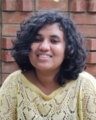
Prerana N T
Anant Fellow, Anant National University, India

Julius Nagel
Student, University of Applied Sciences St. Pölten, Germany
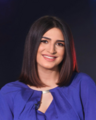
Lana Najdi
Student, Lebanese American University, Lebanon

Liz Nass
Student, Michigan State University, United States of America

Lahana Pearce
Student, Nevada State University, United States of America

Icela Pelayo
Program Officer, Racial Equity & Community Engagement W.K. Kellogg Foundation, United States of America

Xiaoya Peng
Student, The Chinese University of Hong Kong, China

Aubrey Rademacher
Student, Michigan State University, United States of America

Natalie Schneider
Student, The University of Texas at Austin, United States of America
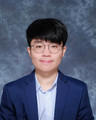
Johnny Tsang
Student, The Chinese University of Hong Kong, China, Hong Kong SAR
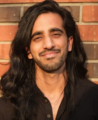
Shashank V
Student, Ashoka University, India

Vagmi V S
Student, Anant National University, India

Hamza Vakhariya
Student, Anant National University, India
Maria Regina Vega Alatriste
Student, Universidad Iberoamericana, Mexico

Karli Wallace
Student, Emerson College, United States of America

Katrin Wallner
Student, University of Applied Sciences St. Pölten, Austria

Logan Ward
Student, Emerson College, United States of America

Gemma Warde
Student, The University of Texas at Austin, United States of America

Taylor Whelchel
Student, Nevada State University, United States of America

Marissa Wollbrinck
Cadet, United States Military Academy, United States of America

Ying Yang
Student, The Chinese University of Hong Kong, China, Hong Kong SAR

Anjelica Yeung
Student, The Chinese University of Hong Kong, China, Hong Kong SAR

Serene Zhai
Student, The Chinese University of Hong Kong, China, Hong Kong SAR
Staff

Valeriia Chernysh
Program Associate, Salzburg Global, Austria
Olisa Dellas
Manager, Development and Evaluation, Salzburg Global, Austria

Bobbie Foster
Assistant Professor, University of Arkansas, United States of America
Surya HK
Network Development Specialist, Culture & Design Lead, Salzburg Global Media Academy, Salzburg Global, India

Sammi Ho Wing Tung
Program Intern, Salzburg Global Seminar, China, Hong Kong SAR
Paul Mihailidis
Program Director & Professor, Emerson College, United States of America
Beth Pertiller
Managing Director, Operations and Organizational Development, Salzburg Global, Austria
OVERVIEW
The 2024 program of the Salzburg Academy on Media & Global Change asked how we could support and prioritize human belonging, compassion, attentiveness, and solidarity in a time of increasingly invasive technologies. We explored what practices and pedagogies could advance relations and radical co-existence. Alternative truths and existing inequities threatened the best of intentions for machine learning and artificial intelligence. At a time of global conflict and strife, we looked for pedagogies that centered care and the humanities as a way to develop with technology and communities that were both positive and productive. As we looked around the world, the need to fight for more inclusive and connected futures was of great urgency.
In this program, we explored ways to reintroduce the human to the machine and explored ways to center care within the development of “thinking” technologies. As automated technologies learned from humanity, we paused to ask what they were learning and emulating. What were the lessons we wanted to pass on to machines? How would they think, or possibly feel, about humanity? While media and popular culture provided ample negative images and dystopian futures, the challenge of 2024 was to imagine the possibilities of finding belonging in the age of machines. What could it look like, feel like, and potentially introduce to the global community?
Science fiction author Isaac Asimov once wrote three laws for robotics. 1) A robot may not injure a human being or, through inaction, allow a human being to come to harm. 2) A robot must obey orders given it by human beings except where such orders conflict with the first law. 3) A robot must protect its own existence as long as such protection does not conflict with the first and second laws.
Asimov’s laws served as a basis for both fictional and theoretical discussions about conscious technology; however, Asimov’s three laws also reflected how humans might begin to think and care for each other. As we considered what values we taught technology, we also paused to consider the values we taught ourselves.
PROGRAM STRUCTURE
The Salzburg Academy on Media and Global Change was an in-residence program that brought together 60-70 emerging leaders across media fields to connect with faculty, industry leaders, and media makers to explore how media could support more equitable and just global futures. The program offered innovative and dynamic opportunities each day for seminars, workshops, and culture-building opportunities, along with a program focused on cultural and personal enrichment. Program participants experienced the following experiential outputs:
- Connection to an active international community of outstanding leaders working at the intersection of media, innovation, and social change.
- Inspiration and learning from across the world and foresight into directions for future media environments and innovations.
- Relationships for networking in media fields across organizational, professional, and national boundaries.
- Access to a vast network of Salzburg Global Fellows working on similar pursuits.
Participants also had the opportunity to:
- Harness the collective intelligence and experience of over 85 other emerging and established leaders in media and media education fields.
- Opportunities for mentoring, peer network building, and collaboration.
- A candid, safe, and open exchange with peers under the Chatham House Rule.
FORMAT
The Media Academy ran for 16 days. Programming ran four days per week and included a mix of seminars, workshops, a film club, interactive activities, cultural excursions, a musical performance, and other social activities. Three excursions complemented the in-time program. Weekends were open for participants to explore Salzburg, Austria, and surrounding spaces. The program took place at Schloss Leopoldskron.
KEY QUESTIONS
Across program themes, the Salzburg Academy on Media & Global Change has focused on the following core questions:
- What does it mean to belong in an age of invasive media practices?
- What key features of machines - artificial intelligence, platforms, and beyond - exacerbate social, civic, and political divides?
- What media practices and pedagogies are needed to support more human-centered realities?
- How can we imagine media systems to support strong social cohesion in the age of abundant digital media realities?
- What human aspirations are needed to promote belonging and care in the age of the machine?
PARTICIPANT PROFILE
The Salzburg Academy on Media & Global Change brings together emerging and established leaders across media fields. Our participants come from top-tier universities around the world across all levels of learning. Additionally, we welcome professionals at all levels of their careers interested in thinking about media as a vehicle for innovation across sectors and industries. This program builds networks for those involved in media production, media innovation, media policy, and beyond, and who are interested in the capacity for media to support positive social reform, inclusive new realities for global cooperation, and transformational change across and within public and private institutions.
PROGRAM GOALS
- Launch a network of aspiring leaders in media industries to collaborate on new ventures, initiatives, and collaborative projects for more inclusive, robust, and sustainable media initiatives.
- Create a multimedia publication that presents a series of Speculative Media Initiatives in support of more inclusive and robust media futures.
- Produce a Faculty Report (Salzburg Statement) on transformative pedagogies for inclusive media futures.
- Implement imaginative practices and pedagogies created at the Media Academy with partner institutions around the world.
- Provide co-design workshops for aspiring media makers to hone their skills in media design for creative storytelling and media innovation.
- Offer media education training for inclusive and transformative leadership in media industries and media education.
- Connect participants with past alumni networks to expand the footprint of the Media Academy community and strengthen the potential for collaboration and engagement.
How to Apply?
The application process has concluded. The candidates will be announced later in April or at the beginning of May.
To help you prepare, here's what to expect from Salzburg Global's applicaton portal. Responses should be short (1,000 characters max).
1. Describe how participating in this program will advance your personal and/or professional goals
2. Share a vision of how you think media innovations can support positive change in your field of work?
3. Share an example of a new idea, innovation, strategy, or practice you have been part of?
4. Share a bio, CV/resume, and other documentation that highlights relevant professional experience.
Who Should Apply?
The Salzburg Academy on Media & Global Change brings together emerging and established leaders across media fields. Our participants come from top-tier universities around the world across all levels of learning. Additionally, we welcome professionals at all levels of their careers interested in thinking about media as a vehicle for innovation across sectors and industries. This program builds networks for those involved in media production, media innovation, media policy, and beyond, and who are interested in the capacity for media to support positive social reform, inclusive new realities for global cooperation, and transformational change across and within public and private institutions.
Language of Communication: English
Related News
Apr 24, 2025
16 Lessons From 16 Days at the Media Academy
Apr 11, 2025
Back and Forward: A Trio and a Degree
Mar 18, 2025
Arrival, Adaptation, Affection
Mar 05, 2025
A Toolkit to Pursue Belonging
Feb 26, 2025
Reflections on the Living Library
Sep 10, 2024
Generative AI and the Anxiety of Change
Aug 29, 2024
Stories That Heal: Fostering Belonging in the Shadow of AI
Aug 27, 2024
Global Media, Local Change
Aug 20, 2024
The Unyielding Spirit of Exiled Journalists
Aug 13, 2024
What Does It Mean To Be Human in the Digital Age?
Aug 05, 2024