Salzburg Global Annual Report

2022 - 2023

From a leadership change to an extraordinary $11 million gift and a succession of new programs, 2022 and 2023 were two transformative years in Salzburg Global's history.

Read all about it in our annual report.

explore

Salzburg, Austria: Schloss Leopoldskron, Leopoldskronstrasse 56–58, 5020 Salzburg, Tel. +43 (662) 839830


Washington, DC, USA: 1541 14th Street NW, Suite 2 West, Washington, D.C. 20005 , Tel. +1 (202) 637-7683

Introducing
Our Annual Report 

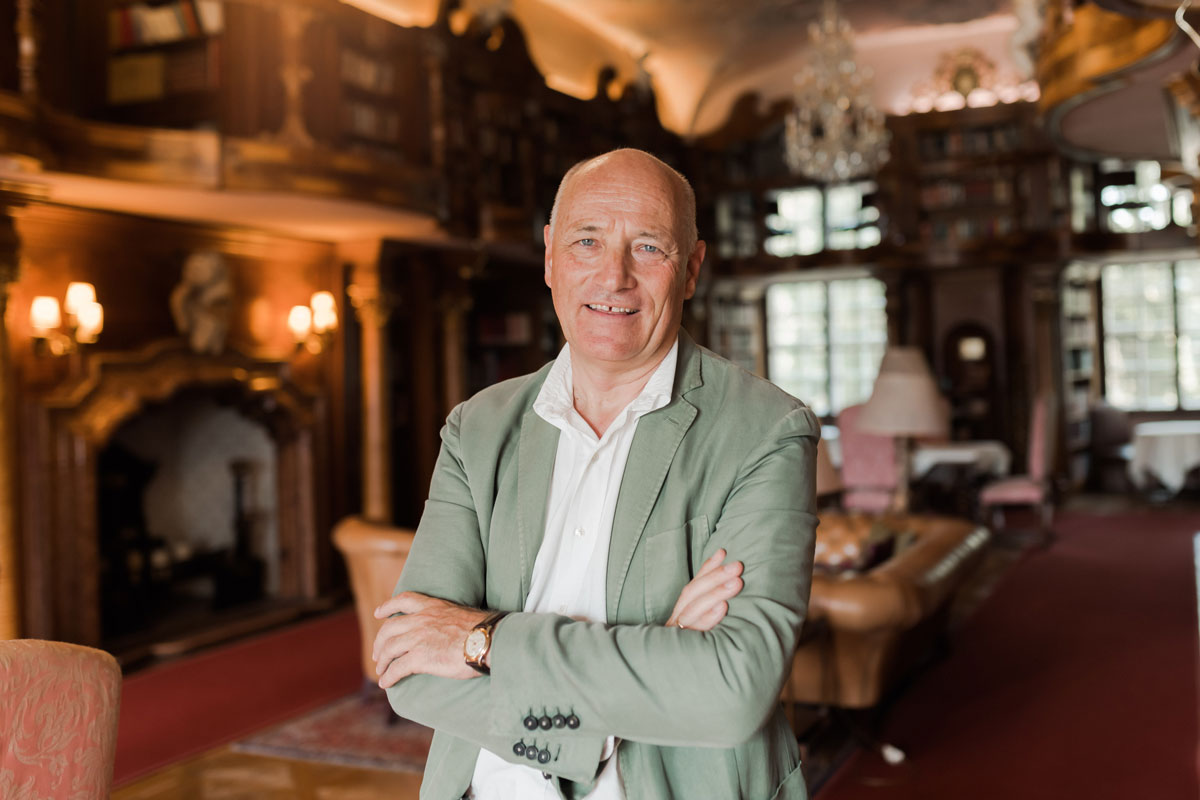
Salzburg Global President and CEO Martin Weiss reflects on the organization.

We live in an age of polarized voices and fixed views. Too often, perspectives narrow and thinking becomes siloed. Meanwhile, the big challenges of our time remain. To solve them, we need leaders with open minds – individuals willing to move past fixed ideas, question assumptions, and embrace nuance. We need to change the conversation.

Salzburg Global is where open-minded leaders from around the world gather for breakthrough conversations on pressing global issues. As an independent, nonprofit organization, we serve as an international forum for people from every background.

Since assuming the role of CEO and President of Salzburg Global in August 2022, I have witnessed our organization's profound impact firsthand. Over the past year, we resumed in-person programs, launched new multi-year initiatives, and hosted significant events like the Salzburg Global Weekend, themed "Democracy on the Front Lines." This event underscored the urgent need to support democratic systems and those on the front lines defending them.

With the launch of the "Pathways to Peace" (P2P) initiative, supported by a generous $11 million gift from Victoria Mars, we are addressing urgent geopolitical challenges through open and critical dialogue.

In 2024, our focus is shifting "East," examining the dynamics and challenges in the Asia-Pacific region. This exploration tackles key issues such as sovereignty, economic stability, democracy, technological advancements, and the climate crisis. By fostering understanding and cooperation between "East" and "West", Salzburg Global continues to pave the way for new avenues of dialogue and collaboration.

Martin Weiss
President and CEO, Salzburg Global Seminar


PREVIOUS SECTION | A LETTER FROM OUR PRESIDENT

CURRENT SECTION | LOOKING BACK ON THE 75TH ANNIVERSARY

NEXT SECTION | STEPHEN SALYER STEPS DOWN AS PRESIDENT

Salzburg Global at 75: The Future Has Never Looked So Bright


As Salzburg Global's 75th anniversary year has come to an end, we reflect on a year of extraordinary achievements


By Benjamin Glahn and Helia Nazari


Anniversaries are important. They remind us how far we have come, and they give us an opportunity to reimagine the future. They are moments to be celebrated as important historic milestones. And they are chances to chart a new course and invest in the future. In short, anniversaries allow us to reflect on the past and recommit to a vision that will shape the decades to come.

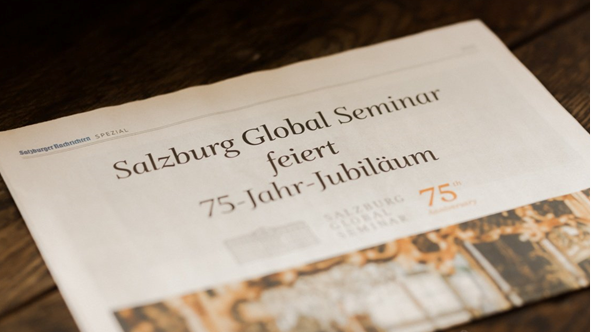
As we marked the official conclusion of Salzburg Global Seminar’s 75th anniversary in July 2023, we wanted to share our reflections on this extraordinary anniversary year with our Fellows, friends, and supporters, and to celebrate our achievements together as we look ahead to the next 75 years.

This anniversary – Salzburg Global’s 75th – was a transformational one. Without exaggeration, this anniversary year was perhaps the single most transformational year in the long history of this extraordinary institution.

This is a bold claim to be sure. However, in reflecting on all that we accomplished during our 75th anniversary year – from celebrating our history, to engaging and supporting our Fellows, navigating a successful leadership transition, and investing for the future – we think you will agree that Salzburg Global at 75 has never looked better and our future has never looked brighter.

Celebrating our History

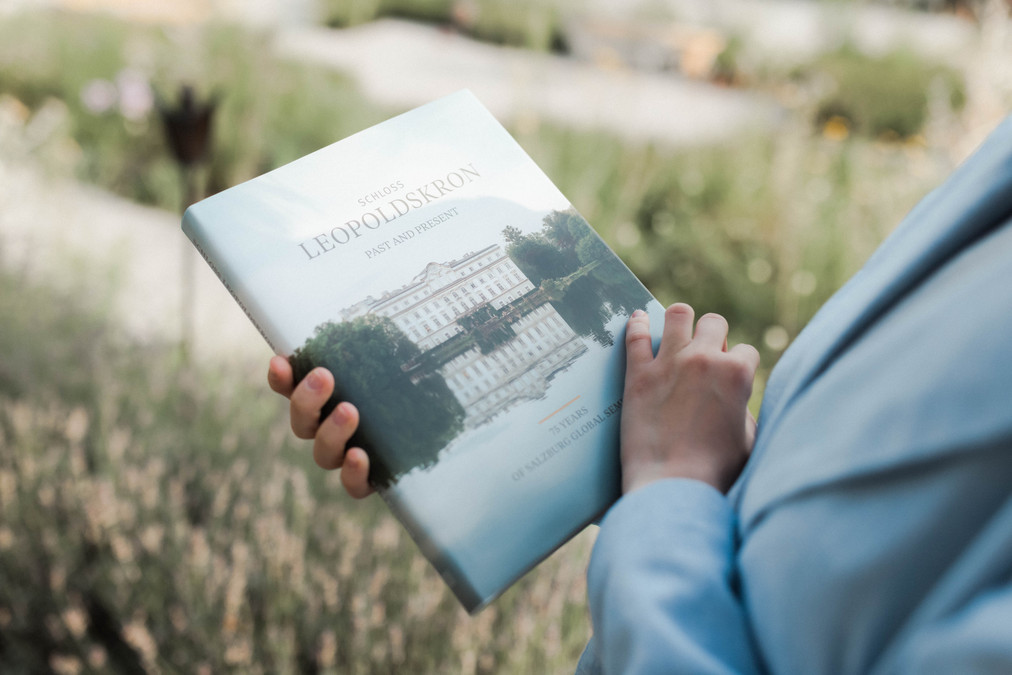
Schloss Leopoldskron: Past and Present: To officially inaugurate our anniversary year, we published the most complete history of Schloss Leopoldskron and Salzburg Global Seminar to date. From the construction of Schloss Leopoldskron in 1736, to the Max Reinhardt era and his establishment of the Salzburg Festival, to the founding and evolution of Salzburg Global Seminar, this commemorative book includes research-based essays, photographs, and archival material that provide a journey through the unique history of Schloss Leopoldskron and Salzburg Global Seminar.

75th Anniversary Vignettes: With 75 years of incredible stories about the visionary people and ideas that have helped shape a better world since 1947, for our 75th anniversary, we published a series of 12 historic vignettes. These vignettes, written by former Resident Director, Timothy Ryback, explore the symbiosis of visionary enterprise, extraordinary people, and the magic of Salzburg Global Seminar and Schloss Leopoldskron. 

Harvard University Opens New Salzburg Global Exhibit:This major exhibition of our archives, never before made available to the public, tells the story of Salzburg Global Seminar’s evolution, identity, and historic commitment to bridging divides and shaping a better world. The exhibition, A Marshall Plan of the Mind: 75 Years of Salzburg Global Seminar, was held at the Pusey Library at Harvard University from November 2022 to March 2023 and featured a range of archival materials, including letters from the post-war period describing the need for exchange and the importance of the early mission and vision of our founders.

Supporting and Engaging our Fellows

Providing Refuge at Schloss Leopoldskron: Just as we did after our founding from 1947 to 1949, during our 75th anniversary year, Salzburg Global Seminar opened the doors of Schloss Leopoldskron to Fellows fleeing war in conflict. When Russia’s full-scale invasion of Ukraine started in February, Salzburg Global opened its doors to offer refuge to our Ukrainian Fellows, their friends, and families. Not long after, to support Ukrainian Civil Society leaders and their organizations, we initiated the Ukraine Civil Society Forum, which continues to support Ukrainian Civil Society in partnership with the United States Institute for Peace and the 21st Century Trust.

Re-curating Schloss Leopoldskron: A Celebration of our Fellows and their Creative Practice: Throughout its history, Schloss Leopoldskron has been inextricably linked to cycles of power, persecution, and renewal. Despite difficult and sometimes dark periods in the history of Schloss Leopoldskron, the cycles of renewal – through vision, enterprise, and cultural and social leadership – have provided a space for creativity, inclusion, and inspiration for people from all over the world. For our 75th anniversary, we began the process of re-curating our historic spaces to better represent our values, serve our mission, and ensure our historic spaces are inclusive for all our Fellows and guests from around the world. During this year, we have re-designed and re-curated several important public spaces by investing in exhibition infrastructure, exhibiting new artistic works reflective of our global Fellowship, and developing new signage, educational materials, and curatorial projects in Schloss Leopoldskron to examine and understand its complicated and contested histories.

Examples of these exhibitions include:

  • Salzburg Global Fellows Artwork: This exhibition of works created by Salzburg Global Fellows is part of an ongoing curation project aimed at ensuring that the richness and diversity of Salzburg Global's programs and Fellows are manifested at Schloss Leopoldskron. The current exhibition, which opened in June 2022, includes works by Louisa Whettam, a descendant of the Wiradjuri tribe in New South Wales, Australia; Siphiwe Ngwenya, a painter, illustrator, conceptualist, and self-taught social scientist from South Africa; and Phillip Simpson, a painter and mural artist from Detroit, USA, whose portrait of Stacey Abrams (another Fellow of Salzburg Global) hangs outside Fellows Hall.
  • Cultivating History, Documenting Dreams: Opened in June 2022 and currently on display throughout the Schloss and Meierhof, "Cultivating History, Documenting Dreams" features photographs taken by Salzburg Global Fellows during the October 2019 Cultural Innovators Forum by Jose Cotto, a photographer and designer from New Orleans, and Yasmine Omari, a Palestinian-American photographer and cinematographer born in Haifa.
  • Visualizing Translation: A collection of photographs from Detroit and Dortmund by photographers Theon Delgado Sr. and Peyman Azhari currently in exhibition in our Gallery, "Visualizing Translation: Homeland and Heimat in Detroit and Dortmund", reveals how vibrant multilingual communities in Southwest Detroit and Northern Dortmund lay claim to and shape their neighbourhood for the better. This exhibition was co-curated by Salzburg Global Fellow Karah Shaffer (Facing Change: Documenting America), Alan Chin and Kristin Dickinson (University of Michigan), and supported by the Mellon Sawyer Seminar.
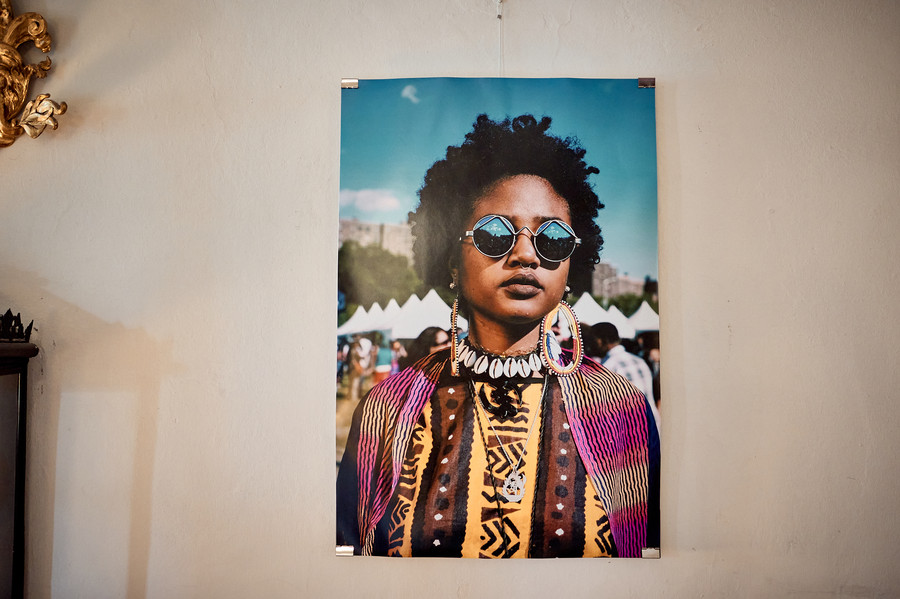
  • Here You Can Be Whatever You Want: Currently exhibited in our Great Hall and in the Meierhof Café and curated by Salzburg Global Fellow Karah Shaffer is a collection of documentary portraits and atmospheric images made at Afropunk festivals on three continents and in four countries between 2014 and 2018, celebrating Black festival attendees fully embodying individual expression through community, music, dance, and fashion. The tenets of Afropunk are “no sexism, no racism, no ableism, no homophobia, no ageism, no fatphobia, no transphobia, and no hatefulness”. Photographers Kholood Eid and Melissa “Bunni” Elian documented festival guests of all genders and walks of life in spaces unmarried to the weight of the societal and political landscapes immediately outside festival grounds.
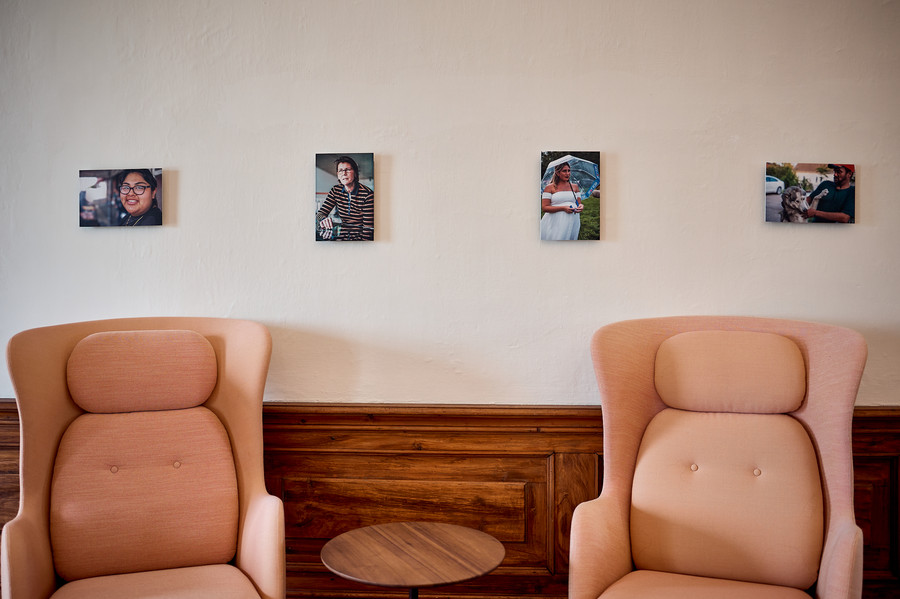
  • Capturing Legacy: A series of portraits of Salzburg Global Fellows, which are displayed on the walls of the Meierhof building, offer a glimpse into the experience of being a part of the unique and inspiring programs of Salzburg Global. Through this project, Fellows are photographed throughout the Schloss grounds and Salzburg, and remain, through portraits, present in our place. The selection of Fellows seeks to showcase Salzburg Global’s international Fellowship and diverse network and will be updated as more Fellows are welcomed to Schloss Leopoldskron.

Launch of Fellows’ Mobilize Community: For our 75th Anniversary, our Salzburg Global Fellowship Community was moved to Mobilize, a platform designed to build online communities, connect with other Salzburg Global Fellows, share opportunities, engage in our programs, and receive updates from Salzburg Global and our 40,000 Fellows around the world. If you haven’t joined yet, find out more here: Mobilize!  

Transitioning to New Leadership

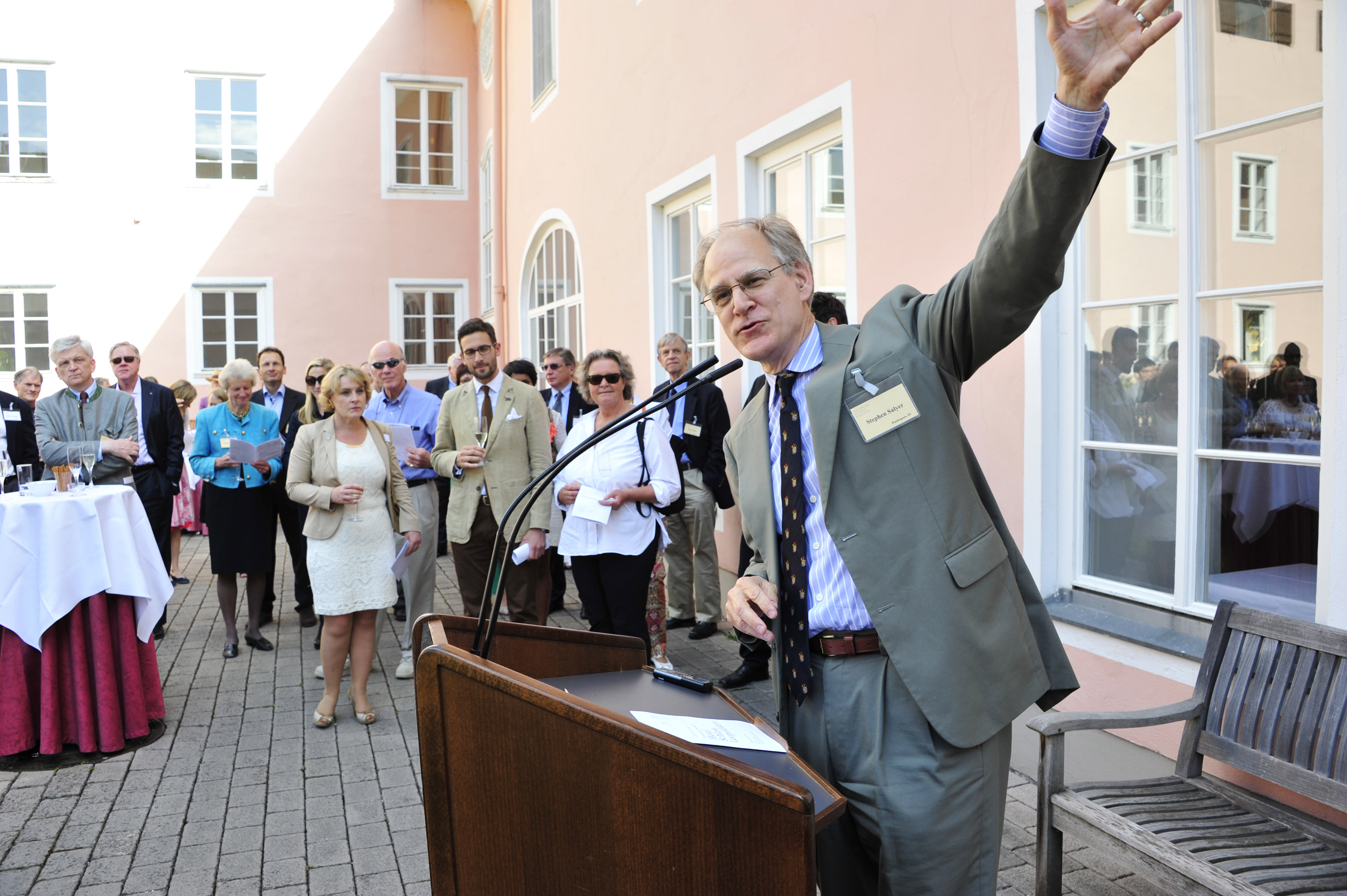
Salzburg Global Seminar’s 75th anniversary also included a changing of the guard. Stephen Salyer, our President and CEO from 2005 to 2022, stepped down on July 31, 2022. And on August 1, 2022, Martin Weiss became our first Austrian President and CEO, stepping down as Austrian Ambassador to the United States to take over the reins. Leadership transitions can sometimes be delicate and disruptive, but the transition from Stephen Salyer to Martin Weiss was truly an inspired one.

Stephen Salyer departed Salzburg Global as the longest serving CEO in Salzburg Global’s history. Since 2005, Stephen’s leadership and focus on non-profit innovation steered Salzburg Global through two major global crises—the financial crisis of 2008 and the COVID-19 crisis—while at the same time expanding our programs and impact, enhancing and diversifying our board and governance functions, increasing our endowment, and investing more than $10 million in Salzburg Global’s historic facilities. Under Stephen's tenure, we created a social enterprise hospitality business, Hotel Schloss Leopoldskron, and successfully completed the largest fundraising campaign in our history, dramatically improving our financial sustainability. As Stephen said when launching our anniversary celebrations, as “we celebrate 75 years, we celebrate a timeless place like no other, a place where informed by the past and by enduring principles, the future will unfold, and where a new generation will strive to shape a better world.” If the measure of success is leaving some-thing in better shape than you found it, Stephen’s tenure as CEO was surely one of the most successful in our history.

Since joining Salzburg Global Seminar on August 1, Martin Weiss has extended that legacy and already made quite a mark on this extraordinary institution. During his first year, Martin led the development of new and expanded partnerships with the Nippon Foundation. He reinvigorated our Austrian partnerships and collaborations, including with the Salzburg Festival, the Land and City of Salzburg, the University of Salzburg, and the Diplomatic Academy in Vienna. He also initiated a new brand development and strategy process to upgrade Salzburg Global’s iconic brand for the next 75 years. Finally, to conclude our 75th anniversary year, Martin announced the largest single gift to Salzburg Global Seminar in our history, an $11 million contribution from our Chair, Victoria Mars. The only question now is what Martin will do in his coming years as CEO!

Investing for the Future

While anniversaries are important for the history they celebrate, they are more important for the future that they make possible. During our 75th anniversary year, we set out to ensure that this year will be remembered for the major investments we made in Salzburg Global’s future.

We succeeded beyond our wildest expectations.

Successful Completion of our Inspiring Leadership Campaign: At the start of our 75th anniversary, we announced the completion of the largest fundraising campaign in our history, with $18.3m in funds raised. The success of this ambitious campaign enables us to invest in our programs, people, and place, and sustain future generations of groundbreaking programs, leadership development, and historic home of Schloss Leopoldskron. These investments included:

The Launch of our Salzburg Global Center for Education Transformation: Launched on World Teacher’s Day in 2022, and made possible by our Inspiring Leadership Campaign, our Education Center focuses on influencing systems transformation efforts by developing new approaches to critical and emerging issues, including social, emotional, and creative skills, education in emergencies, regenerative education, language of instruction, education leadership and inclusive futures.

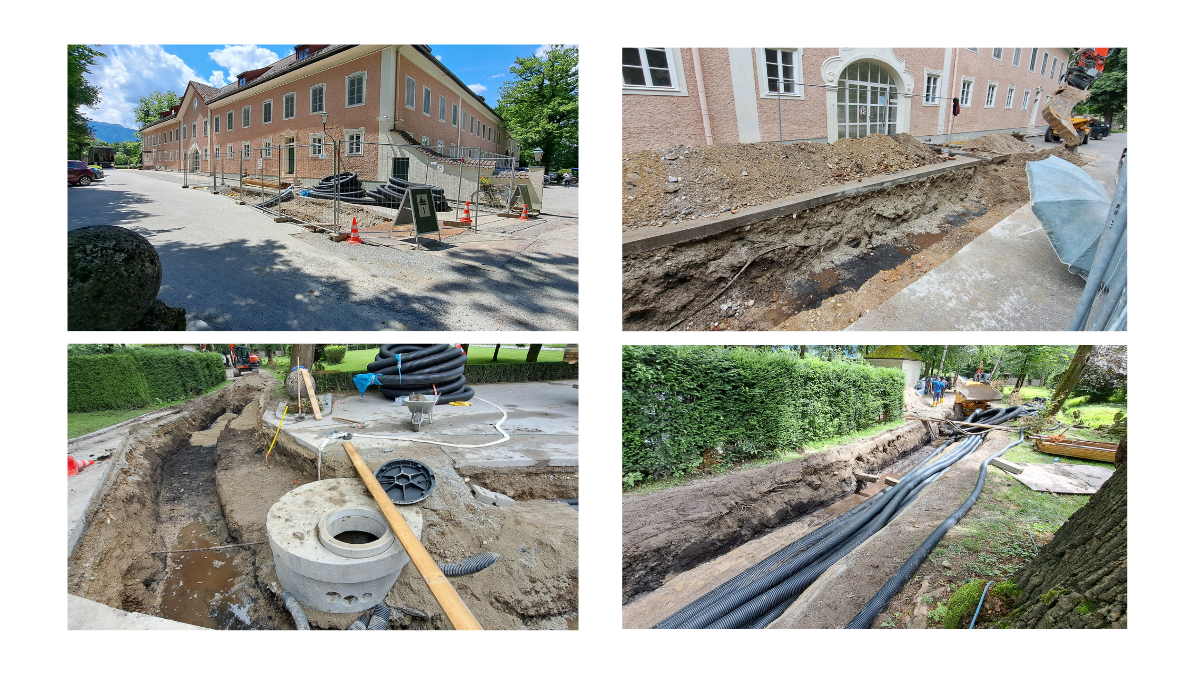
Achieving Carbon Neutrality in Schloss Leopoldskron and the Meierhof: In 2017, during our 70th anniversary, we began the process of moving our facilities toward carbon neutrality by removing the existing oil heating system in Schloss Leopoldskron and connecting to the district heating system of Salzburg, which relies primarily on renewables and is committed to carbon neutrality by 2050. For our 75th anniversary, and with support from the Packard Foundation, we removed the natural gas heating system in the Meierhof Building, which includes 18 offices, 55 hotel rooms, 4 apartments, 5 staff housing units, a café, two conference rooms, and a large reception area and library. With Packard’s support, as well as with support from generous individual donors, we installed air-heat pumps as well as solar panels (in 2024) to provide zero-emission heating (and eventually cooling) of the Meierhof. Together, these investments are enabling us to achieve a significant priority for Salzburg Global Seminar’s 75th anniversary: transitioning our facilities to carbon neutrality and achieving zero carbon-emitting infrastructure.

The Initiation of the First Ever “Masterplan” for Schloss Leopoldskron: During our 75th anniversary year and following more than ten years of major investments and numerous renovation projects in Schloss Leopoldskron and the Meierhof, including the new Fellows Hall and the new Gallery, with the support of Salzburg’s Historic Preservation Agency (Bundesdenkmalamt), we initiated an extensive facilities masterplan process. This was the first time in Schloss Leopoldskron’s 280-year history that a long-term masterplan was developed. The masterplan process creates a lasting vision for our historic property, including Schloss Leopoldskron and the Meierhof, to ensure that the mission and purpose of Salzburg Global is central to long-term planning. This ensures the long-term preservation and sustainability of Schloss Leopoldskron and the Meierhof while enabling short-term progress on key renovation priorities. We are producing a “Conservation Management Plan” for each room of Schloss Leopoldskron, including detailed information on the condition, recommended preservation and restoration measures, and restoration costs.

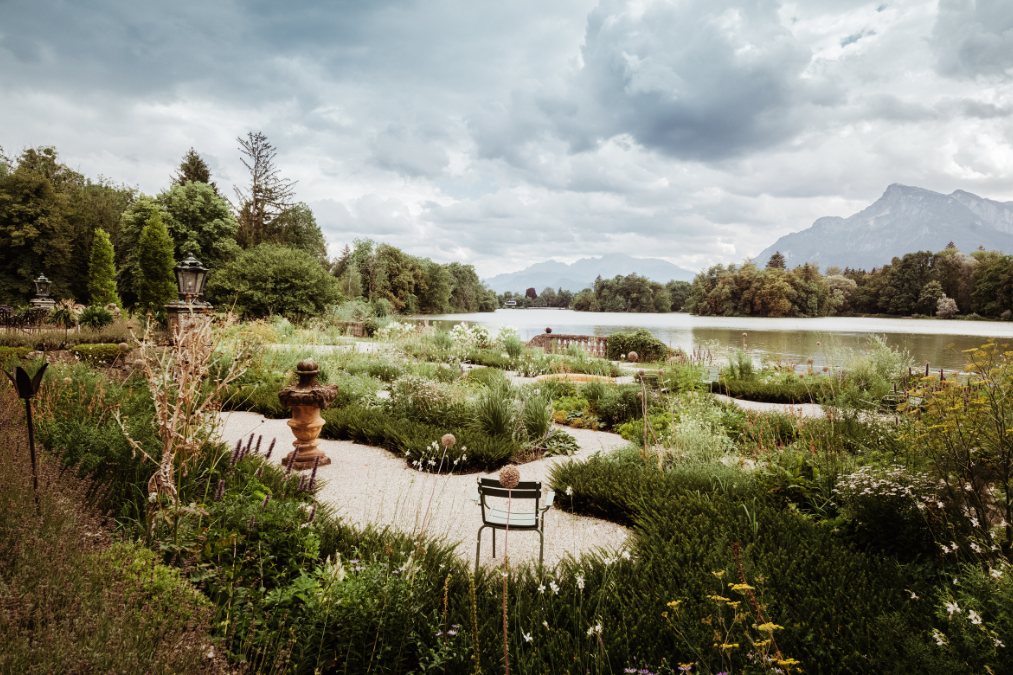
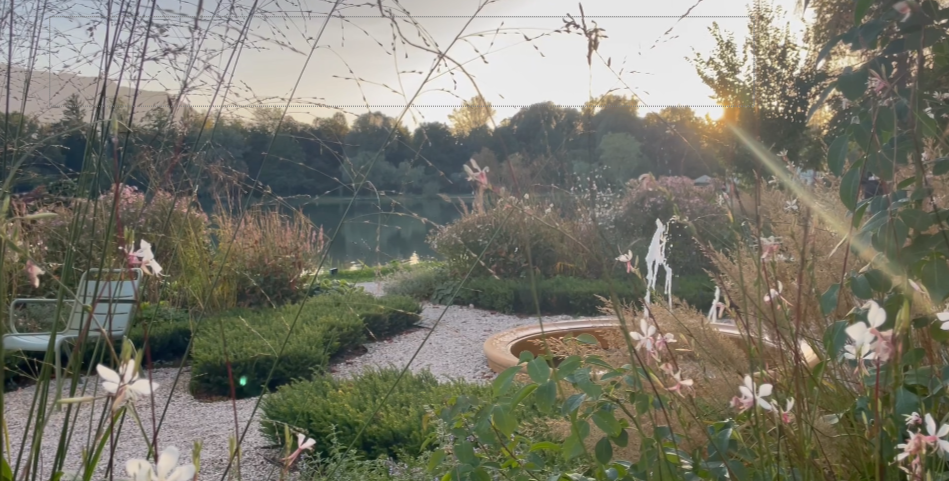
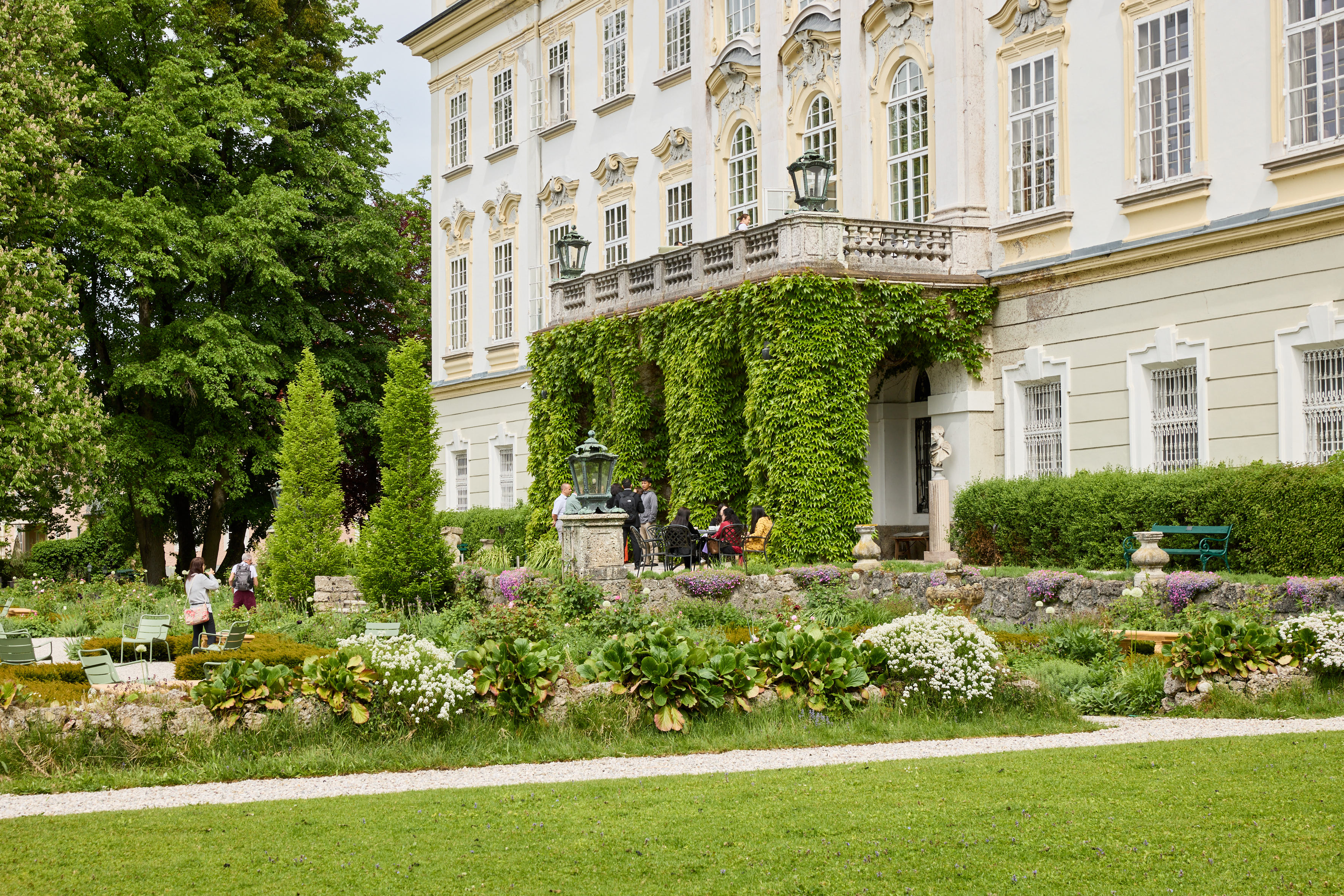
The Renovation of our Historic Gardens and Mansbach Garden Parterre: In June 2022, after two years of restoration, the "Mansbach Garden Parterre" was officially opened. With support from our Board Member, Tom Mansbach, the main historic gardens between Schloss Leopoldskron and the lake (the Garden Parterre) were beautifully and carefully restored by the Royal Garden Academy in Berlin. The Royal Academy reviewed archival images and historic garden plans from the time of Max Reinhardt to develop a parterre that reflects the unique beauty of Schloss Leopoldskron but is also intended to be used as a space for reflection, engagement, and creativity. The Mansbach Garden Parterre now blooms throughout the year with more than 1000 different bushes, plants, and flowers that symbolize and represent the diversity of Fellows, languages, and cultures that are part of our programs.

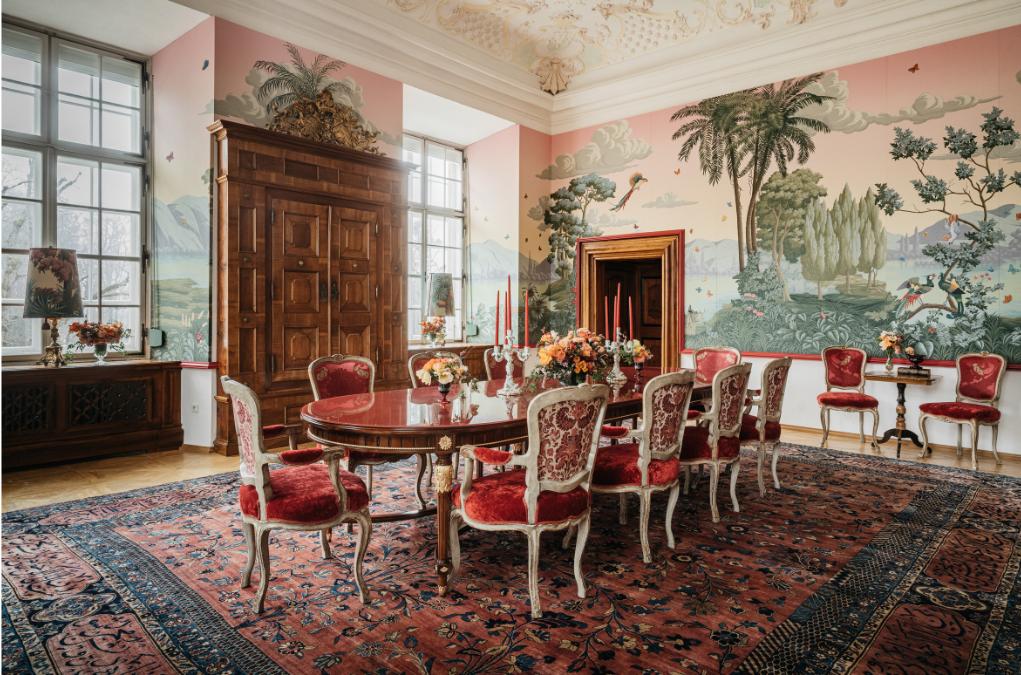
The Renovation of the Red Salon: With leadership support from former US Ambassador to Austria, Trevor Traina, as well as numerous other former US Ambassadors and friends of Salzburg Global Seminar, Max Reinhardt’s Red Salon was renovated and restored for our 75th anniversary and for the 150th anniversary of Max Reinhardt’s birth (September 9, 1873). The restoration of the Red Salon was implemented by renowned interior designer Ken Fulk and was intended to reflect the legacy and spirit of Max Reinhardt. Using elements from the original baroque stucco ceiling, historic tapestries once used by Reinhardt as backdrop for theatre productions, and the inspiration of Reinhardt’s influence on the evolution of the theatre, the Red Salon now displays the confluence of these elements, using the concept of creative renewal and artistic collaboration to inspire a Red Salon for the 21st century.

The Largest Gift in Salzburg Global’s History – Pathways to Peace: Finally, on June 30, 2023, one year after starting our official 75th anniversary celebrations, we announced a historic gift of $11 million from our Chair, Victoria Mars, to advance our mission and impact and to launch a new “Pathways to Peace Initiative". This gift, the largest in our history, enables us to make a sustained and lasting contribution to new thinking and ideas that enable pathways to peace – a mission that has been at the heart of Salzburg Global’s purpose since 1947. Most importantly, this gift, which will support and grow our program endowment, ensures we can continue this important mission for the next 75 years and beyond.

Salzburg Global President Stephen L. Salyer Steps Down 

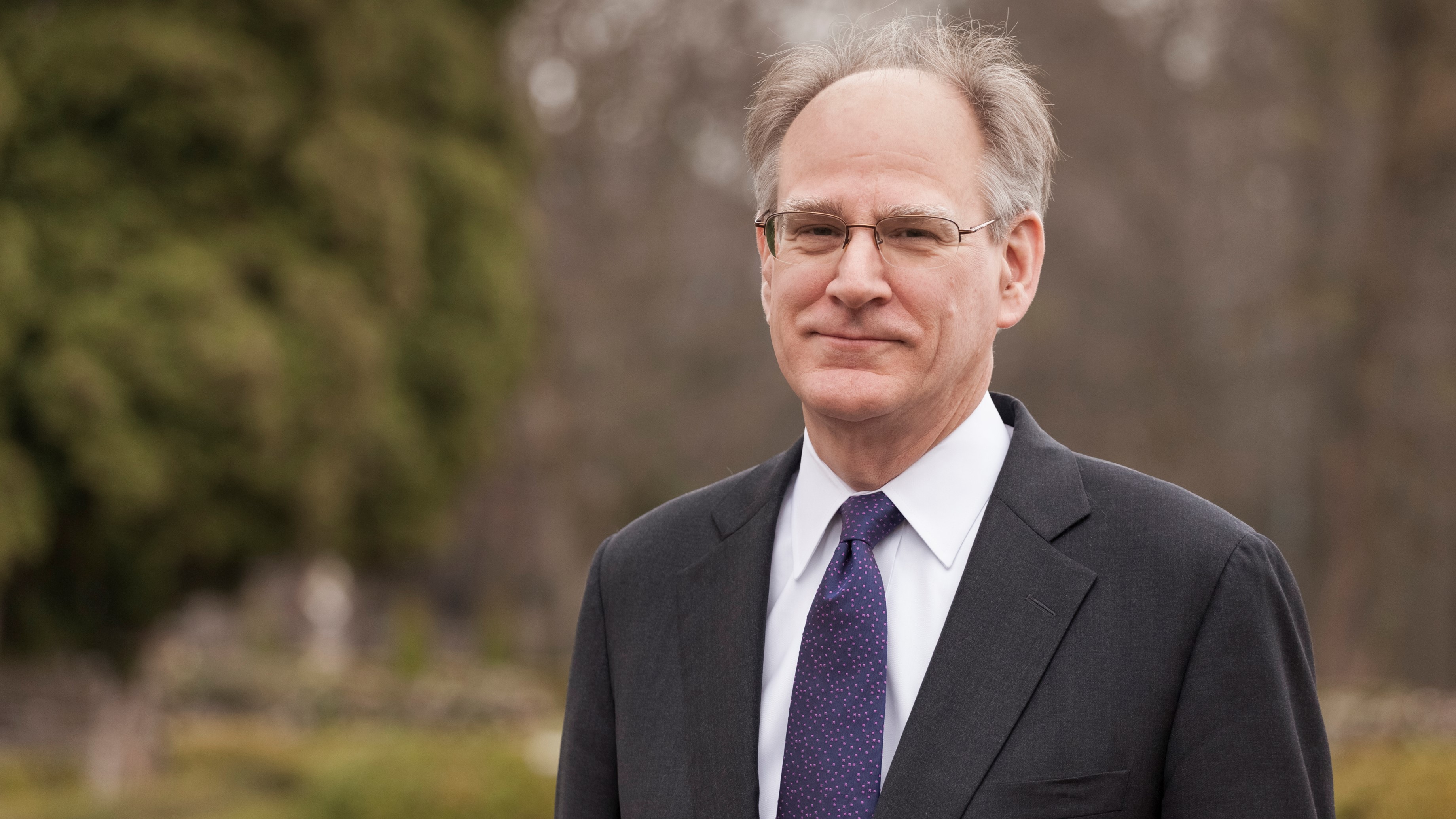
Stephen L. Salyer – the organization’s longest-serving president and first Fellow to assume the position – ended his 17-year tenure in June 2022

By Salzburg Global

In June 2022, Salzburg Global Seminar celebrated its 75th Anniversary. This also marked the conclusion of Stephen L. Salyer’s 17-year tenure as President and Chief Executive Officer. 

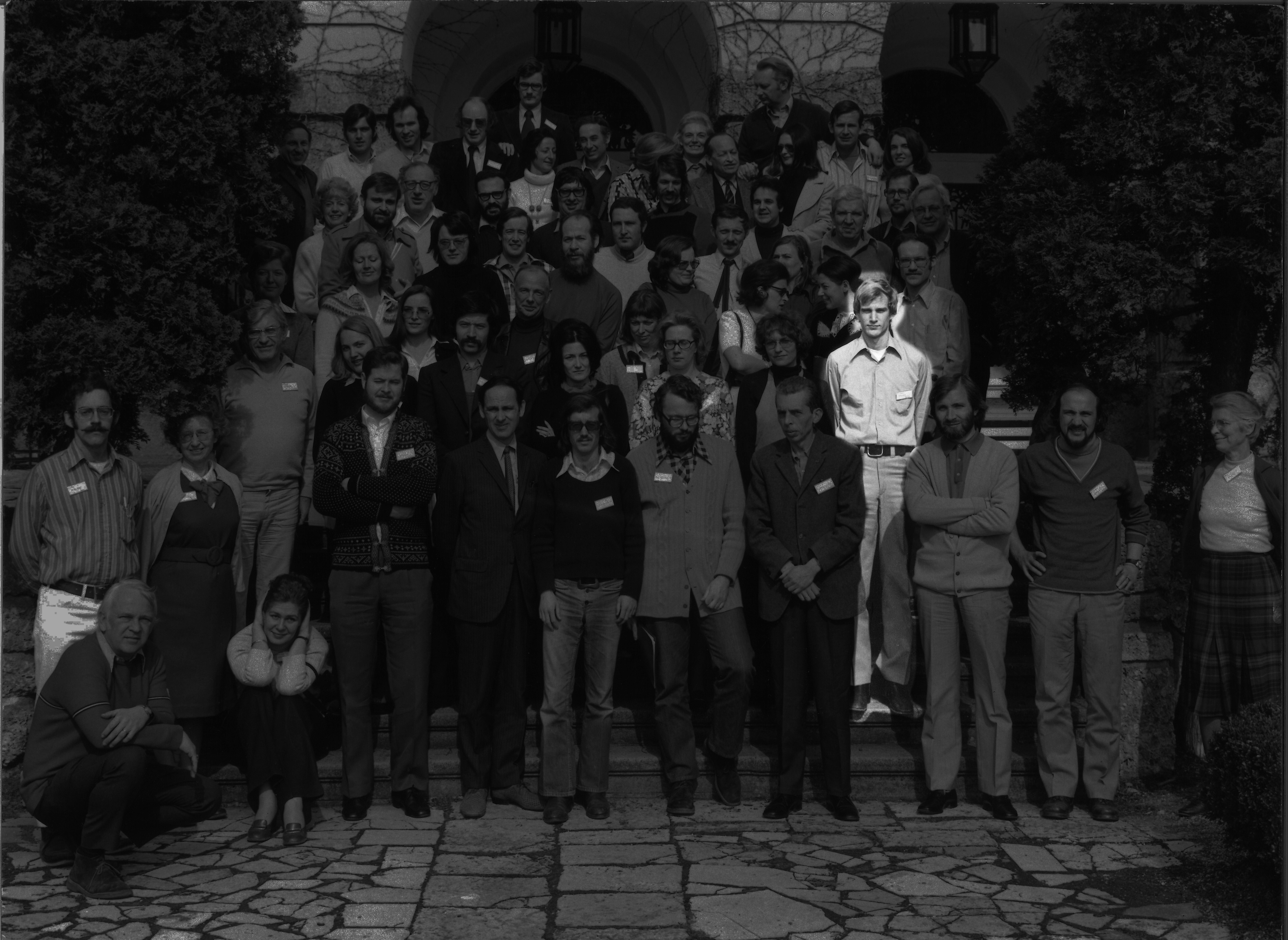
Over Salyer’s presidency, the organization increased its global reputation as an enabler of rising leaders and as a place known for building networks to tackle the world’s toughest challenges. Himself a poster child of a young leader whose career trajectory accelerated after he attended the program, The Global Impact of Mass Communications in 1974, Salzburg Global’s longest-serving president described the impact of that first exposure to Salzburg Global: 

“The people I met became my mentors and made me a believer in the power of individuals to start movements for change.” 

Thirty years on, when he received a call asking if he was interested in leading the organization, he could not refuse, becoming the first Fellow to serve as President since its founding in 1947. Since his appointment in 2005, the organization has become synonymous with global problem-solving – as reflected in its change in name in 2006, when it became Salzburg Global Seminar with a revamped mission: “to challenge current and future leaders to solve issues of global concern.”

Global Focus

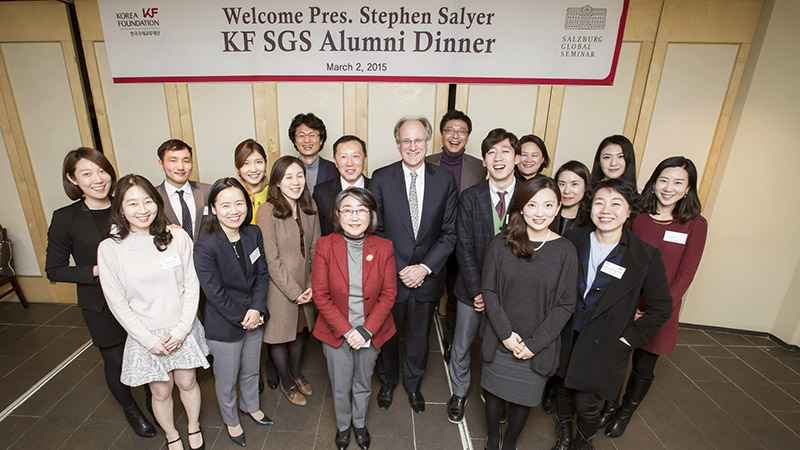
The global expansion of Salzburg Global Seminar saw the strengthening of partnerships in Asia, particularly through the Salyer-led Japan Advisory Council and with support from the Korea and Nippon Foundations. A move of the US office to Washington DC and the forging of a partnership with the London-based 21st Century Trust, saw Salzburg Global establish annual events in the two capital cities. The alumni groups of the two organizations were combined in 2007 to establish the Salzburg Global Fellowship with events held the world over. 

With prior professional experience in media and philanthropy and an education in law and public administration, Salyer established initiatives to strengthen independent media, optimize institutional philanthropy, and seed a next generation of publicly minded journalists, lawyers and policymakers. 

As part of the John S. and James L. Knight Foundation-funded Salzburg Media Initiative, together with his wife, journalism professor Susan Moeller, Salyer founded in 2007 the Salzburg Academy on Media and Global Change. The three-week summer program has since assembled in Salzburg over 1000 students and faculty from university partners on five continents alongside media innovators and journalists to shape the future of media literacy and of evidence-based journalism.   

In 2010, Salyer initiated the Cutler Center for the Rule of Law in honor Salzburg Global’s long-serving director and board chairman, Lloyd N. Cutler, well-known for convening leading judges and rising practitioners in Salzburg. In addition to an annual lecture given at the US Supreme Court, the Center spawned the Cutler Fellows Program in 2012. The now-annual program selects outstanding students from top US law schools to explore public and private international law and public service and is being expanded to incorporate European counterparts.

In recent years, Salzburg Global’s programming has expanded to incorporate Holocaust education and genocide prevention, LGBT* rights, healthcare innovation, education equity and the future of work, pandemic preparedness, cultural innovation and entrepreneurship, good corporate and financial governance, public sector strategy, and criminal justice reform. 

* LGBT: Lesbian, Gay, Bisexual and Transgender. We are using this term as it is currently widely used in human rights conversations on sexual orientation and gender identity in many parts of the world, and we would wish it to be read as inclusive of other cultural concepts, contemporary or historical, to express sexuality and gender, intersex and gender non-conforming identities.

Salyer’s leadership of the organization saw it weather not only the 2008 global financial crisis but also the COVID pandemic, which severely hampered the convening of international programs at Schloss Leopoldskron and associated fundraising. A strong pivot towards online programming has enabled the organization to not only survive but thrive, with many new program partnerships established, most recently with the Walt Disney Company on Public Policy New Voices Europe. 

Salyer’s tenure has also overseen the diversification and greater global representation in all levels of the organization, from a renowned internship program to the Board of Directors. He has also overseen new educational opportunities and development opportunities for staff, most notably in the creation of the Davidson Impact Fellowship though his alma mater, Davidson College in North Carolina, USA, helping to seed the pipeline of future professionals and leaders in the nonprofit sector.   

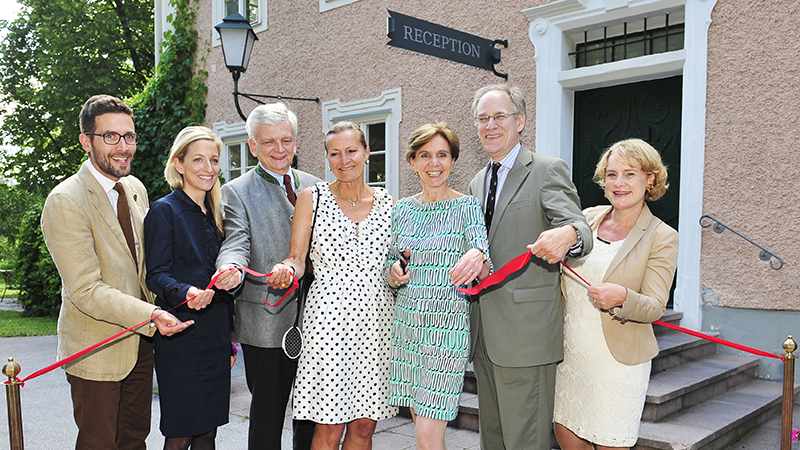
The home of Salzburg Global Seminar, Schloss Leopoldskron has also undergone transformation during the last 16 years. Multi-million-dollar renovations of the Meierhof, Schloss suites and state rooms and of the adjoining Schloss Park have made the rococo palace a revenue-enhancing boutique hotel, a prime wedding and conference venue and a sought-after location for film shoots to fashion shows. Revenue from these enterprise opportunities have improved the sustainability and enabled stewardship of this national historical monument.

Salyer left the organization in a position of strength and growth, aided particularly by the three-year-long $18 million Inspiring Leadership Campaign, he led, and which concluded in 2022. 

Salzburg Influence

While the Salzburg Global presidency is the capstone of his career, the organization also had an immense impact on the earlier decades of Salyer’s working life.

He credits his participation in that 1974 Salzburg Seminar session as having completely changed his career trajectory.

“I heard one speaker say, ‘We need non-profit entrepreneurs to invent new forms of media, to fill gaps in what commercial media supply.’ I carried that challenge home with me, and it led to a 25-year career in public television and radio.” 

It was in this Rockefeller role that Salyer came to Schloss Leopoldskron. “As one of only three Americans at the program, I realized how little most Americans understand about the wider world.”

After studying at Harvard’s Kennedy School of Government, Salyer worked at PBS flagship station WNET/Thirteen as an assistant to the president for 18 months. He left to attend NYU Law School, then returned to WNET in 1979 to become the youngest vice president in the history of the New York station. Over the next nine years, he led production of primetime series, children’s programming, video-based telecourses, and computer-assisted learning. He saw the potential for linking television productions with related book, video and computer interactivity to create powerful learning experiences. Among the projects he helped develop while at WNET/New York were Academy on Computers (1983), WNET Learning Lab (1984), Heritage Civilization and the Jews (1984), Behind the Scenes (1984), The Constitution That Delicate Balance (1984), Rock School (1986), The Brain (1986), The Mind (1988), and Shining Time Station (1988).

In 1988, Salyer accepted the presidency of American Public Radio, later renamed PRI, Public Radio International in the Twin Cities of Minnesota. Through the 1990s, he turned the fledgling radio network into a fierce competitor to the better known National Public Radio (NPR), championing programs developed by independent producers and local stations seeking national outlets for their content. For several years, PRI surpassed NPR in the number of affiliated stations and in the share of nationally produced program hours they scheduled, including a partnership that made BBC World Service programs available to American listeners on FM radio rather than shortwave. 

PRI also became an award-winning producer, co-producer and distributor of leading programs and podcasts, many of which remain Public Radio staples to this day, including Marketplace (1989-), The World (1996-), This American Life (1997-) and Studio 360 (2000-2018). Salyer was an industry leader in embracing new technologies for program distribution and audience engagement, and in creating novel business models to support diverse content. 

In 1999, he co-founded Public Interactive, LLC, initially a for-profit company providing web services to public radio and television stations, 15 of which were investors in the company as well as consumers of its tools and content. He also created a partnership with leading station producers to operate channels on both Sirius and XM, the two leading US commercial satellite radio services. He served as PI’s chairman until his departure from PRI in 2005 to head the then-named Salzburg Seminar. 

Continued Legacy

In his final months with Salzburg Global Seminar, Salyer led the Inspiring Leadership Campaign, seeking funds to increase the organization’s impact. The Campaign supported investments in groundbreaking programs, in renovating and enhancing Schloss Leopoldskron, in state-of-the-art technology to make our programs more inclusive, and in scholarships to empower a new generation of Fellows who will shape tomorrow’s world.

Salzburg Global celebrated its 75th Anniversary in 2022, including the opening of renovated guest and meeting rooms, improvements to adjacent gardens and park land used for outdoor programming, an arts festival featuring the work of Salzburg Fellows and honoring the legacy of theatre impresario Max Reinhardt, co-founder of the Salzburg Festival and pre-war owner of Schloss Leopoldskron. 

Stephen Salyer - What I Wish for Salzburg Global Seminar

Former Salzburg Global President and CEO reflects on his 17 years of leadership and his hopes for the future

By Stephen Salyer - 15 April, 2022

Dear Fellows and Friends,

Leading Salzburg Global Seminar for 17 years, I have witnessed many remarkable moments. But I have never been prouder of anything we’ve done than I was last month (February 2022), when we opened our doors to dozens of our Ukrainian Fellows and their families. I cannot say enough how much the messages of encouragement and support from across the Salzburg family meant to my colleagues and to me.

The millions of refugees fleeing the war in Ukraine recall our founding 75 years ago in the aftermath of World War II, during another massive refugee crisis. Alongside our first programs, Schloss Leopoldskron served as a “rest center” for student refugees. As our co-founder Dick Campbell wrote in 1948 to his co-founder Clemens Heller, himself an Austrian exile:

"When a displaced person comes to Leopoldskron, he is asked to forget that he is a DP…and he is accepted simply as the individual he is."

On the occasion of our 75th anniversary year, I feel keenly the continuing relevance of our mission and our work. Creating space for open dialogue, seeking understanding and sharing wisdom that motivates individual and collective action is as urgently needed today as ever before.

As a Salzburg Fellow myself, I know firsthand the power of our programs to shape lives and inspire rising leaders. As I prepare to step down as Salzburg Global’s president in July, my greatest wish is that we could offer that same transformative experience to every emerging leader across the world. For that reason, I am asking you to make a gift that makes that possible for an ever larger, more diverse group of Fellows.

The last 17 years have not been without devastating challenges – financial crises, global pandemic, horrible wars. But across these challenges caring, committed leadership by Salzburg Fellows spurs hope and committed action. The enduring strength of “The Seminar” and the Fellowship of those who have experienced it light the way through the darkest moments. By enabling current and future leaders to shape a better world, we together create a future we want for ourselves and those who follow.

There are numerous ways to support Salzburg Global's work going forward. You can recommend potential Fellows and partners; you can submit an impact story detailing outcomes of your Salzburg Global experience; you can share our publications, and you can donate time or resources if you’re able to do so.

Please don’t underestimate what you can offer!

Our Programs in 2022-2023

Through programs dedicated to Peace & Justice, Education, Culture, Health, and Finance & Governance, and inspired by 40,000 Salzburg Global Fellows in 180 countries, we co‐create ideas and impacts that shape a better world

By BENJAMIN GLAHN

Salzburg Global Seminar's 75th anniversary programs (2022-2023) were marked by a continuing commitment to fostering peace and championing democratic values in an era when democratic societies – and the fundamental belief in human rights, justice, and the rule of law – were facing existential threats. As the world grappled with escalating threats to democracy and peace, Salzburg Global, commemorating its 75th anniversary, embarked on two years of programs that highlighted the threats facing "Democracies on the Front Lines" and the critical role of citizens around the world working to protect and defend the principles of just and inclusive democratic societies.

The years 2022 and 2023 witnessed a global landscape fraught with polarization, conflict, political violence, and perilous uncertainties. Democracies, inherently fragile and imperfect, faced unprecedented tests from both internal strife and external aggression. The COVID-19 pandemic cast a long shadow over the pervasive challenges of geopolitical instability, structural injustice, a tenuous global economic recovery, and ongoing threats to inclusive and pluralist societies. This confluence of challenges exacerbated political and social tensions around the world, leading to episodes of political violence in some countries and military conflicts in others. From the conflict in Ukraine, to the humanitarian crisis in Ethiopia, to political violence in the United States, India, and Brazil, and to the October 7 Hamas attacks against Israel and the war in Gaza that followed, in 2022-2023 our world witnessed a tumultuous period unlike any in recent memory where the very essence of democratic societies and their commitment to justice and the rule of law was under siege.

In response to these challenges, and for our 75th anniversary, Salzburg Global’s programs sought to reaffirm our founding principles of fostering peace and reconciliation, promoting democratic pluralism, and upholding the rule of law.

At the heart of our programs lay a deep-seated belief in the transformative power of connecting citizens and open-minded leaders working on the front lines of a democratic resurgence, and the role that Salzburg Global can play in helping them overcome barriers and open a world of better possibilities.

Our Peace & Justice Programs prioritized engagement with civil society leaders, particularly those from regions grappling with conflict and upheaval, underscoring our commitment to amplifying marginalized voices and fostering dialogue across divides. Our Ukraine Civil Society Forum and Asia Peace Innovators Forum represent two examples of our efforts to support grassroots peacebuilding initiatives and bridge gaps in regional cooperation. As part of our anniversary celebrations, we also reaffirmed our commitment to advancing democratic values and the rule of law through our American Studies Program and our Cutler Fellows Program, which support the evolving dynamics of pluralist democratic societies and the rules-based international order, both of which are critical to peace and progress.

Our Education Programs, and the launch of our Center for Education Transformation in 2022, recognized the critical role that education systems play in creating the foundations for broader social progress on issues of equity, access, inclusion, and the skills needed for social and economic progress. Programs focusing on advances in civic and civil education, the role of education in combatting disinformation, gender equity in education systems, our Whole Child Development for Displaced Learners Network, and our Education Policy Makers Network, sought to empower students, teachers, schools, and communities with the tools they need to navigate an increasingly complex and polarized world. Through innovative approaches to education systems transformation, we aimed to support and sustain education transformation around the world and to develop new approaches to critical and emerging issues, including social, emotional, and creative skills, education in emergencies, regenerative education, language policy, education leadership and inclusive futures.

Our Culture Programs further underscored our belief in the power of the arts, innovation, and new models of leadership to inspire change, foster resilience, and shape a better world. Our programs for Artists at Risk and for the next generation of diverse leaders in public policy across Europe through our Public Policy New Voices Europe program, represent two ways in which we sought to address the challenges faced by underrepresented groups and emerging leaders by providing a platform for support, mentorship, networking, and skills-building.

Our Health Programs centered around gender equity, economic participation, and inclusive recovery from the COVID-19 pandemic. From programs exploring innovative interventions and policies to Connect Capital to Communities and Harness Financial Markets for Essential Social Infrastructure, to Sciana: The Health Leaders Network, our health programs aimed to promote systems leadership to build resilient health systems and support a new social contract for health and wellbeing that can prioritize the needs of marginalized and underserved communities.

Finally, our Finance & Governance Programs provided a global platform for senior leaders to explore the role of corporations, governments, and the financial services industry in promoting corporate responsibility, accountability and public trust in an era defined by economic uncertainty and geopolitical upheaval. Programs focusing on How Boards Navigate New Risks, Artificial Intelligence and the Future of Corporate Governance, Shaping the Future of Finance, and Global Turbulence and Financial Resilience, our finance and governance programs underscored our commitment to ensuring that corporations, financial systems, and public institutions work together to contribute to a more resilient and equitable global economy.

As we reflect on our programs through 2022-2023 in the pages below, one thing remains abundantly clear: just like our founding in 1947, we believe that Salzburg Global has an important role to play in shaping a better world through supporting pluralist values, protecting the rule of law, upholding democratic societies, and supporting peace and reconciliation efforts around the world. 

Health

Our Health programs promote a future that is generative of health, well-being, and happiness for all. We seek to equip leaders with networks and ideas for integrating health and well-being into all policies. ​We build trust-based, international, and cross-sector communities of health influencers with the deliberate aim of inspiring collective leadership in health. Focusing on structural and emerging health challenges, each program exchanges innovations, best practices, and strategies for system transformation.

BY MARY HELEN POMBO AND CHARLOTTE MÜER

Introduction to Our Health Programs

The Salzburg Global  health programs are a long-standing leading forum for exchanging strategies for the toughest challenges in health, equity, and wellbeing, now and in our common future. ​ 

Health equity and community health; systems leadership;  harnessing AI, digitalization and innovation; gender equity and care economy; health and the environment are among the pressing global transformationareas where we aim to facilitate progress.  

Collaborating with several forward-thinking foundations, Salzburg Global health programs built new networks and collaborations across an ever-expanding range of sectors, all of which are crucial to addressing the determinants of well-being. Health Fellows delved into finance, economy, social infrastructure, digitalization, gender equity and corporate governance, through in-person, off-site and online convenings. 

With Sciana: The Health Leaders Network, we developed a community of support for leaders in times of crisis, uncertainty and distrust in health surrounding the COVID-19 pandemic. Across all programs, Fellows brought droves of promising practices for uplifting health and wellbeing despite the complexity of determinants of health.  

Over the last two years, Fellow strategies, commentaries, and program insights appeared in over 25 communication and international media platforms. This was largely made possible by Fellows and media partners, such as Diplomatic Courier, Impact Alpha and Project Syndicate. These media partnerships reflected the urgent need for shifts in narratives and scaling solution-oriented insights across regions and sectors.

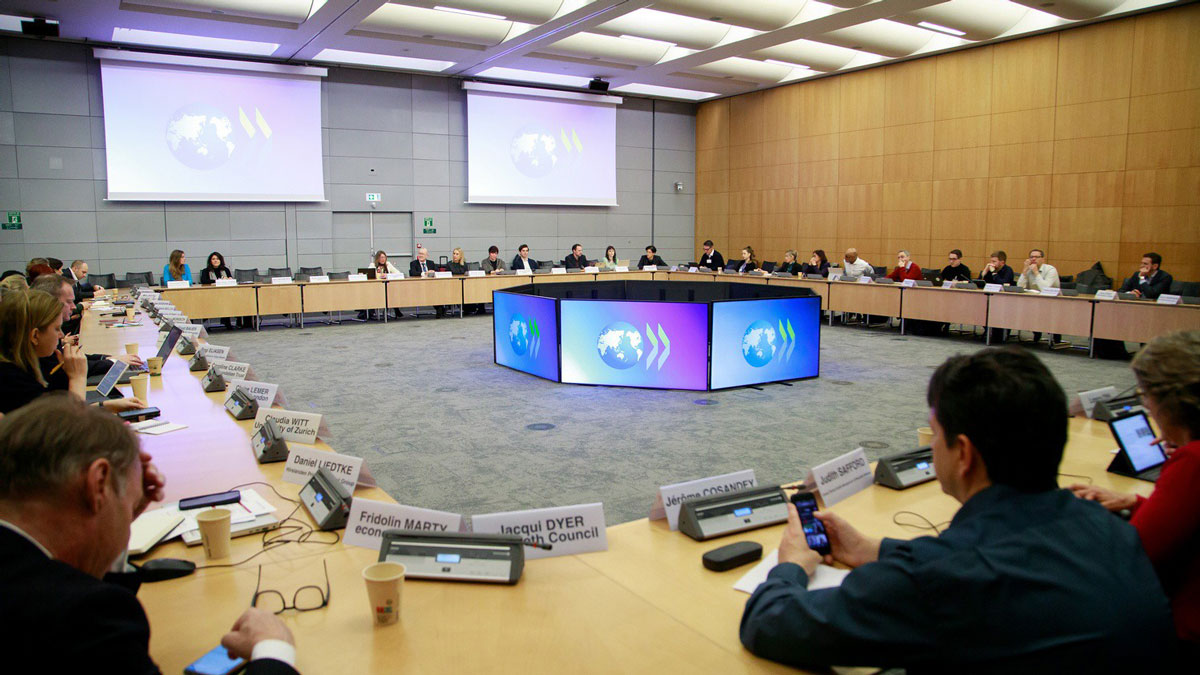
Over the last years, we have strengthened our engagement with international organizations for health, such as the WHO and OECD. Our program has counted regularly on Fellows and speakers from UN agencies and the OECD to offer high-level data on cross-country health policies to programs in Salzburg. With the Sciana Paris meeting in 2023, we introduced a new series of biennial meetings to facilitate global exchange and learning outside of Salzburg, which started with dialogues at the OECD and the French Ministry of Health. Furthermore, in celebration of the first-ever International UN Day of Care and Support on October 29, 2023, WHO-Europe organized a dedicated event launching the Salzburg Global Statement on the Value of Care alongside key interventions from the LSE and EIGE.

Looking ahead, we are entering a new stage of our work, deepening our focus to the “science-based” determinants of health and enhancing our collaboration with international organizations, media and philanthropic partners to amplify our programmatic impact. For Sciana, we are preparing the program’s second international meeting, taking place in Copenhagen with WHO-Europe and the Danish Ministry of Health. With new partnerships with the Jewish Healthcare Foundation and a renewed partnership with the Robert Wood Johnson Foundation, our programming in health equity is turning to the longstanding challenge of deeply embedded bias and gap in health science and services. 2024 started with a deep dive convening on health and wellbeing of women as they age in San Diego. The year culminated with a convening dedicated to global ideas and solutions to centering wellbeing and marginalized voices in building new ways of thinking and doing health science.

Together We Care - Together We Test


Sciana Fellow Daniel Liedtke explains the public-private partnership project he established to prevent the spread of COVID-19

BY DANIEL LIEDTKE - June 1, 2022

This article was written by Daniel Liedtke, who is a Salzburg Global Fellow and Sciana Fellow of Sciana: The Health Leaders Network.

In 2021 - another year dominated by COVID-19 – I was inspired by the initiatives of my Sciana colleagues working in the NHS. As a result, the Hirslanden Group, for which I’m CEO, ventured into another innovative public health and public-private partnership project.

In addition to the nationwide inpatient and intensive medical treatment of COVID patients and the establishment of the largest Swiss vaccination centres, we have developed “TOGETHER WE TEST” on behalf of the cantons and the federal government - a project for repeat PCR- testing with saliva in Switzerland. This initiative enabled us to add prevention as a further activity in the fight against COVID.

The idea took shape after a round of spicy Graubünden Salsiz, fresh bread, and a glass of wine at the civil defence centre of the canton of Graubünden. Martin Bühler, head of the cantonal command staff, gave us his assessment of the situation. He had just launched a second pilot project for monitoring the COVID-19 pandemic: repetitive testing in businesses and schools using saliva tests.

Besides being interested in the development of the measures, I was interested to see if the Hirslanden Group would also be able to contribute in this area. We were already treating COVID patients and running the biggest vaccination centres in some cantons. So repetitive testing seemed to me to be an ideal, further contribution to fighting the pandemic.

Scaling up the project

So I had an intensive exchange with Gieri Cathomas, the project leader for Graubünden, about the opportunities and risks of a national expansion of repetitive testing using PCR saliva tests. As a result, at the end of February 2021, we agreed on further developing the regional model into a Swiss-wide scalable concept, which we would offer nationwide under the name “TOGETHER WE TEST”.

It was clear from the beginning that the project had to focus on an IT platform/network, a so-called digital ecosystem, which would be able to orchestrate public and private network partners. It was also clear to us that this digital ecosystem had to meet the highest standards of data security, interfaces, and functionality and had to be realised in the shortest possible time.

It was important to us to put together a core team of proven experts and network partners for all tasks such as setting up logistics, laboratories, a call centre, transport services, material procurement, and quality assurance. In this way, we were and can offer repetitive PCR testing with saliva in a valid and reliable way to people in Switzerland via cantons in all schools and companies. This process was followed by agreements with important partners such as the Swiss Post, Swisscom, more than 20 public and private laboratories, and regional bicycle couriers.

At the same time, numerous questions were raised:

  • How would the pandemic develop?
  • Would a small team that had not worked together be up to the task?
  • Would we be able to implement the technical and regulatory requirements within a few weeks?

As unclear as the overall picture was at the beginning, I was overwhelmed by the development after just a short time. The speed with which all project elements took shape, thanks to the dynamism and commitment of this small, creative, purpose-driven team, was most impressive.

By the end of March 2021, we had been authorised by the first cantons to undertake our work. It quickly became clear that TOGETHER WE TEST would be an extremely important basis for the nationwide management and monitoring of the pandemic in autumn and winter.

Thus, by the end of February 2022, around nine million tests had been delivered in our 12 contract cantons. With a positivity rate of up to 16%, a correspondingly large number of transmission chains had been interrupted.

Lessons learned

For me, TOGETHER WE TEST was a great success for two reasons, in addition to its important contribution to pandemic control. Firstly, we implemented a digital ecosystem that served as a common basis for companies, schools, institutions, laboratories, various actors from the medical sector, and the Federal Office of Public Health. This process was achieved in a very short time, thanks to the pragmatism and cooperation required in a pandemic, hard work, and, of course, a certain willingness to take financial risks on our part.

Secondly, we could hardly have made a better decision than to engage a group of experts detached from the regular business structure. The dynamism and results-orientation of this team convinced me to approach future innovation projects of the Hirslanden Group exactly according to this model: give committed professionals the necessary freedom and let them be purpose-driven to create.

As a private health care provider, I am very pleased that we have been able to contribute to Swiss society and initiate a public-private initiative with national relevance.


Addressing Intersectionality of Gender with Race, Ability and Other Factors

What strategies and policies have proven effective at addressing intersectionality of gender with race/ethnicity, ability, age and other factors as well as the experience of those with diverse gender identities? What are the greatest challenges to these strategies and tools; and how can they be mitigated?

BY TAOFEEKAT ADIGUN - Nov 07, 2022

This article was written by Salzburg Global Fellow Taofeekat Adigun, who attended the Salzburg Global program on “Health and Economic Well-being: Gender Equity in Post-Pandemic Rebuilding” in October 2022.

Centering intersection gender lens and mainstreaming have become a box ticking exercise and perfunctory extrapolation of intersectional segments. Sometimes, we consider intersectionality as linear with single and distinct characteristics. It's therefore more important than ever that global diverse identities with lived experiences are heard and understood in conversations about intersectionality, in order to design a better and safer world that truly, not only leaves no one behind, but brings and uplifts people alongside. That was the message and what was achieved at the Problem-Solving Lab: Strategies, and Mitigation policies effective at addressing intersectionality of gender with race/ethnicity, ability, age and other factors, hosted at the Salzburg Global program on "Health and Economic Well-being: Gender Equity in Post-Pandemic Rebuilding".

"The solution lies in re-centering the needs of diverse group"

"Intersectionality has become a single buzzword form. While it has proven to be a useful tool for highlighting multiple forms of discrimination and how they intersect, we need to give a broader picture on the nuances of the lived experiences of intersectional segments. Be it race, gender, and ethnicity. The solution lies in re-centering the needs of diverse group” said Jocelyn Frye, president of the National Partnership for Women & Families with an opening statement at the problem-solving lab.

Furthermore, some of the development principles included, asking important and challenging questions such as how centralized or diverse should intersection be? So much contradiction is embedded in the themed question of intersection depending on the lens being used. Krishanti Dharmaraj, Executive Director, Center for Women's Global Leadership, New Brunswick, NJ, USA highlighted the ideology, assumption bias and institutionalized polarizations for intersection. "Even the most seemingly straightforward ideas and words can contain quite diverse and even incompatible assumptions and expectations, depending on the people ‘in the room'."

True to form, considering the existing framework that we have - from our culture, our politics, policy, law and interaction - do not automatically lead people to being conversant and literate in intersectionality or want to make changes. Understanding the need to shift repressive power dynamics can strengthen the rights and influence of those most affected by inequities, violence, oppression and injustice across the globe. We need to reimagine not just what intersection should look like but what it can potentially be as a lens for seeing the world of oppression and a tool for eradicating it.

"People with problems are not problem people"

Most of the time, intersectionality co-exists and overlaps with marginalization. People with problems are not problem people. Seeing people as rights holders (as opposed to beneficiaries) in shared spaces, communities and institutions has the potential to uphold gender and intersectional equality. This approach demands not just seeing them as "marginalized" communities but equal and deserving communities.

"While we may all be weathering the same storm, we are in drastically different boats with more cushioning effect than others"

Structural inequality is embedded in our society, and it requires bold, concerted action to eliminate it. "There are many many different kinds of intersectional exclusion — not just black women, but other women of color. Not just people of color, but immigrants, indigenous people and ethnic minority group,” says Professor Jarpa Dawuni, Associate Professor, Howard University, Washington, DC, USA. While we may all be weathering the same storm, we are in drastically different boats with more cushioning effects than others. For example, within gender and Intersection, an Asian woman will likely have a very different experience than a black African woman living in the United States.

What needs to happen to re-envision what we mean by "intersectionality"?

Council of Women Leaders Secretary General Laura Liswood’s words set the tone during the program, as she talked about earning "two points for identifying the problem, eight for finding a solution”, and moving beyond the illusion of “building back better: strategies to re-envision intersectionality.”

Defining Intersectionality and Creating Awareness

Our conception of “intersection” and what counts must change, to include the centrality of multiple forms of intersecting inequality. The awareness of what we bring to the conversations and groups we find ourselves in is always worthwhile, helping us identity and talk through sometimes subtle yet substantial differences in how we understand the problems and worlds around us.

The Simultaneousity Strategies

The "Simultaneousity" as coined by Jarpa Dawuni during the problem-solving lab simply means doing different things at the same time, directing struggle and support, and not wait until we achieve one victory before commencing the journey of another struggle. Demanding healthy and meaningful conversations from ourselves and the spaces we’re in is one vital step in being part of an equitable, just and sustainable present and future for all.

Valuing voices

Valuing voice means lifting up, promoting, and supporting the leadership and storytelling of those most affected by policies and practices. Lebohang Liepollo Pheko, Senior Research Fellow, Trade Collective, Johannesburg, South Africa emphasized that we are in a unique moment, "where we need to value voices, promote and support leadership of diverse voices." This applies to many situations where underrepresented or historically excluded people are asked to participate in an activity or contribute to a project.

Too often they are still included only for tokenized participation, conferred with "the first black or women of color label" and without much context to give their perspective that’s supposed to represent the "intersection voice." "You cannot be at the forefront of a cause where you don’t identify with its struggles and possess lived experiences." Respect the voice of those most affected by issues by centering their voices, respecting their goals for their communities, and stepping aside and allowing them to serve as spokespeople for their own causes.

Data Collection for Evaluation and Impact

We need data, and storytelling narratives for evaluation "Where we can hear from people telling their own stories of intersectionality and ways they have felt accepted or rejected based on their unique experience and factoring all this in,” said Teresa Younger, President and CEO, Ms. Foundation for Women, Brooklyn, United States with inspiring and final words. “We need to embrace and welcome these differences to continue building balance that can overcome the times we are living in especially when looking at intersectionality. For example, the experiences of racism and sexism intersect and create unique experiences for black women and women of color, leading to varied compounded, systemic barriers.

“Contextualizing gender, intersectionality and human rights in a development paradigm promotes a balance for multi-strengthened synergy. We are all in the fight together and should develop narratives that push intersection in a way that perhaps before we were not able to push and ensure everyone is brought along. Building community and encouraging alliances, coalitions, critical reflection, collaboration across sectors, and looking out for each other will help us solve problems. That’s why this conversation is happening at the right time and we need to have more conversations like it.”

Taofeekat Adigun is an Impact Fellow at Salzburg Global and works with the Health team. She is a public health and development specialist working at the intersection of policy, advocacy and research. Before joining Salzburg Global, she worked with several public health and social development organisations including the Simivac Foundation, the Ministry of Health, and Global Health Alliance.

Sharing Innovations and Solutions to Advance Gender Equity in a Post Pandemic World

Salzburg Global Fellow Atiya Anis writes about her experience at Salzburg Global's latest Health and Health Care Innovation session

BY ATIYA ANIS - Nov 07, 2022


This article was written by Salzburg Global Fellow Atiya Anis, who attended the Salzburg Global program on “Health and Economic Well-being: Gender Equity in Post-Pandemic Rebuilding” in October 2022.

While the world is emerging from the impacts of the COVID-19 pandemic, new emerging threats like the deepening climate crisis, and geopolitical conflicts are further threatening  to overturn the progress made so far. The global indices (Global Gender Gap index) and gender empowerment measures paint an equally dismal picture, stating it will take another 132 years to bridge the global gender gap. Falling women’s participation in labor force is a major contributor to this, exacerbated by the aftermath of the pandemic, which can be attributed to long-standing structural barriers, including childcare, occupational segregations, infrastructure, safety and mobility, social identities, and violence against women and girls.

With the goal to deliberate, discuss and find innovative solutions to the pressing issue of gender equity in the post-pandemic rebuilding, leaders and changemakers from over 26 countries met at Salzburg Global Seminar, as part of the "Health and Economic Well-being: Gender Equity in Post-Pandemic Rebuilding" program, from October 15 to 19, 2022. This program brought together experts and leaders working around the issue of gender to inspire new thinking and action.

In October 2022, I got the opportunity to be a part of this Salzburg Global program. It has been a proud and inspirational moment for me to engage with experts from all over the world bringing in their perspectives and learnings and co-create innovative solutions to address long standing challenges about ways in which gender continues to impact outcomes. This program tried to establish the strong linkage that health has with wellbeing and prosperity, and how it is inevitable to creating an equal and equitable world. Gender transformative structures, leadership and policies have the potential to enhance the agency of women and girls and bring about sustainable change and transformation.

The Salzburg Global program was inspiring not only in terms of the thematic focus but the design that helped leverage the discussion, enabling effective interaction and tangible outcomes. The format was democratic and structured, and gave a voice to each participant and region.

Modules included open conversation, knowledge cafes and working groups, lending the opportunity to all Fellows for inclusive and focused reflections, achieving better learning outcomes. These discussions revolved around themes like reimagining the future of work, lessons learned from leadership, innovation in work and social supports, centering women and marginalized groups in decision making and the pandemic recovery. Other topics included the care economy mission, building a gender responsive government, creative solutions to gender-based violence, and political playbooks for sustainable progress. Salzburg Global also offered media and communication opportunities to Fellows interested in extending and publishing their work, and working groups were organized to define a proposal and build an agenda for collaboration.

Salzburg Global Seminar helped connecting an international community of outstanding leaders and brought together inspiration and learnings from across the globe, creating avenues for coalition-building under the vast umbrella that is the Salzburg Global Fellows network. While Fellows went back to their respective workplaces and countries after the end of the program, they stayed connected by a strong sense of commitment to work together to ensure that economic recovery and strategies are gender responsive, integrated and resilient.

As I headed back home, I was astounded by the immense learning and exposure Salzburg Global brought me in the span of five days. And the connections don’t stop there. Fellows have a lifelong access to collaborate, engage and share ideas and best practices. I am grateful for the opportunity to be part of the Fellowship that nourishes a culture of learning, sharing and cooperation. If you are in search for high-stakes, challenging, and meaningful work, and want to become a transformational leader, there cannot be a better platform than Salzburg Global Seminar.

Atiya Anis is an advocacy and communications specialist, working in the social impact sector in India for the past decade around themes of health, sanitation, gender and environment.


Fresh Insights and Collaboration at the OECD

Louise Baker-Schuster, chief foundation partners' officer, reflects on a Sciana network meeting in Paris

BY LOUISE BAKER-SCHUSTER - Mar 21, 2023

This article was written by Louise Baker-Schuster, the chief foundation partners' officer for Sciana: The Health Leaders Network.

The Eiffel Tower, the Champs Elysee, maybe even a boat trip down the Seine? For Sciana Fellows and their whistle-stop tour of Paris in March 2023, the packed itinerary looked just a little different.

An afternoon at the French Ministry for Health and Prevention (yes, and Prevention), a reception hosted by Giancarlo Kessler, the Swiss Ambassador to the OECD at UNESCO, and a meeting with the Health Division at the OECD ensured the 45 participants from across all five cohorts were given food for thought for their journeys home.

Not even a national train strike was going to stop Sciana from finally holding their international meeting in Paris. The long overdue event, which was originally planned for 2020 and had to be postponed for reasons we are all very much aware of, was the brainchild of Ilona Kickbusch, Sciana Chair and renowned expert on global and public health issues.

Supported by Mary Helen Pombo and Charlotte Müer, Sciana Programme Director and Manager respectively, the Network gave its fellows the opportunity to connect outside of the residential meetings in Salzburg and focus on current hot topics in each of the participating health systems in the UK, Switzerland, and Germany: digital transformation, resilient health systems, workforce shortages, and wellbeing.

Discussing and debating with their colleagues in Paris enabled the Fellows to gain insights and inspiration from outside their daily professional environment and political constraints. It soon became clear that the representatives from all countries present were experiencing the same challenges in their respective health systems. It also became very clear, very quickly, that the answers to those challenges are dependent on the national context, making it impossible to find that one perfect solution.

Over 24 hours, burning questions were raised and discussed with the international hosts. How can we use the tools already available to ensure we respond to future crises better? When responding to a future pandemic, what knowledge besides science and economics should influence policy? How can you measure wellbeing and integrate this information into effective policy decisions? How can we support growth in our countries which is also of good quality? How can we address the needs of our health workforces and ensure flexibility to meet current and future care needs?

The Fellows appreciated this exploration of international perspectives and the bilateral exchanges.

“When we're all together, we neutralise each other’s potential conflicts of interest, allowing us to discuss as ‘critical friends’. From my perspective, this is the most strategically useful 24 hours I've spent this year,” said Tim Taylor, Cohort 4.

Facilitating out-of-the-box thinking and providing time and space to reflect strategically is just one of the Network’s strengths, something that was very much present at this international meeting. In just over a day, the Fellows, the foundations, and our hosts experienced debate, connections, exchanges, and inspiration, confirming once again the need for international collaboration to tackle national issues head-on.

View photos from the Sciana OECD Network Meeting


Community at the Forefront: Building Trust for Transformational Community Investments

Ankita Bose and Kelley Buhles reflect on the discussions at Salzburg Global's latest Health and Health Care Innovations session

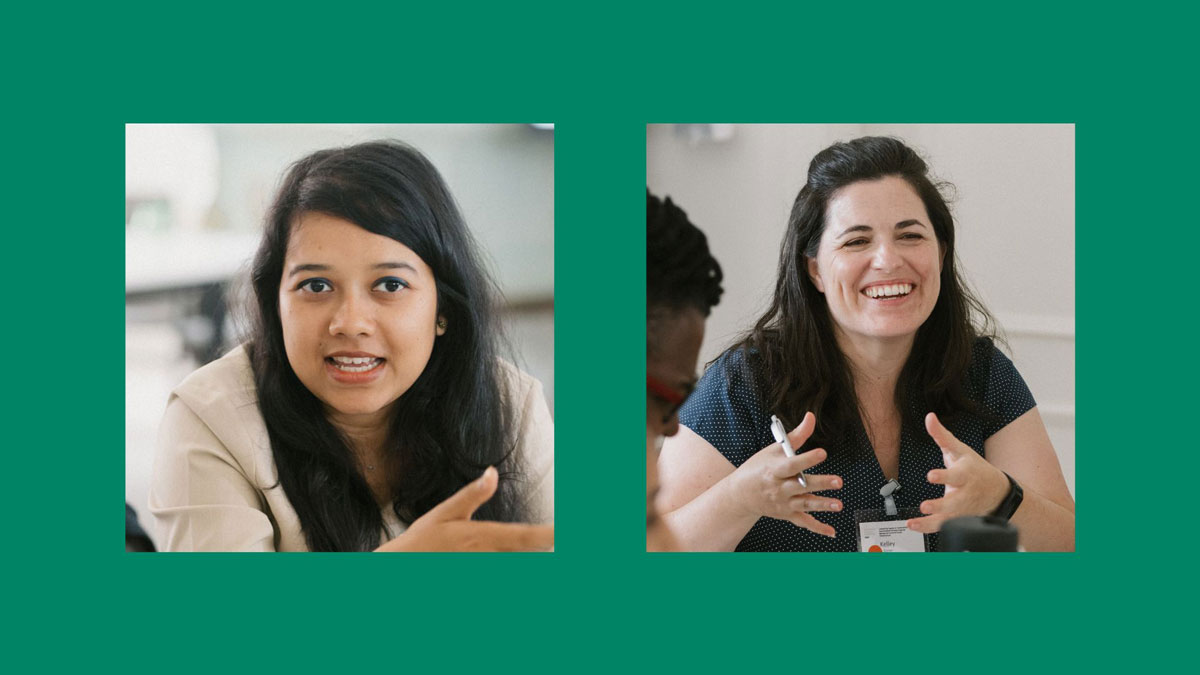
BY ANKITA BOSE AND KELLEY BUHLES - Sep 14, 2023


A relentless challenge remains when investing in community and essential social infrastructure – and that’s the gap between the goals of funders and the needs of communities whom the investments initiatives should most serve.

In June 2023, more than 45 leaders contemplated this challenge at the Salzburg Global program Connecting Capital to Communities: How Investors Harness Financial Markets for Essential Social Infrastructure. Participants explored ways communities around the world are gaining more control over capital, and investors are better integrating the voices of community into regenerative investment decisions. During this group discussion, some of the more challenging nuances of community-led processes were discussed. Fellows named common concerns held about community-led processes, as well as shared examples of practices being used to mitigate those concerns.

Community knows best - or not?

The belief that communities always know what is best for them was challenged during the discussion. As an example, Tee Thomas, former State Water Finance Director at Quantified Ventures, recounted an experience with a US Midwestern community that had a cluster of cancer occurrences in young people that are highly associated with exposure to agricultural chemicals via water, air, and food. While at the funeral of a 21-year-old who died from this aggressive cancer, she noted that many people in attendance were wearing hats or clothing of the local fertilizer distributor. She felt that the community was unable or unwilling to see the impact of the industrial agriculture system on the health of their families. Even if they could be convinced that exposure to these dangerous chemicals was killing their children, it would require them to put their livelihood at risk by having to seek alternative employment in an extremely economically depressed area.

Another concern raised by the group was that sometimes communities don’t have the expertise they need. As Abrar Chaudhury, Research Fellow and Climate Expert at the University of Oxford, shared. In his native Pakistan, traditional knowledge of suitability for growing a particular crop (like cotton) in a region is challenged due to climate change. This burdens the community with a lot of technical decisions, sometimes leading to suboptimal outcomes.

The needs and interests of groups within communities often vary– sometimes they directly conflict. During the conversation, distinct groups within communities came to the forefront. An example of rural communities in South Asian countries like Bangladesh and India came up, which portray bifurcated structures between groups who hold power and those who do not. Distinctions can be based on landholding, monetary resources, gender, historical factors like caste hierarchy, and other social dynamics. What might appear as a homogeneous community to an outsider actually comprises these distinct sets of people who have their own expectations and varying authority within the community.

To be clear, the conversation wasn't advocating for eliminating community engagement, there was general consensus that community input is critical, and that top-down approaches are often more likely to fail and/or cause more damage. However, by naming some of the challenges and questions that come with community-led processes, the group was able to share practices that can help those processes be more successful.

For example, in Tee Thomas’s story, she felt that external interventions play a critical role in promoting a common understanding of community needs and supporting community mobilization. Without these capacities, the lack of social cohesion can be exploited by companies harboring extractive practices.

External interventions can be enabling

Building a solid foundation of communication, awareness and collaboration within a community is essential for investment partnership that truly meets the long-term, sustainable needs of those most marginalized. Monica Altamirano, Director of Climate Impact at WaterEquity cautioned that “external experts shouldn’t tell the community what to do; but instead, we should have expert facilitators that facilitate a participatory system analysis process. These need to work with community members to clear [up] any misconceptions, and by bringing external expertise into these processes at the right time and way support communities in zooming out from the symptoms they experience, connect the dots and gain insights about the mechanisms and root causes for the problems they face. It is from this shared understanding that they can then themselves propose effective plans and strategies”.

In working with marginalized rural communities in India, we would aim for “enabling external interventions” for the successful implementation of community empowerment programs. A predominant focus was getting the voices of the community involved right from the project building stage, with inputs from the community in program design. Once the project rolls out, feedback loops are a vital component - going back to the community and getting feedback at every stage helps in modifying the program as per the evolving needs of the community.

A similar example in the African context came up during the panel discussion. Chanda Banda, Government Relations and Policy Manager at the One Acre Fund, shared that their work on carbon agro-forestry with communities in Zambia depends upon building a strong channel of communication with all stakeholders involved, including the community, traditional leadership, and government officials. For example, spending the initial two years on community conversations before starting the project helps in building the trust of communities and avoid skepticism about the project. Maintaining a high level of engagement throughout is crucial to ensure that the project is informed by community voices, thus facilitating capital absorption within the communities.

Creating feedback loops as a theme also emerged among the social enterprises that shared about their community engagement practices. Michaela Kauer, Director of the Brussels Liaison Office for the City of Vienna who promotes Vienna’s uniquely successful model of social and affordable housing, pointed out: “It is important to keep revisiting the decisions made to ensure true empowerment and transparency, keeping in mind human and women rights, a long-term perspective and a high quality of living for all citizens.”

An enabling external intervention, when it respects and engages a community’s knowledge, wisdom, and expertise, can work with the community to highlight factors of influence that can lead to greater communal freedoms. Bi-directional knowledge flows help to “grow expertise within the community by bringing together multiple forms of non-financial capital like social or relational capital, as opposed to “experts” coming in and telling the community what they should do.” as Cathy-Mae Karelse, Systems Change Lead at Resilience Capital Ventures highlighted.

External experts also should appreciate the multiple ecosystems that exist within a community. It is the interaction between both external and internal players that helps in collaborative decision-making towards greater capital absorption where it is needed most.

Trust-based and participatory process

Building long-term relationships, creating feedback loops, capacity building, and collaborative decision making are practices that we also see in the growing movements of Trust-based Philanthropy and participatory methodologies, such as Participatory Action Research, Participatory Grantmaking, Participatory Budgeting, etc.

They point to a trend towards re-thinking some of the assumptions that underpin our typical investment processes, such as hierarchical power structures, qualitative measurements, and profit driven decision making. With trust-based and participatory processes, the process is the point. The empowerment of communities is one of the returns on investment.

Community-led doesn’t need to mean that communities need to be the experts or even have a clear understanding of their situation from the start - community-led means that communities have a voice, as well as decision-making authority over decisions that affect their livelihoods and wellbeing.

Ultimately, community needs are best understood by members of the community themselves. External experts need to keep an open mind to appreciate the multiple ecosystems that exist within a community. Interaction between external and internal players can help in collaborative decision-making that results in greater capital absorption capacity by communities.

Ankita Bose has worked extensively in social impact for more than 8 years. She is currently pursuing her Masters in Public Policy at the Lee Kuan Yew School of National University of Singapore. Prior to this, Ankita worked to provide access to water for marginalized communities in inherently dry areas in India. She attended the UNLEASH global lab 2022 to curate innovative solutions for addressing sustainability challenges related to water and sanitation. Earlier in her career, Ankita was a documenter for UNICEF project and worked towards the elimination of communicable diseases in India. Ankita has a holistic outlook, having engaged directly with communities at the grassroots level and in strategy as part of a corporate donor team. She holds a bachelor's degree in Economics from St. Xavier's College, India, and a Master's in Social Work from the Tata Institute of Social Sciences, India.

Kelley Buhles is a consultant working at the intersection of philanthropy and community governance. She is passionate about liberating charitable money to provide non-extractive capital to entrepreneurs and movements, and to create economic models that build and retain power and wealth in communities. She has over 12 years of experience with participatory grantmaking, has designed and led over 20 participatory processes, and is a founder of the Participatory Grantmaking Community. Kelley also has 15+ years of expertise working with integrated capital, Donor Advised Funds, and philanthropy. She is a fellow of the Just Economy Institute and sat on the Transformative 25 2023 review committee. Previously, she was a Senior Director at RSF Social Finance, where she co-created the integrated capital approach to financing, ran the philanthropic programs, facilitated community pricing conversations, and supported organizational culture. She volunteered with Showing Up for Racial Justice and enjoys sketch comedy writing. Kelley holds a B.A. in anthropology from San Diego State University.

A World United for Care: A Salzburg Call to Transform Care and Caregiving

Salzburg Global Fellows call for policy change to promote fairness, sustainability and resilience of care systems

 October 29, 2023


Every individual will need care at some point in their lives; every individual will give care at some point in their lives. Care for self and others is fundamental to building and maintaining social relations and its value to individuals, families and societies is truly incalculable. Care is also a productive activity, deserving of appropriate compensation, and a crucial resource for human and economic development.

From October 17 to 22, 2022, Salzburg Global Seminar, with support from the Robert Wood Johnson Foundation, held Health and Economic Well-being: Gender Equity in Post-Pandemic Rebuilding.

For four days, the program brought together 60 participants from around the world, representing different sectors that can influence gender equity at all levels, from citizens, to communities, civil society organizations to policymakers.

Together they explored what it would look like to place the health and economic well-being of women at the center of COVID-19 recovery, with a focus on economic participation, opportunity and inclusion, as well as working conditions and culture.

Following this session, program participants drafted a Salzburg Statement on the Value of Care and Caregiving. Led by Stefania Ilinca, Technical advisor for long-term care at WHO Europe, and Hania Sholkamy, Co-chair of the Care Work Taskforce of the National Council for Women of Egypt. They set out priorities and recommendations to appropriately recognize, value and support care and caregivers and promote fairness, sustainability and resilience of care systems. Through this statement, Salzburg Global Fellows are calling for policies and actions that will help achieve that goal.

"In the face of global ageing and persistent social inequities, the Salzburg Global Statement on the Value of Care and Caregiving is a paramount call to action. The role of care and caregiving has long been underrecognized, but it is truly the foundation upon which societies are built. We’re proud of this work and look forward to supporting this statement to be more than an expression of intent, but a commitment to shape a more compassionate and equitable future for all”, stated Mary Helen Pombo, Salzburg Global’s Program Director for Health.

Download the Salzburg Statement as a PDF

Read the full Salzburg Statement below:

To further the reach and impact of the Statement, we encourage you to share it with your network. If you or your organization would like to collaborate to amplify this Statement and its mission, send an email to Mary Helen Pombo, Program Director for health at Salzburg Global at mpombo@salzburgglobal.org.

Current endorsements:

  • Atyia Anis, Senior Manager, Communications, Institute for What Works to Advance Gender Equality ( IWWAGE), New Delhi, India
  • Carla Barros, Well-being Program Manager, EDP, Lisbon, Portugal
  • Poonam Barua, Founder and Chairman, Forum for Women in Leadership, and Director, PAMASIA Global, New Delhi, India
  • Holly Birkett, Director of the Work Inclusivity Research Centre, University of Birmingham, Birmingham, United Kingdom
  • Bettina Borisch,  Professor and Executive Director, World Federation of Public Health Associations, Geneva, Switzerland
  • Melissa Boteach, Vice President, Income Security and Child Care/Early Learning, National Women's Law Center, Washington, DC, USA
  • Luciana Caseiro,  HR Specialist, Diversity & Inclusion, EDP, Lisbon, Portugal
  • Leesa Cheeser, Non-executive Director and consultant, Blue Sky Consulting Australia Pty Ltd, Adelaide SA, Australia
  • Sue Egersdorff, Charity Founder, Ready Generations, United Kingdom
  • Julia Fäldt Wahengo, Advocate for gender equality
  • Jocelyn Frye, National Partnership for Women & Families, Washington DC, United States
  • Stefania Ilinca, Technical advisor for long-term care, WHO Europe, Copenhagen, Denmark
  • International Foundation for Integrated Care (IFIC) – organizational endorsement
  • Sonia Malaspina, HR Director Italy & Greece, Danone, Milan, Italy
  • Fatima Masse, Director, Economic and Social Analysis, Mexico City, Mexico
  • Seroshi Nandasiri, Founder & Chairperson, Women's International Foundation, Sri Lanka
  • Mary Helen Pombo, Program Director, Health, Salzburg Global Seminar, Austria
  • Tammy Pustilnick, Co-founder of Descentralizadas, Concepción, Chile
  • Esteban Daniel Szmulewicz Ramirez, PhD Candidate, Leiden Law School, Law Professor at Universidad Católica del Norte, Netherlands/Chile
  • Giovanna Rosato, Head of Legal & Compliance Italy & Greece, Danone, Milan, Italy
  • Hania Sholkamy, Co-chair of the Care Work Taskforce of the National Council for Women of Egypt, Cairo, Egypt
  • Teresa C. Younger, President and CEO, Ms. Foundation for Women, Brooklyn, United States

Salzburg Global Center for Education Transformation

Education leaders, policymakers, and funders in every context are making decisions about how to transform learning and education. Our Education Programs, which fall under the Salzburg Global Center for Education Transformation, focus on influencing systems transformation efforts by developing new approaches to critical and emerging issues and providing unparalleled opportunities to step back, ask big questions, and think differently about what to aim for and how to get there.

BY DOMINIC REGESTER AND PAUL MIHAILIDIS

Introduction to Our Education Programs

In 2022, the Salzburg Global Center for Education Transformation was launched. We wanted to support education system transformation in specific education priority areas where we had a track record and strong partnerships, but more critically, Fellows doing important work. The Center was made possible because of support from the Inspiring Leadership campaign. It was conceived and designed as a new approach to Salzburg Global’s programmatic work, which would enable us to go beyond strategic convening and support emerging thinking around system transformation.   

Our work in education focuses on six key areas: social, emotional, and creative skills; education in emergencies; regenerative education; language policy; education leadership; and inclusive futures. The programs that we organize and our wider work through the Center are designed to advance collective understanding of these different, interconnected priority areas. 

Broadly speaking, the work falls into four categories: in-person programs (our core activity), supporting online convenings and communities of practice, developing partnerships to disseminate ideas from both virtual and physical programs, and additional activities that the Center makes possible, such as the education writing residencies program and our annual lecture.  

Between April 2022 (when we started hosting in person programs again after COVID-19) and June 2024 we have hosted 11 in-person education programs in Salzburg, aligned with our new education strategy.  

In April 2023, the Transforming Education Co-Action Summit program drew on previous work in social and emotional learning, education leadership, and education for inclusive futures. We convened an intergenerational group of education leaders to produce resources that could support intergenerational thinking in service of education transformation. The guide on intergenerational convening has been accessed more than 1000 times and presented and discussed at events in New York, Doha, Paris, Berlin and Abu Dhabi. The ideas for this program were first discussed at the Education Futures program in 2022. A group of partners who were involved in that program all pooled resources to make the Co-action Summit possible. We used some of the education center’s ideation funds, designed to support small groups of Fellows to return to Salzburg to move an idea from an earlier program forward, to help with the cost of the program.  

Online Engagement 

From the start of the pandemic until today, we have designed and facilitated regular online meetings on topics such as social and emotional learning, greening school environments, education policy, holistic child development for displaced learners, collaborative leadership, and intergenerational collaboration. In some cases, these programs are an extension of in-person programs, in other cases they have helped build momentum around a topic for an in-person program. We have also built a strong partnership with the annual Learning Planet Festival, which provides an opportunity to showcase the work of Fellows that has come out of our programs. 

Here is a full list of outputs from our education work. Highlights have included a podcast series on Transforming Education, a guide on intergenerational convening, a series of three reports on the future of leadership in education, advocacy statements, policy briefs for Ministers of Education, essay collections, and articles from Fellows published on Salzburg Global’s website, and on the Transforming Education channel we co-host with long-time partner Diplomatic Courier. Program Director Dominic Regester has also written for Diplomatic Courier about the need for education transformation.

The Four Challenges Facing Ukraine's Education System

Ahead of the Education Policymakers Network's first in-person meeting, Salzburg Global Fellow Oksana Savytska reflected on the impact of Russia’s invasion of Ukraine

BY MAKO MUZENDA - Apr 29, 2022

Education can be a silent victim of war and conflict. Amid the need to protect and defend national sovereignty, the education system is faced with its own challenges. Educators and students alike must contend with the destruction of infrastructure, disruption of the school calendar, and the psychological trauma of war. How does a country’s education system navigate through war? And when it ends, what is the best way to rebuild it?

For Ukraine’s Ministry of Education and Science, these are no longer abstract questions but a harsh reality. Only two months into Russia’s invasion of Ukraine, the country’s education system had already suffered from military attacks, the immeasurable loss of life, and the approximate 5.2 million people who fled as refugees.

Oksana Savytska is a member of Salzburg Global Seminar’s Education Policymakers Network and a state expert with Ukraine’s Ministry of Education and Science, working specifically on pre-school education and psychological support. For her, Ukraine’s education system faces four major challenges: the destruction of educational infrastructure; the complete loss of or limited access to the Internet; the retention and payment of teachers in areas where teaching has stopped completely, and ensuring that students can graduate to the next grade of their curriculum.

As Savytska explains: “The system of preschool education requires radical restructuring. These children are deprived of the possibility of full development. Conservative solutions should be replaced by flexible and adaptive options that do not require significant resource costs. After all, we have no right to lose this important period of sensory development of the child if we want to have a well-considered future generation.”

The immediate focus was largely on addressing urgent concerns, with more than 900 educational facilities being destroyed or damaged and an estimated three million children requiring humanitarian assistance. But even then, the Ministry was looking towards post-war reconstruction and transformation of education in Ukraine. A significant area is teacher training.

“The emphasis in this training will shift to the methodical readiness of the teacher to accompany the child, psychological competence to maintain contact with the child, and motivate them to study,” says Savytska. There’s also the integration of out-of-school education into the classroom. This move will not only improve the use of physical infrastructure, it will also encourage comprehensive learning and development for children and adolescents.

Key to the comprehensive development of these students is social and emotional learning. In addition to addressing current disruptions to teaching, Ukraine’s education sector will also be part of a larger national post-war healing, teaching students the emotional frameworks and tools necessary to navigate trauma.

“There are children who have received significant psychological trauma. There should be a system of training and support of educators to preserve and maintain their psychological well-being, as well as to support children,” Savytska explains. Although Savytska couldn’t attend the first in-person program, she will continue to contribute to and benefit from its network and bring those inputs to her work in the interventions for Ukrainian children and teachers.

This article featured in Issue 1 of the Breadth of Skills: Education Transformation program newsletter. Download and read the full issue.

Hot Topic: “What Is the Most Pressing Issue for the Future of Education?”

Salzburg Global Fellows share their views during Education Futures: Shaping A New Education Story

BY MAKO MUZENDA - May 05, 2022

“Since I work in the area of climate, I would say the most pressing issue is the conjunction of three crises: social, economic and environmental crises. I think that the climate crisis is going to shape our world if we don’t just act already, and that it’s going to have an impact on education. I would say those three crises."

Lucia Vazquez

CEO, Educación y sostenibilidad, Spain

“The most pressing issue for the future of education is the future of independent thought. We are so reliable now on technology and digitalization that we completely forgot independent thinking. Another big threat to the future of education is the current state of mind of the entire world. Instead of us coming together, 
we’re finding more and more ways to divide ourselves. This is basically what we’re teaching our children.”

Aida Ridanovic

Director of Communications and External Affairs, Qatar Foundation International, Croatia

“I think the most pressing issue is that we need to redefine what foundational learning is. Currently it’s so focused on basic numeracy and literacy, and education cannot stay relevant if it stays like that. It needs to transcend that, it needs to include skills like Social and Emotional Learning, psycho-social support, arts and curiosity. It needs to be delivered in a more meaningful, responsive way.”

Gerhard Pulfer

Portfolio Manager for Education in Displacement, Porticus, Austria

“For me the biggest issue is teacher burnout. The ability for education to have the social benefit that is implicit in the activities of schools and educational systems is completely undermined as teachers lack the capacity, tools and resources to address the external challenges that they face, such as teacher compensation, agency and a lack of purpose. Burnout occurs on a psychological and emotional basis. This wave of burnout is creating a significant crisis that erodes the relationship between teachers and students.”

Ryder Delaloye

Associate Director for Social, Emotional and Ethical (SEE) Learning, SEE Learning, United States of America

This article featured in Issue 1 of the Education Futures: Shaping a New Education Story program newsletter. Download and read the full issue here.


A Call to Action – Salzburg Global Seminar Publishes Salzburg Statement for Education Transformation

Salzburg Global Fellows ask: What kind of societies are we aiming for and how could transformed education systems help us to get there?

BY CORINNA NAWATZKY - May 24, 2022

In May 2022, Salzburg Global Seminar, in partnership with Big Change, ETS, The LEGO Foundation, Microsoft and Qatar Foundation International, brought together 51 Fellows for the four-day program Education Futures: Shaping A New Education Story.

The first output of this collective effort, the Salzburg Statement for Education Transformation, was published at the Education World Forum 2022 in London. It serves as a call to action for policymakers, learners, educators, and parents to intervene in education systems in order to bring about fundamental and lasting transformations.

Jointly drafted by Fellows of the program, the statement underscores the global moment for education transformation, outlines the drivers for change, and ultimately calls on those stakeholders with power, agency, and voice to use it to build the education systems that are needed for human and planetary flourishing this century.

Read the Statement in full below.


Read an excerpt of the Salzburg Statement below:

Education leaders, policymakers, and funders in every context are making decisions about how to transform learning and education. This moment offers an unparalleled opportunity to step back, ask big questions, and think differently about what to aim for and how to get there.

A growing global consensus for education transformation is emerging to prepare young people for their futures and our sights need to be set on transformation, not reform. While reform starts with processes and improves the system, transformation begins with values and mindsets and changes the purpose of the system.  Reform results in a better version of existing systems; transformation results in different systems. To equip every young person to thrive throughout life, we must focus on transformation and less on reform and incremental improvement.

Salzburg Global Fellows from the May 2022 program Education Futures:  Shaping A New Education Story leaned into global research by Big Change and UNESCO’s Futures of Education initiative. The reports act as starting points to ask the right questions. Contextualizing and identifying actions is a collective effort. 

Fellows Publish Salzburg Statement for Greening School Grounds & Outdoor Learning

Ahead of an in-person program in November 2022, Fellows produced a Statement to influence thinking, policy, and approaches

Oct 19, 2022

Since November 2021, the Children & Nature Network, in partnership with Salzburg Global Seminar, the International School Grounds Alliance, the International Union for Conservation of Nature, #NatureForAll, and the National League of Cities Institute for Youth, Education and Families, have worked together on the Global Lessons on Greening School Grounds & Outdoor Learning project.

This project engages global leaders and practitioners to build networks of like-minded organizations and individuals to identify scalable strategies and deepen our understanding of how to support the worldwide movement of schoolyard greening.

Fellows participating in the online program have drafted a new Salzburg Statement to influence thinking, policy, and approaches to school grounds and outdoor learning opportunities.

This Statement, published in September 2022, supports a global action agenda to ensure that all children and communities have access to green school grounds and outdoor learning.

Fellows continued to work on this agenda when they met at Schloss Leopoldskron, in Salzburg, Austria, in November 2022.

For more information and other translations of the Statement, please visit schoolgroundgreening.org.

Download the Salzburg Statement as a PDF

Read the full Salzburg Statement below:

Read an excerpt of the Salzburg Statement below:

There is growing momentum worldwide to scale school ground greening as a sensible and thoughtful approach to increase climate resilience and improve health and education outcomes, especially for those most impacted by systems of inequity and environmental injustices.

Scientific evidence shows that transforming school grounds into nature-rich environments is a powerful tool that improves physical and mental health, social and cognitive skills, creativity, and academic performance. The ability to play, learn and grow on school grounds allows children and young people to be connected to nature and, in turn, protect it and itsinhabitants, which is essential for actions to mitigate climate change.

We strongly recommend greening school grounds and outdoor learning should both be implemented, resourced, and expanded for the following five key reasons:

- Play
- Health & Wellbeing
- Climate Resilience & Biodiversity
- Community Engagement
- Education


Empowering Playful Learning: Transforming Education Through Play

Insights from Ben Mardell's Interactive Session on Playful Learning and the Pedagogy of Play

BY AUDREY PLIMPTON - Aug 23, 2023

“Play is more than an activity to make time for, it is a strategy for learning.” Ben Mardell, the project director of the Pedagogy of Play team at Project Zero, led an interactive session on playful learning with the Fellows of Salzburg Global’s Education Policymakers Network.

The session happened during May 2023’s Breadth of Skills: Education Transformation and focused on the main insights from the book A Pedagogy of Play: Supporting playful learning in classrooms and schools. This was the result of a collaboration between Project Zero and the LEGO Foundation, as “the LEGO Foundation’s mission is to promote learning through play around the world in lots of different contexts. They came to Project Zero wanting to start an initiative around bringing more playfulness into schools.”

During the session, Ben Mardell engaged the Fellows in activities that foster a playful mindset, such as discussing a drawing of a “playful city” and describing individuals who embody the characteristics of playful learners. Through these activities, the Fellows explored the relationship between play and learning.

Ben posed three main questions to the Fellows: What does learning look like? Where does learning thrive? What is worth knowing both for today and tomorrow?

Playful learning intends “to cultivate a sense of playfulness that allows kids in a variety of learning situations, contexts, and age groups to lead their own learning, explore the unknown, and find joy in their learning.” Ben emphasized that learning through play is universal, but its specific manifestation should be determined by individuals in their cultural contexts.

In a playful school culture, children should be encouraged to ask “what if” questions and “engage in complex global issues like the climate crisis, inequality, and racism… to engage, there needs to be a sense of playfulness where kids have some agency to decide what is compelling to them,” said Ben. The goal is for children to “believe they have the right and responsibility to ask questions, explore, engage, and learn together.” But how can a playful school culture be created?

Teachers play an important role in shaping the school culture. “To have active, engaged, and empowered kids, we need active, engaged, and empowered teachers,” explained Ben. Policymakers are also responsible, as they should “create a condition for [educators] to feel a sense that they can try things out, take risks, and know that they can do the right thing for their local circumstances.” Building trust between teachers and policymakers is key to fostering a playful school culture.

To support playful learning in classrooms and schools, the Pedagogy of Play offers a range of tools that help educators deliver their curriculum in a playful way. This research was conducted across countries, age groups, and disciplines, making it valuable for the diverse group of education leaders present at the Salzburg Global program.

Ben highlighted two key takeaways from the session. First, “play is not an activity, it is a mindset” which should be embraced by both educators and students. Second, there is “more than one way” for playful learning to thrive and education systems should allow for flexibility and diverse ways of engaging in lessons, accessing information, and demonstrating learning.

In embracing the power of play and cultivating a playful school culture, we can empower young learners to explore, discover, and create. In turn, this will foster a generation of leaders, critical thinkers, and compassionate global citizens.


Art as a Beacon of Hope: How Creative Expression Can Transform Our World

For this Mexico-based filmmaker, art is not only the practice of love and freedom - it can also play a crucial role in how we design better, safer, and more equitable societies

BY AUDREY PLIMPTON - Aug 29, 2023

Pablo Martínez Zárate believes in the transformative power of art and media, urging others that “artistic practice can help us envision worlds that we would like to inhabit”. In his view, artists cannot be indifferent to the state of the world we live in.

A pioneer of web and interactive documentaries in Mexico and Latin America, Pablo delivered the Bailey Morris-Eck Lecture to a group of young artistic and media leaders at the Salzburg Academy on Media and Global Change in July 2023.

Pablo engages with critical art, meaning art that recognizes itself as part of the crisis, immerses itself in the situation, and acts critically. He describes himself as a media artist, documentary filmmaker, and scholar who aims to “bring forth new questions on the world, our reality, and the possibilities that we have to change this reality”.

Delivering a lecture on Art and Horizons of Possibility: Towards a Poetics of Care, Pablo encouraged participants to imagine a future world where people rely on cooperation instead of competition, tenderness instead of brutality, and ultimately care for each other. His focus resonated with the Media Academy theme of Imagining Inclusive and Equitable Futures.

“Both art and media have a deep influence on the ways we imagine the world and ourselves within it. Art and media are pillars not only for imagining distant futures but for representing our own identity,” Pablo stressed. “Art is the highest form of hope” for improving our world by giving artists and the broader community the freedom to change our current situation.

As a long-time participant and faculty member of the Salzburg Academy on Media and Global Change, Pablo believes that such spaces “are critical to generating that confidence that we can change the world and that we are changing the world, or at least writing history, every single day. I feel [that Media Academy participants] get out of this the certainty that their lives [and] their voice is really important”.

Coming to Schloss Leopoldskron makes him feel like he is part of a historical tradition where “people are truly engaged with what they do and have the certainty that their work is impacting or affecting the life of others”.

Pablo hoped that after the Academy, participants will gain energy “for the world we're living in and the world to come. I hope they [have] the courage to live by their dreams. I hope that they can also trust their own dreams”. After giving Pablo a standing ovation for his passionate lecture, Academy participants left with the belief that their artistic endeavors could contribute to building a more inclusive and equitable world.

To read the full transcript of Pablo’s speech, please click here.

The Bailey Morris-Eck Lecture is an annual lecture on international media, economics, and trade which was established in 2004 through the generosity of former Salzburg Global Board of Directors member Bailey Morris-Eck and her family.


5 Ways Education Can Create the Conditions for Active Citizens

Key highlights from discussions on “Civic and Civil Education: Identity, Belonging and Education in the 21st Century”

BY AUDREY PLIMPTON - Nov 27, 2023

Fellows from educational spaces across the world gathered at Schloss Leopoldskron from November 14-19, 2023 to rethink the role that education can play in tackling issues like declining democracy, misinformation, and polarization, by considering how to support citizens with the skills and behaviors to live harmoniously.

They found ways to connect, communicate, and solve problems together across different cultures, countries, and ideas - an example that they hope to set for students everywhere. Fellows were inspired to co-create comprehensive solutions that strengthen citizenship and democracy education for learners as well as better training for educators. Below are 5 key takeaways from their discussions during the Salzburg Global program on “Civic and Civil Education: Identity, Belonging and Education in the 21st Century”.

Education can create the conditions for active citizens by:

  1. Developing Critical Thinking and Global Citizenship

    • Equip students with critical thinking skills and ethical skills to analyze information, interests, and agendas and to propose solutions to socio-economic, political, and environmental problems.
    • Help students build personal, national, and global identities that allow them to make sense of the world and their relationships with others.
  2. Teaching for Democracy

    • Foster democratic values in students by implementing curricula, pedagogies, and spaces that "teach for democracy", where students actively learn that their voices, agency, and participation are encouraged.
    • Support student-led active citizenship through projects that engage young people in positive problem-solving in their communities, value their voices, and help them challenge injustices in the wider world.
  3. Modeling Everyday Democracy and Shared Responsibility

    • Model citizenship in the classroom and utilize citizenship as pedagogy.
    • Demonstrate that democracy is a verb by practicing it daily through our own agency and the opportunity for agency that we offer each other.
  4. Encouraging Inclusive Leadership for Democratic Culture

    • Encourage leadership and decision-making in schools, universities, and public bodies like libraries to see themselves as beacons for building a resilient democratic culture through inclusive approaches that encourage human flourishing.
  5. Promoting an Ethical Use of Information and Technology

    • Build resilience to misinformation and junk news through media and information literacy, including “solutions journalism”.
    • Inspire and harness ethical and informed uses of technologies to further democracy so that citizens understand digital tools like AI as a force for good and are empowered to assume their data rights.

As the diversity of Fellows in this program showed, working for democratic engagement has to engage everyone across all sectors and settings. It also requires an understanding of our connection to others, our higher order needs and wants, how we can create synergy for change together, and asking ourselves the fundamental question of ” What do we owe each other?”.

As one Fellow summed up, “There is no one solution to the complexity of problems surrounding civic and civil education, but any improvement we make will encompass many different actions and actors putting their own solutions at work. This complexity gives hope that there are different people working on different parts of the problem, and it will all come together in a lasting way.” 

“Civic and Civil Education: Identity, Belonging and Education in the 21st Century” is part of the Education for Tomorrow’s World series, which informs new approaches to learning, skills, and inclusion for radically different societies.


Testimonial: How Salzburg Global Changed the Trajectory of My Life

Fellow Louka Parry talks about his experience with Salzburg Global

BY SALZBURG GLOBAL

This article features Salzburg Global Fellow Louka Parry, who has attended several Salzburg Global programs since 2019.

Salzburg Global: How did you first get involved with Salzburg Global?

Louka Parry: I first found out about Salzburg Global when I was invited to a fellowship in late 2018, by an education colleague of mine, who was sponsoring that specific program. […] It was Social and Emotional Learning: A Global Synthesis, and it completely blew my mind. […] This [was a] really key, pivotal moment in my life, in my career of like the expansion of possibility and spending its time with 50 remarkable other educators, innovators, researchers, philanthropists, system leaders just was so enlivening.

SG: How did your relationship with Salzburg Global progress?

LP: I've only attended three programs. The first being a global synthesis, the second in March, I think it was 2019, was called Social and Emotional Learning: Time for Action.  [At the time] we knew that education systems broadly were missing those key components of social and emotional learning and development alongside academic development. And so that's been a key theme in the bodies of research that, in that field, I wasn't aware of, even as someone who was a bit of a nerd anyway and had done a couple of master's degrees and pretty well-read, and I was like, “What?! How did I not get this kind of education as I became an educator?” After that, we spun out this project, Karanga: the Global Alliance for Social Emotional Learning and Life Skills and that came from a time for action.  […] Since 2019, we met in New York, and then we met again in Salzburg to scope it further. We said let’s launch this, let’s put a website out, let’s create a community. As a founding executive committee member it’s been wonderful to see that work grow. […]

Post-covid, I returned for Education Futures, which is quite directly related to the work that I do here in Australia and abroad, which is about “how do we imagine our preferred future and, and how do we bring it into being?” and these are vision, strategy, culture, leadership, types of questions, which is the key role that I play at the moment, through our organization of Learning Future.

SG: How has your work evolved over the past few years?

LP: I think in 2019, after I'd been to two programs and I was effectively kind of in the discovery phase of my career, I didn't know what I would do. […] I started The Learning Future in 2019, and it was just me as a solo founder. And the work that I did was to try to bring awareness to the multi-dimensionality of learning so that we can understand the social, emotional, and academic convergence of what great learning is. […] Salzburg was instrumental in connecting it to the work of big change. For example, another institution which transforms education is the Brookings Institution, but all of these bodies I had never heard of before down here in Australia! The next minute, I’m at these convening bodies like Salzburg learning about intergenerational leadership, it’s fantastic.


SG: You host a podcast that was started at one of the programs. Can you tell me about it?

LP: […] I was so inspired by the people that I met [at the programs] that I thought, I have to connect with them, but let me do so in a way that makes it useful to others so they can hear my learning journey made visible. My guess is that 50% of the people I’ve interviewed are fellows. […] The most recent series was a collaboration with Salzburg Global and the Center for Education Transformation. We kicked it off with the fearless director Dominic Register and had a good conversation. Salzburg Global is such a beautifully unique organization as a think tank and a convener and a holder of space, and connector of action. 

SG: Was there any connection that you made at Salzburg Global that sticks out in your mind?

LP: 100%. Meeting Dominic has been pretty profound. I’ve had so many wonderful engagements with him over time. Dominic, Joanne McEachen, Jennifer Adams, we were the four that really started Karanga. […] I think we've got something that's fairly sustainable now, although we are really interested in taking it up one level, I would say, and making it a little bit more influential in the right kind of ways. […] I also get to hang out with some of the people I respect the most, like Stephanie Jones from Harvard. Finally, it would have to be the team from the Learning Economy, like people my age, or even slightly younger, that are kind of just really on a mission. I love the intergenerational part of the Salzburg design. I stepped in as a young leader, and I got to learn from some of the best in the world, and I’m still learning from them. 


SG: Do you recall any fun anecdotes from your time in Salzburg?

LP: As a Greek, Welsh Australian, in the bierstube, I led this Zorba dance, and I have this video of about 50 fellows in a circle doing the Zorba. It was packed! The other is just all the music. We have had so many wonderful sing-alongs, and also [concerts] in the formal concert space. The last time we were there, we had a few sing-alongs like the whole crowd. It’s just so generative. Salzburg is such a generative space. So those are kind of personal. […]
But professionally, having some really deep conversations with Olli-Pekka Heinonen, who has leading the Finnish system, or with Marc Bracket, Leslee Udwin and her passion. […] The level of commitment that fellows have. So, what they are trying to create and contribute in their life is so remarkable that every time I step away from that space or I get to engage in it again, I'm reminded of who I might be in the world. […]
I fully believe that Salzburg totally changed the trajectory of my life. In the most wonderful way. I am very grateful that I get to be a part of this community. 

2022

EDUCATION PROGRAMS


Whole Child Development for Displaced Learners

Emerging Urban Leaders

Education Policymakers Network

Greening School Grounds and Outdoor Learning

Agile Leaders of Learning Innovation Network

Education for Tomorrow's World

Salzburg Academy on Media & Global Change 


2023

EDUCATION PROGRAMS


Whole Child Development for Displaced Learners

Emerging Urban Leaders

Education Policymakers Network

Transforming Education Co-Action Summit

Education for Tomorrow’s World

Salzburg Academy on Media & Global Change 

Karanga – The Global Alliance for SEL and Life Skills 

Peace and Justice

Our Peace and Justice Program promotes pluralist values, the rule of law and peace and reconciliation efforts around the world. We seek to reconcile past conflict, to shape long-term peace, stability, and regional cooperation and help build a more just and peaceful international order. Our interdisciplinary programs connect innovators, practitioners, and strategic thinkers striving to overcome societal challenges through promotion of good governance, human security, and social trust.

BY CHARLES EHRLICH

Introduction to Our Peace and Justice Programs

Our Peace and Justice work emerged from the pandemic even more active than before, not just because virtual work remained as in-person meeting resumed, but also because the portfolio added new programs.

Resolving our most pressing social challenges will require new ways of thinking and acting. For decades, we have maintained a fruitful partnership with the Nippon Foundation of Japan, which fully funds two of our current multi-year programs. The Asia Peace Innovators Forum fosters mostly grassroots exchange of region-led best practices and experience from interdisciplinary sectors seeking to shape long-term peace, stability, and regional cooperation. The Japan-India Transformative Technology Network connects and empowers outstanding change-makers in two countries on the forefront of technological progress to work towards social good to maximize the benefits of various forms of new technologies for improving health and healthcare, expanding social inclusion, and enriching life in urban and rural communities.

Our grassroots work also encompassed the initiative on Global Innovations on Youth Violence, Safety, and Justice, run in partnership with three US-based foundations, which has had over a hundred Fellows engaged from dozens of countries. Fellows were able to convene in person after the end of the pandemic, with one meeting each in 2022 and 2023. The consensus among Fellows was that a “whole systems approach” in which different organizations, professions, and sectors come together to support youth and to address the causes of violence holistically, provided the greatest opportunity for replication and adaptation across multiple contexts, cultures, and jurisdictions. The work has focused on transferring specific knowledge about this approach to other geographies and systems, in order to inform new research agendas and country-appropriate strategies and implement these ideas in different jurisdictions in the United States and globally. We added case studies and research materials to augment the initiative’s online interactive report and published a “Salzburg Statement on Youth Violence Prevention” which outlined a framework for improving outcomes for young people worldwide; Fellows have applied this to their advocacy and change efforts, and have introduced it to local, national, and international fora. Fellows who met through our initiative have also launched at least a dozen new joint international projects as a direct result. 

Although we have not had any program in the Holocaust Education and Genocide Prevention series in Salzburg recently, Fellows around the world continue to implement work growing out of that initiative. As one example, we had the opportunity to support some of this through a workshop in South Africa in 2022 with partners from across Africa who are implementing a project that originated in Salzburg in 2016, in which they work with youth in their countries to address troubled histories and inspire other young people to shape the world they want to live in.  

In spring 2022, while sheltering dozens of Ukrainian refugees in Schloss Leopoldskron, we asked them how we as an organization could make a longer-term impact. Based on their input, within three months, we launched our Ukraine Civil Society Forum as a program to keep Ukrainian civil society connected during displacement and war and to craft a joint vision for the future of their country. At the second meeting in 2023, we followed up on priority topics the Fellows themselves identified. Numerous collaborative projects have emerged from this work.  We also published five sets of “Salzburg Recommendations of Ukrainian Civil Society” to inform policymakers and activists. 

The organizational flexibility needed to swiftly organize a new program outside our planned budget helped spur our new Pathways to Peace Initiative thanks to a generous contribution by Victoria Mars. This launched in 2023 with a program addressing the urgent need to think radically about managing and mitigating increasing uncertainty and danger exuding from Moscow in the longer term. In a completely open and off-the-record exchange of views and ideas under the Chatham House Rule, high-level experts, including Russian exiles, shared insights into political, economic, and security developments within and across Russia and the dynamics of other ongoing conflicts on Europe’s periphery.   

Finally, our American Studies program has solidified its place as one of the most multidisciplinary gatherings in the already multidisciplinary field, with a mix of academics and activists coming together to address burning issues of American society, and how to teach them around the world, in a non-partisan manner. The festive mood of our 75th anniversary year – American Studies being the original program back in 1947 – underscored not only that such civilized discussion, even with disagreements, is possible, but also that it is as necessary today as it was back when our founders created this institution in the rubble of post-War Europe. 

Our Peace and Justice programming remains just as relevant today as in 1947. While the daily news may prove relentless and depressing, the Fellows who have worked with us these last couple of years are impressive in their optimism and enthusiasm in the face of ever-present challenges. 

Rebuilding Ukraine: Salzburg Global Seminar Publishes Statement Outlining Fellows’ Recommendations and Priorities

Ukrainian civil society leaders developed an action plan to address the country’s ongoing crisis

Aug 01, 2022

From July 11 to 15, Salzburg Global Seminar, in partnership with the United States Institute of Peace, 21st Century Trust, the German Marshall Fund of the United States and the Institute of International Education, brought together 48 Ukrainian civil society leaders, policymakers and members of the private sector to discuss Ukrainian post-war reconstruction.

Following this session, Fellows drafted a Salzburg Statement, in which they set out the priorities and recommendations from Ukrainian civil society identified at this meeting. The document is available both in English and Ukrainian and brings key issues to the attention of policymakers and people of influence, acting as an advocacy tool for groups lobbying for change.

The statement outlines the crucial role of civil society in winning the war and rethinking Ukrainian reconstruction, lists priorities and recommendations, and calls for quick action to address the immediate needs of the Ukrainian people. 

Download the Salzburg Statement as a PDF

Read the full Salzburg Statement below:

To access the Ukrainian language version of the Salzburg Statement, click here.

To download the Ukrainian language version of the Salzburg Statement as a PDF, click here.

Read an excerpt of the Salzburg Statement below:

SALZBURG STATEMENT OF UKRAINIAN CIVIL SOCIETY

Fellows of Salzburg Global Seminar, predominantly coming from Ukrainian civil society (including civil society leaders displaced inside and outside Ukraine), gathered at Schloss Leopoldskron in Salzburg, Austria, on 11-15 July 2022. 

  • Acknowledging that Ukrainian civil society is one of the key driving forces in Ukraine to win the war;  
     
  • Recognizing that Ukrainian civil society will play a vital role in rebuilding the country immediately and continuing after the end of the current war of Russia against Ukraine; 
     
  • Stressing that this meeting was for (not about) Ukrainian civil society, and sought to connect and support this work; 
     
  • Determining to ensure that women will be essential to, and displaced persons remain central in, planning and decision-making, and should be heard by international and Ukrainian political and development sector leadership; and 
     
  • Desiring a deeper intra-Ukrainian social cohesion, resilience, and cooperation.


Ukrainian Higher Education Post-War

Olena Orzhel on knowledge sharing and the role of universities during and after the war

BY AURORE HEUGAS - June 1, 2022

“The voice of higher education should be heard; we should make it louder. Cooperating with civil society is an opportunity to be heard.”

Olena Orzhel is a senior researcher at the Institute of Higher Education with the National Academy of Educational Sciences of Ukraine. She is a Salzburg Global Fellow who attended the Salzburg Global program on "Connecting and Supporting Ukrainian Civil Society in Time of War".

“We are already having very active conversations, and people in my group on education systems change all the time, so we hear the opinions and ideas of different people. It is for me an opportunity to have a broader picture of what people think. For instance, in our last group, we had quite a big representation of people and experts from NGOs who are involved in informal education, working with businesses and adults. (…) It is really nice to know that they are very optimistic, that we think we can advance in our lifelong learning adult education”, said Olena during the program.

Olena has been a Salzburg Global Fellow since 2018, where she attended Session 603 – Social and Emotional Learning: A global Synthesis. Since then, she has attended several other Salzburg Global programs online, ranging from Social and Emotional Learning in the Mediterranean Region, to Designs on the Future: Who Owns the Past?

Olena decided to attend Salzburg Global’s latest session to amplify the role of higher education, especially during, and after the war in Ukraine. But what role do universities play in this conflict?

“I strongly believe in knowledge society, and I believe that knowledge today is a major asset, a major tool for problem-solving and peacebuilding. If we apply knowledge properly, we can solve most of our problems, and we can start now”, said Olena.

She believes that while the Ukrainian education system is good at generating and disseminating knowledge, the utilization of that knowledge is lacking.

“Many problems that we have in our society, at least in the social sphere could have been solved with knowledge. We are quite good at resilience, the war has demonstrated this, but for example conflict resolution, tolerance, multicultural communication, conflict between East and West, (these issues) happened partly because there was not enough knowledge sharing. If we now learn to apply knowledge properly, look at our own history but also at the global experience, we might solve these issues.”

Olena believes social, as well as technological issues could find solutions through knowledge sharing. Because of the ongoing war, Ukraine is starting to deal with an enormous amount of construction garbage, ruins of buildings destroyed.

“In other places of the European Union, there are very effective technologies to deal with this construction rubbish. If for instance we come and ask for this technology, for them to give us the knowledge, we could deal with this issue faster. And in my understanding, knowledge is basically concentrated in universities, so they are partners of the recovery process.

“And now, as we are dealing with the war, and rethinking our economy, talking about Europeanization, war traumas, and the rest of the problems we have to deal with, we need people with high quality education. In my opinion, at this moment of our history, Ukraine needs more higher education, not less.”

This might prove difficult as less students are applying to universities due to the war, some of them refugees in other European countries, others afraid to go to big cities that could be a threat to their safety.

“There will be a lot less people this year, but we are discussing in our group about education systems, what we can do so we don’t lose our students to the European countries and so they come back, because we need them in Ukraine”, explained Olena.

What does Olena hope comes out of the Salzburg Global program?

“To prepare a good action plan for education, from preschool to adult education. It is equally important as higher education today. There will be a lot of new skills that will be necessary for this recovery period and reconciliation and revival. I could say we expect more support from international donors, but this is only part of the story, and I think that our leadership, either individual or institutional will also change many things positively.

“And this networking that we are doing during this [session] is also a very important part of the story as we will be using the expertise of the experts here, our contacts, our colleagues, our friends. When we go back to Ukraine, we can rely on each other and hopefully will be able to implement many projects with or without international support.”

The Fellows of this session drafted a Salzburg Statement, in which they set out the priorities and recommendations from Ukrainian civil society identified at this meeting. To read the Salzburg Statement, click here.


Technology for Good: A Japan-India Collaboration in Salzburg

Fellows representing Japan and India work together to advance innovative cross-cultural team projects 

BY AURORE HEUGAS - Oct 07, 2022

At the end of August 2022, Salzburg Global Fellows participating in the Japan-India Transformative Technology Network met at Schloss Leopoldskron, after working together online for nearly two and a half years. While having never met each other in real life, the first day of the session was filled with joyful reunions, like old friends meeting again.  

The result of a partnership between Salzburg Global Seminar and the Nippon Foundation, the Network connects and empowers outstanding change-makers in two countries at the forefront of technological progress in Asia – India and Japan.  

It offers a platform for those working towards social good to maximize the benefits of various forms of new technologies. Together, Fellows develop innovative ideas to apply technology to products, processes, policymaking, organizational practices, and financing across three related sets of challenges: health systems; accessibility, mobility and inclusion; and living and livable communities.  

“I personally really value the program because it gave us the opportunity to meet across extremely different cultural contexts, but also across vastly different professional contexts,” said Naomi Clara Hanakata, assistant professor for urban planning at the National University of Singapore, a participant of the Japan-India Transformative Technology Network. 

During their week together in Salzburg, Fellows had the opportunity to further their own existing work, including the collaborative projects they have been developing, as well as to discuss the issues, build their skills, and consider new projects for the future.  

“In 2019, you all applied for this program.  We promised you one thing, and then COVID-19 happened and forced us to shift everything online-only indefinitely. We recognize just how difficult it was, having to trust each other without having met, but we really hope that this interaction online and project development and ideas have given you additional hope during those difficult times,” said Charles Ehrlich, Salzburg Global program director, to the Fellows. 

The projects developed as part of the Japan-India Transformative Technology Network include:  

  • ENABLING MAGOME: AN EMPATHIC DESIGN STRATEGY FOR COMMUNITY REVITALIZATION 
  • NEXT SENSORY AUGMENTED HEARING AID (NSAHA) PROJECT 
  • PROJECT SAFAR (SAFE AND ACCESSIBLE FARE USING AI ON ROADS) 
  • SUNO SUNAO: MOBILE SERVICE & INFORMATION PLATFORM FOR WOMEN 

“For Suno Sunao, it was a once-in-a-lifetime experience of showcasing our work from the last few months - covering not just our milestones, but also the challenges that the team experienced. We received valuable critical feedback that we will be discussing further as a team. Additionally, we immediately received specific strategic inputs and potential collaborations that we hope will take this project quite far,” said Aishwarya Panicker, health team senior associate at RTI International India, and member of the Suno Sunao team. 

The week consisted of varied activities; from project feedback sessions, skills-building exercises, and discussions about the different approaches to technology in Japan and India, or how to influence public policy; to working groups, informal networking, and even piano concerts in a hall where other great talents like Mozart once performed as a child. 

One of the week’s highlights did not involve the discussions, yet perfectly represented the cultural richness of the program. During tea breaks, Indian and Japanese Fellows brought tea and treats from the two countries, sharing the way they would usually drink tea, a beverage important in both countries but enjoyed differently, to enhance cross-cultural connectivity and exchange. 

“I would’ve never imagined to be a part of a group that’s so diverse, so talented. It’s a privilege to be among all these people,” reflected Mohit Challa, an AI and technology expert, and program participant. 

The magic of Salzburg Global Seminar is being able to meet someone you never thought you could connect with, let alone relate to so deeply. It’s about people coming from all walks of life, learning from each other, and leaving Schloss Leopoldskron feeling inspired to change the world in their own community, starting this trickle-down effect of impact. It only took Fellows four days of reflection and being outside of their comfort zone to realize how much potential their ideas can have.  

“Arriving at the Schloss Leopoldskron to meet the Salzburg Global and Nippon Foundation teams and other [Network] Fellows was beyond what I had imagined. We had been waiting for this moment for the last two years, more so to meet each other in person. I’m sure others will agree that the amount of expertise, lived experiences, and intelligence that was in the conference room brought a lot of excitement- honestly, four days was not enough- and we definitely will cherish (and hopefully continue) the enlightening conversations that occurred. 

“Thank you to Salzburg [Global Seminar] for bringing us all together and building on collective wisdom. We hope to keep engaging in whatever capacity possible and seeing the success of all projects presented,” reflected Aishwarya on her experience. 

In his closing remarks, Charles Ehrlich discussed the next steps: “During the last few days, we solidified some projects and designed steps to move forward. We are all friends in this room. What happens next is you go home, and we actually do this work. We will be announcing the recruitment of a new cohort, but that does not mean you’re done. It just means you have more friends. The value of the network is the value you put into it. Be generous, but be greedy. Ask people for help and make use of the Network to create a better world.” 


American Studies in the Next 75 Years: Navigating Democracy, Climate Change, and Global Challenges

Salzburg Global Fellow Nina De Bettin Padolin discusses her vision for the future of American studies

BY NINA DE BETTIN PADOLIN - Apr 12, 2023

This op-ed article was written by Salzburg Global Fellow Nina De Bettin Padolin, who attended the Salzburg Global program "Democracy on the Front Lines: Polarization, Culture and Resilience in America and the World."

From the mainstream radicalization by right-wingers to the incessant pumping of fossil fuels into the air, American Studies scholars have virtually anticipated such developments and provided tools to critically evaluate our prospects on the future and to suggest solutions in the next step. The field has always been good both at holding up a mirror to the world and examining extant injustices and at simultaneously pointing out exactly what can be done to counteract these tendencies, systemic predicaments, and institutional shortcomings.

Climate change and its impacts are one of the greatest crises humanity has faced, and will undoubtedly fuel our discussions in the decades to come. The Salzburg Global American Studies program in 2023, "Democracy on the Front Lines: Polarization, Culture and Resilience in America and the World", asked how scholars are dealing with a term that is currently in an unwelcome state of flux: democracy. As democracy and understanding(s) of national belonging will continue to change in the coming decades, American Studies must necessarily grapple with issues of economic hardship, the changing political landscape, and the role of humans on a planet that may become partially uninhabitable.

Activist scholarship and political discourse oriented toward strong foci on democracy are needed more than ever before. Non-Eurocentric ways of perceiving and structuring the world are being approached already and will become even more recognized. Research on and with Indigenous ecological epistemologies, conceived by and with Indigenous scholars and peoples in the Americas, provides a glimpse of future multidisciplinary focus areas in our field. This scholarship has been vocal about the fact that states and countries cannot operate in the future as they do today.

A brief glimpse into the achievements of American Studies’ past reveals that scholars’ critical perspective on U.S. shortcomings has helped shape the nation’s current landscapes.

America’s self-portrayal as the land of the free has been critically evaluated in recent decades by American Studies scholars. Furthermore, BIPOC scholarship is outspoken about the construction of nations, borders, and other “bounded wholes” (Levine 2015).

In recent decades, we have seen American Studies develop new fields when a changing world demanded it. The discussion of borders and nations has evolved into a much-needed discourse of planetary connections among people. Conceptualizing the existing rhizomic connections between humans and nature is one of the steps American Studies has taken to find viable solutions to an uncertain future. To give one example, some scholars have argued that relationships are becoming more reciprocal as opposed to material and technical. The solution to prevailing doomsday scenarios may, to some extent, be to conceive of a planetary future based on equality and equity.

Even if the future of our field sometimes seems uncertain, especially as funding becomes more difficult every year, the production of knowledge is undoubtedly essential for humanity’s future. Therefore, the relevance of our discipline will not diminish over the next 75 years, as it plays an important role in communicating social and institutional critique, particularly in times of geopolitical change and political uncertainty.

Which role, then, can American literary studies play? Literature and broad ranges of performances are powerful vehicles to communicate and encourage democratic values. The recent literary landscape has been characterized by democratizing developments. Two examples of this would be the successful coexistence of multiple canons and the constant updating of those with works by non-white, non-male authors. Despite recent bans on books in many states that predict other restrictions for the future, scholars of American Studies address the problematic and undemocratic aspects of these measures and will do so in the next 75 years.

Literature is, and always has been, a powerful means of conveying and approximating democratic values. Therefore, I see the next 75 years as bringing an even greater focus on the interconnectedness and interrelatedness of cultural and literary studies. Inclusive scholarship that addresses previously silenced voices and epistemology is a field that will matter more than ever in light of the crises afflicting the planet. With one eye on the past and our undivided attention to a more equal and reciprocal future, American Studies are strong contributors to assessing and shaping the future.

Nina De Bettin Padolin is a Ph.D. candidate in American literature and a project assistant at the Institute of American Studies at the University of Graz. Her dissertation explores ecocritical theater with a focus on planetarity and indigenous ecological knowledges. During the academic year 2020/2021, she served as a foreign language teaching assistant at Washington and Lee University in Virginia. In November 2021, she was awarded the "Talentförderungsprämie" (a stipend geared towards recognizing young talents) by the state of Upper Austria in the category "cultural studies and the humanities." She graduated from the University of Graz with a joint master's degree in English and American studies with honors and a master's degree in interdisciplinary gender studies.


The Fall of a Nation: A Story of Resilience and Hope

Salzburg Global Fellow Mustafa Aryan recounts his vivid memories of the Afghan government collapse

BY MUSTAFA ARYAN - Aug 18, 2023

This article was written by Salzburg Global Fellow Mustafa Aryan, who attended the Salzburg Global program on "Democracy on the Front Lines: Polarization, Culture and Resilience in America and the World" in November 2022.

The 15th of August 2021, a date forever etched in the memory of the Afghan people, marked the catastrophic fall of the Afghan Republic. As the sun rose on that fateful morning, casting its golden glow upon the city of Kabul, little did I know that the day would forever change the course of my life.

I embarked on my daily routine, unaware of the storm brewing on the horizon. The lively streets of Kabul hummed with their usual energy, but beneath the surface, there was an unmistakable air of unease. Whispers of political unrest and the encroaching presence of the Taliban lingered in the minds of the people.

As the hours passed and the sun reached its peak, the city became a canvas for chaos. The news spread like wildfire that the Afghan government had collapsed, and the Taliban fighters had seized control of Kabul. Panic and uncertainty swept through the nation like a tidal wave, leaving no corner untouched. The once-vibrant streets turned into avenues of fear and apprehension.

Amid the turmoil, I found my world turned upside down. My home, a sanctuary I had taken for granted, suddenly felt like a fragile construct on the verge of crumbling. The rights and freedoms that I had grown familiar with, the very foundation of my existence, seemed to be slipping away.

The days that followed were filled with a deep sense of fear of the unknown. The history and reputation of the Taliban painted a grim picture of what awaited those who dared to oppose them. As the weight of the situation settled upon my shoulders, it felt as if my entire life, painstakingly built over decades of hard work and dedication, was being reduced to ashes.

Dreams and hopes, like delicate petals torn from a flower, withered in the face of the upheaval. The vibrant tapestry of Kabul turned into a scene of uncertainty, its colours muted by the shadows of doubt. Amidst the chaos, the flames of hope flickered and threatened to be extinguished by the darkness that loomed.

With a heavy heart and a mind filled with turmoil, I made the agonizing decision to leave behind my beloved homeland. The journey to safety was treacherous, fraught with danger and uncertainty at every turn. The once bustling Kabul airport now echoes with gunshots and the haunting cries of children caught in the gunfire.

As I boarded the airplane that would carry me away from the land I had called home, tears streamed down my face, mingling with the weight of grief and loss. They were tears not just for me but for the people whose dreams and aspirations were torn apart and whose lives were forever altered by the events that had occurred.

Three days later, weary and worn, I found myself in the embrace of a new land. Copenhagen and later Toronto welcomed me with open arms, offering respite from the chaos that had consumed my homeland. Yet, amidst the safety and stability, a sense of homelessness settled within me—a feeling that extended beyond the physical, permeating the depths of my being.

In those moments of quiet solitude, as I lay upon a bed and pulled a blanket tightly around myself, the weight of the journey settled upon my shoulders. It was in those moments of reflection that I realized the power of choice—the decision to rise above the circumstances that sought to define me.

Tony Robbins' words echoed in my mind, reminding me that life's quality is shaped not by our conditions but by the decisions we make. I resolved to embrace the lessons that the tumultuous journey had taught me—lessons that would serve as beacons of light in the darkness.

Lesson one: Recognize change. I found solace in routine, in the act of grounding myself amidst the uncertainty. I established a daily practice of gratitude, acknowledging the small blessings that remained in my life. Each morning, as I opened my eyes to a new day, I reminded myself to be grateful for the opportunity to rebuild and find strength in the face of adversity. I recognized that change was inevitable and that by acknowledging it, I could navigate its effects with greater clarity and resilience.

Lesson two: Adapt to change. The journey had taught me the importance of flexibility and adaptability. Like a reed that bends with the wind, I learned to adjust my expectations and embrace the unknown. I allowed myself to be shaped by the challenges I faced, knowing that it was through adaptation that I would find the strength to overcome them. I sought opportunities for growth, seeking out new experiences and connections that would help me rebuild my life in a new land.

Lesson three: Keep integrity. In the aftermath of despair, it is easy to lose sight of one's values and principles. But I refused to let adversity erode the core of who I was. I rebuilt my life from the ground up, embracing the challenges and opportunities that came my way with unwavering integrity. I made a commitment to myself to stay true to my beliefs, knowing that by doing so, I would leave a lasting impression on others and contribute to positive change in my community.

Lesson four: Be hopeful. In the darkest of times, hope is the beacon that guides us forward. I maintained hope like a lifeline, reminding myself that adversity is not the end of the story but merely a chapter in the grand tapestry of life. With hope in my heart, I summoned the courage to keep moving forward, believing that even the smallest seed of possibility could grow into a flourishing tree of opportunity. Each day brought with it the potential for a brighter future, and I held onto that hope with unwavering faith.

Lesson five: Live life. I recognized that life is a precious gift, and even in the face of adversity, I was determined to make the most of it. I seized every opportunity that came my way, whether it was finding a job, pursuing my passions, or connecting with like-minded individuals. I revelled in the simple joys, cherishing the moments of laughter, love, and connection that brought light into my days. I embraced the present, knowing that life is meant to be lived, even in the midst of uncertainty.

Over the course of two years, my journey has transformed me into a resilient person, unafraid to face the unknown, and committed to advocating for the rights and well-being of the Afghan people. Through writing and speaking, I strive to inspire hope, embrace change, and never lose sight of our dreams. As I continue forward with purpose, armed with the lessons of adversity, I am determined to make a difference, building a world where peace and prosperity flourish and where no one's dreams are extinguished by chaos. I carry an unwavering belief that change is possible, hope can conquer despair, and resilience will always be rewarded, making this my story of resilience and hope—an ode to the indomitable spirit of humanity and an unwavering pursuit of a brighter future for myself and the world.

Mustafa Aryan is a Research Officer at the Munk School of Global Affairs and Public Policy at the University of Toronto. He is also the Director of the Security, Gender, and Development Institute, which operates as an international volunteer network of experts producing research and events focused on a gendered analysis of international security and development topics. Prior to the fall of the Afghan government, he served as the director of policy and strategy at the Office of the Chief Executive of Afghanistan, and then as the director of the Regional and International Affairs of Afghanistan's High Council for National Reconciliation. Mustafa holds a master's degree in International Security from the University of Reading in the UK. He is a Salzburg Global Seminar Fellow and a Board Member of the Canadian International Council—Toronto Branch. Mustafa often writes op-eds in English and Persian, several of which have been published in well-known international media outlets. 


Democracy and Governance in Peacebuilding

Mochamad Mustafa on peacebuilding through democracy promotion and his expectations of the Asia Peace Innovators Forum

BY SADAF TAIMUR AND MADHUMITHA SRINIVASAMOORTHY - Aug 30, 2023

This interview was conducted prior to Salzburg Global's Asia Peace Innovators Forum in-person program in June 2023.

Mochamad Mustafa is a Fellow of Salzburg Global’s 2023 Asia Peace Innovators Forum. He works as the program director for democracy and governance at the Asia Foundation Indonesia. With over 15 years of experience in the field, he currently leads the implementation of various democracy promotion, human rights, and peacebuilding portfolios. We spoke to Mochamad regarding his experience and expectations from the Asia Peace Innovators Forum 2023 at Salzburg Global Seminar.  

Sadaf Taimur, Salzburg Global Impact Fellow: Tell us more about what you're currently working on. How is your work related to peacebuilding? 

Mochamad Mustafa: I am Mochamad Mustafa from the Asia Foundation international office. The Asia Foundation is an international organization based in San Francisco. We are working in 20 countries in Asia. And part of the program with the Asia Foundation that I have been concerned about is peacebuilding and conflict resolution. I'm now the director for the democracy and governance unit, within which we have our portfolios in democracy promotion, building and promoting freedom of religion tolerant society, as well as countering violent extremism. 

While I moved towards democracy, social inclusion, and tolerance issues about five years ago from the local governance domain, I was expected to include the aspects of governance in peacebuilding. This is because, at that time in Indonesia, many thoughts on peacebuilding relied on civil society action and movement rather than enforcing the State or the government. We are thinking of a new approach involving governance in peacebuilding and within the Asia foundation itself. In terms of this network, the first consideration is the range aspect of Asia. I think that anything that I can get from the networking will benefit my organization as well. The Asia Foundation in Indonesia is now trying to build connections with other Asian organizations. We hope this connection with a network of Asia experts expands my knowledge, also my capacity to work more broadly at the ASEAN level.  

ST: You're working for democracy and governance right now. What are your thoughts on how democracy and governance are related to peacebuilding directly in Indonesia and why? What keeps you motivated or inspired to work in peacebuilding? 

MM: First, democracies should lead to peace based on respect, tolerance, and equal society. Right. But in the context of Indonesia, where democracy doesn't deliver well, it has led to majority populism and bad governance in the existing fragility of conflict in recent years. Minority groups have always been the victim because the calculation will be of political populism. In that case, we think that we need to work directly with the government, the politician, and at the governance level to limit the behavior of the state or give better guidance for the state in resolving the conflict. The second aspect is that, in the Indonesian context, most of the conflicts are boosted by political and trade interests as well, where political actors are involved in the conflict and try to be part of the competing groups that are conflicting. The final aspect is that we have seen a good improvement in some areas where local politicians and governments also show an initiative in peacebuilding with support from other civil society actors and us. I'm really excited to spread out the initiative throughout the country and among other countries, especially in ASEAN, where similar conflict and political patterns can be observed. 

ST: Why did you decide to join the Asia Peace Innovators Forum? 

MM: There are two reasons why I joined the program. First is a personal reason. I heard about the global program from my supervisor, I have a country representative and deputy country representative that have been involved in one or two global seminar programs. They recommended me to participate and expand my network. When the announcement came from Salzburg Global Seminar and the issue of peacebuilding, it made me more excited because it is my focus area right now. And also, even though I've been doing it for five years and expanding my network and knowledge, maybe we can set our experience to other participants as well. 

ST: What are you hoping to experience through this program?  

MM: The first thing that I expect within the program in Salzburg is people with a lot of expertise and experience. So, maybe I can absorb a lot of new approaches, new knowledge, or new strategy or in dealing with peacebuilding in Indonesia. I might also contribute to the new knowledge to understand as well. So I expect to have dialogue, conversation, and sharing sessions in the seminar. The first takeaway from [Salzburg Global] is the knowledge itself. Secondly, it is the network. From the global network, we can think of having one as a continuous setting. The second is potential collaboration for work. As I said before, in the case of ASEAN, there are a lot of opportunities for collaboration. For example, I don't know about community best practices or program collaboration at the ASEAN level. 

Since coming to Salzburg in June 2023, Mochamad has been working alongside other Salzburg Global Fellows on a project about digital peacebuilding.


Testimonial: "Magical Moments, Lessons Learned, and Valuable Connections"

Haydar Muntadhar writes about his journey with Salzburg Global Seminar

BY HAYDAR MUNTADHAR


I've been incredibly fortunate over the past few years to be welcomed into the Salzburg Global Seminar family. From the honor of attending programs in their multidisciplinary departments, to being invited as a guest at their 75th Anniversary celebrations, it's been an amazing journey. 

There have been countless magical moments, lessons learned, and valuable connections made through these meetings. Highlights were attending the Education and Peace & Justice programs. 

These brought together world-leading experts in their fields to discuss and debate new initiatives and ideas for criminal justice and youth safety. Some of the inspiring Fellows I've had the pleasure of connecting with regularly are Soren and Sayde—both trendsetters and thought leaders in the USA on these topics. Another is the trailblazer Amisa who I continue to work with on an immersive art project that was born out of a Salzburg Global program! 

Salzburg Global stands out from any other fellowship or conference I've attended because it fosters real interactions among participants, understanding that some of the most innovative and collaborative conversations happen outside the programs. 

The backdrop of Schloss Leopoldskron and the beautiful scenery surrounding the palace make it a special place for these connections. One of my fondest memories is of enjoying a summer dinner on the palace’s balcony overlooking the mountains. It was a beautiful moment that brought together experts and Fellows from around the world in a unique and unforgettable way. 

Attendees of the Salzburg Global programs often speak of its lasting impact on their professional thinking and personal lives. The connections made there endure, and even after months or years, there's always a sense of familiarity and comfort to reach out with a new idea or question. 

The staff and the organization have been nothing short of inspiring, caring and leaders in guiding these ever-important global issues. 

For me, Salzburg Global continues to be a world-leading organization that brings together participants from across the globe to rigorously debate contemporary issues, innovate new ideas, and foster collaboration.  


Testimonial: From Schloss Leopolskron to Africa

Salzburg Global Fellow Tali Nates reflects on ways the organization impacted her life and work

BY TALI NATES


For years, I have dreamt of being part of Salzburg Global Seminar. In 2014, with great excitement, I received my first invitation to Schloss Leopoldskron to participate in the Holocaust Education and Genocide Prevention program (2010-2017). I was privileged to be part of stimulating and thought-provoking conversations with colleagues from around the world. I now consider many of them as friends and a larger community of change makers was created next to the beautiful lake in Salzburg. In that first Fellowship, I distinctly remember our impactful visit to the Mauthausen Memorial Site, a day that connected us to issues of confronting difficult pasts as an entry point of educating for a more critical thinking present and future. Through roundtable talks, innovative panels, and lots and lots of conversations over delicious food, a network of memory activists was formed. 

At that time, I was deep into the process of founding and creating the Johannesburg Holocaust & Genocide Center (JHGC), which officially opened to the public in 2019. Many of the friends and colleagues from the different Salzburg Global programs I attended in 2014, 2016 and 2017 helped to shape my thinking during this creative process. Some helped me with wisdom, material and wonderful ideas. With a few, I collaborated on books, innovative projects, conferences and more. Through my growing Salzburg Global community, I visited and worked in India, the USA, Senegal, Nepal, and beyond.  
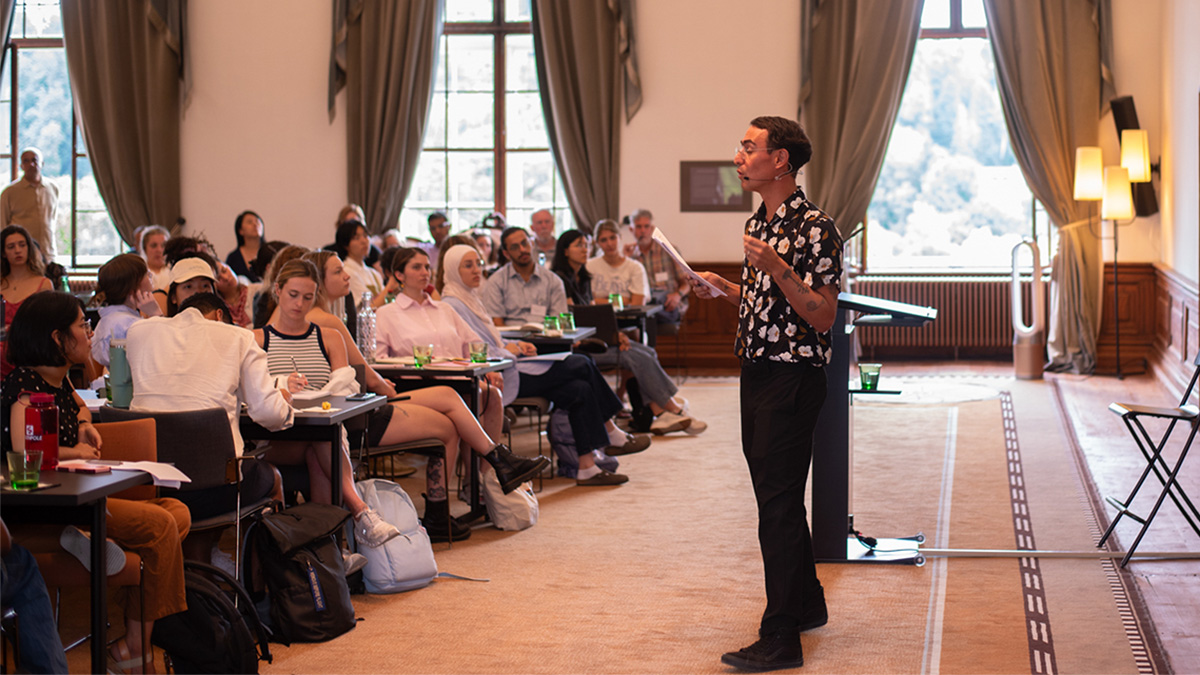
In the 2016 program, Learning from the Past: Promoting Pluralism and Countering Extremism, my co-Fellow, long-time friend and colleague Freddy Mutanguha, myself, and other partners, conceived the Change Makers Program (CMP). The aim of the CMP is to empower youth and thought leaders to resist growing rhetoric that dehumanizes vulnerable groups. The CMP utilizes case studies from the Holocaust, the genocide against the Tutsi in Rwanda, Apartheid in South Africa, and the Genocide in Cambodia, to educate youth and thought leaders to stand up to extremism, racism, antisemitism, xenophobia, homophobia, and all forms of othering. The CMP also motivates participants to develop their own country-focused histories. It also works to promote reconciliation and healing in post-conflict societies torn by religious and ethnic conflict.  So far, the CMP has launched in 13 countries in Africa including Mozambique, Nigeria and the Gambia and in Asia in the Philippines in November 2023 (with grateful thanks to the Nippon Foundation who helped Salzburg Global Seminar Fellows launch the CMP in Asia). 


2022

PEACE & JUSTICE PROGRAMS


Japan-India Transformative Technology Network

Asia Peace Innovators Forum

Global Innovations on Youth Violence, Safety & Justice

Cutler Center for the Rule of Law

Salzburg Global LGBT* Forum

Ukraine Civil Society Forum

Salzburg Global American Studies Program

2023

PEACE & JUSTICE PROGRAMS


Japan-India Transformative Technology Network

Asia Peace Innovators Forum

Global Innovations on Youth Violence, Safety & Justice

Cutler Center for the Rule of Law

Ukraine Civil Society Forum

Salzburg Global American Studies Program

Pathways to Peace Initiative


Finance and Governance

Our Finance & Governance Program enables the critical thinking and strategic foresight needed to tackle complex challenges at the frontline of digital, financial, and societal disruption. We seek to promote effective leadership in an era of emerging risks, and to ensure the alignment of global financial flows with peaceful, equitable, and inclusive development.

BY BENJAMIN GLAHN AND ANTONIO RIOLINO

Introduction to Our Finance and Governance Programs


Salzburg Global Seminar's 2022-2023 Finance and Governance Programs were set against the backdrop of unprecedented global challenges, including geopolitical uncertainties, technological disruptions, and economic instabilities. Our Finance and Governance Programs sought to foster critical thinking and innovative solutions to shape the future of financial markets, corporate governance, and public sector approaches to building inclusive, resilient, and ethical responses in times of global uncertainty and disruption.

During our 75th anniversary year, our Salzburg Global Corporate Governance Forum, established in 2015, addressed the themes of "Global Disruption and Uncertain Horizons", examining how corporate boards can navigate emerging risks amidst converging crises. From geopolitical tensions to climate change, participants explored strategies to uphold corporate stewardship and profitability while advancing environmental, social, and governance (ESG) responsibilities. The subsequent 2023 forum focused on the promise and perils of artificial intelligence (AI) in corporate governance, addressing complex questions surrounding AI's impact on decision-making, stakeholder governance, and risk management. 

Our Salzburg Global Finance Forum, founded in 2011, continued its mission to facilitate critical analysis and dialogue on the future of financial systems. The 2022 program underscored the imperative of sustainable finance and inclusive financial systems, addressing the challenges and opportunities presented by innovations in carbon finance and new financial technologies. In 2023, against the backdrop of global banking turbulence, the forum explored the implications of a resurgence of bank failures and macroeconomic uncertainties on the stability of the financial sector, emphasizing the need for adaptive leadership and strategic foresight.

Our Public Sector Strategy Network, launched in 2010, continued to offer government officials a strategic foresight platform and collaborative networks to address complex challenges in governance and public leadership. Amidst the aftermath of the COVID-19 pandemic, with governments grappling with multifaceted challenges ranging from climate change to technological disruptions, our Public Sector Strategy Network sought to address the emerging challenges faced by public officials including shifting public expectations, political unrest, and budget cuts. Focused on participatory, intelligence-gathering, and medium- to long-term strategic foresight, our Public Sector Strategy Network seeks to support the skills and expertise of public servants around the world by exploring how different governments are responding to uncertainty and turmoil, what strategies they have used, and which have been most effective to promoting responsive and effective governance.

Emissions and Transitions: Carbon Markets and Climate Change

The Salzburg Global Finance Forum started off with topical conversations around global responses to an emerging and growing global carbon market 

BY AAISHA DADI PATEL - Jun 14, 2022

The 12th annual Salzburg Global Finance Forum kicked off with a panel, Carbon Pricing and Carbon Trading: Policy Considerations, examining the role of carbon as a new asset class and tracing what kind of growth trajectory it can plot, as a global carbon market expands.  

Fellows – new and returning – from around the world came together to the first in-person Forum since 2019, held just ahead of the 75th anniversary celebrations of the Salzburg Global Seminar. Broadly themed Shaping the Future of Finance: Carbon Markets and Pricing, Digital Money and Financial Regulation, the three-day program saw Fellows engage questions, discussions, and analysis of strategic challenges and emerging risks. 

In the context of the threats climate change poses to the social, political, and economic landscape of the world as we know it, the panel held a frank and robust discussion offering insights into how different parts of the world are playing their part in managing carbon, and what a just carbon world will look like.  

Moderated by Amelie Champsaur, partner at Cleary Gottlieb, the panel’s speakers included Martin Moloney, secretary general of The International Organization of Securities Commissions (IOSCO), William McDonnell, COO of The Integrity Council for The Voluntary Carbon Market, Kumi Kitamori, acting deputy environment director and head of green growth at the OECD, and Daniel Mminele, head of the Presidential Climate Finance Task Team in South Africa. 

“We looked at how to link markets across jurisdictions,” Martin told Salzburg Global after the panel, which focused its discussion around voluntary and compliance markets, carbon pricing instruments, and the specifics around carbon trade, including credits and allowances. 

“A lot of the market activity is a good sign, but further regulatory harmonization is needed and again on measurement and assessment of different allowances and credits, especially in the voluntary markets,” said Kumi.  

Honoring the Paris Agreement 

William McDonnell spoke to the importance of prioritizing frameworks set out in the Paris Agreement, emphasizing that the goals require “some disruptive change” globally. 

“There was a lot of consensus here that the world economy needs to transform rapidly,” William said after the panel. “And a lot of that is connected with reducing emissions very fast. And so we need to stay very focused on the role of the carbon markets to help accelerate that alongside helping to develop renewables.”  

For William, the most important thing is that in the medium term, markets accelerate reductions. And Kumi Kitamori agrees. “We don't have time to lose anymore. We have to really ramp up efforts and cut emissions in the next 7 to 8 years,” she said. “If we are to meet targets by 2030, that's less than a decade.”  

All panelists agreed that in conversations around compliance and voluntary markets, country-specific circumstances need to remain central. Despite climate change being universal, the roles and stakes of developing countries vary greatly from those in the Global North. 

“Our purpose is helping the voluntary carbon markets accelerate a just transition to 1.5 degrees. And the just transition includes these concepts of helping to finance climate action that's needed in the Global South,” emphasized William. 

A just transition 

Speaking from the context of an “energy-precarious” country, Daniel Mminele highlighted the example of how South Africa – highly reliant on coal for electricity, a resource that is in high demand, with the country facing rolling power cuts dubbed “load-shedding” – faces an energy crisis, but is still an active player in a discussion about energy transitions.  

“The African continent is a very low contributor to global emissions, but finds itself now on the receiving end of very strict prescripts and policies that are right in reducing emissions, but that need to take into account our starting point that are actually the culprits for where we are sit elsewhere, and that they have used fossil intensive development to get to the levels of prosperity that they enjoy,” he said.  

At COP26 in November 2021, an agreement called the Just Energy Transition Partnership (JETP) was established for countries such as France, Germany, the United Kingdom and United States. The aim is to mobilize an initial amount of $8.5 billion to support South Africa’s transition from coal to renewable energy sources.  “We understand as Africans, we want to contribute to the global good, but are saying that we need help and we need that support,” said Daniel. 

The richness of a discussion drawing from global perspectives from people working across the board left Fellows energized for an exciting Finance Forum, promising to impart knowledge of current, topical matters.  

“I think what was really good about this discussion was the combination of people who were in the room,” concluded Martin Moloney. “We had a number of experts in here on carbon markets, but we also had a lot of people who were really trying to come to grips with something that is new to them.”   


Corporate Governance: 3 Questions with Laura Liswood

Laura Liswood reflects on the challenges that directors face today and her experience at the 2022 Salzburg Global Corporate Governance Forum

BY AURORE HEUGAS - Nov 10, 2022

In October 2022, Salzburg Global Seminar hosted its latest Corporate Governance Forum. This year, the theme was "Global Disruption and Uncertain Horizons: How can Boards Navigate New Risks". The participants examined the role directors play in addressing converging crises and debated their changing roles and responsibilities in today’s times of uncertainty.

Salzburg Global spoke with Laura Liswood, secretary general of the Council of Women World Leaders and former managing director of Goldman, Sachs & Co. about her thoughts on the challenges that directors face today and her experience at the Forum.

Salzburg Global: What are the key challenges that directors face today?

Laura Liswood: “I think that the key challenges that directors face today, first and foremost, are the just sheer complexity of ideas, sheer complexity of challenges, of risks almost beyond one individual to actually absorb and understand. And of course, for me, that direction into the thought process around diversity on boards and the essential necessity of having diversity because any one person just can't bring it all in, make sense of it, and know how to maximize best practices.”

SG: What do you think is something that people in your industry don’t talk about?

LL: “[In] the diversity, equity and inclusion industry, if we can call it that, I think that people don't really understand perhaps the difficulty to get to where they ostensibly think they want to go. I think that people think, ‘if we do a lot of programs, we must be a fair organization.’ And we're making progress and not realizing that there are sometimes confusing efforts with outcomes, you know, and intent with impact. There is a name for that now. It's called The Illusion of Inclusion.”

SG: What are your takeaways from the Corporate Governance Forum?

LL: “When one comes to a Forum like this, first and foremost, you are just gobsmacked by how smart people are, how much smarter they are than you. And so first, the kinds of connections that you make and the interesting people that you're meeting. And then obviously what you want to have happen, which is the kind of capturing of it by things like ‘I never thought of it that way’, ‘I never really understood that perspective’, or ‘boy, that's an idea that I could have sat on a desert island for a hundred years and not come up with’, but this person has obviously given it a great deal of thought. So that to me is the ultimate purpose of a hospitable place like the Global Seminar. You get to do that. No one is really judging, everyone is very open. Everyone is very curious. They're listening. You don't normally get that in the real world.”


Promoting Transparency, Accountability, and Customer Protection Amidst Banking Stress and Emerging Financial Technologies

Governor Bowman and Commissioner Johnson unveil key insights on regulatory reforms for a stronger financial system during Salzburg Global’s 2023 Finance Forum

BY AUDREY PLIMPTON - Jul 25, 2023

“The banking system today is strong and resilient, despite recent banking stress,” reassured Governor Michelle Bowman, a member of the US Federal Reserve Board of Governors. Commissioner Kristin Johnson, a Commodity Futures Trading Commissioner, echoed that the banking regulatory framework “has demonstrated remarkable resilience even in the context of the defining challenges of most recent years.” 

Both Governor Bowman and Commissioner Johnson delivered keynote speeches at the 2023 Salzburg Global Finance Forum. The Finance Forum brings together senior and rising leaders from the financial industry and public sector at Salzburg Global Seminar, with the focus in 2023 on “Global Turbulence and Financial Resilience: Implications for Financial Services and Society”.  

Over the course of several days from June 25 to 27, 2023, Fellows tackled critical issues affecting the future of financial markets and global economic stability.  Discussions centered around the recent US bank failures, financial technologies, banking regulation, the growth of nonbanks, and digital currencies, among other topics.  

In her keynote speech, Governor Bowman called for responsible reform of the banking regulatory framework, specifically in the United States. The bank failures of Silicon Valley Bank, Signature Bank, and First Republic Bank “highlighted the need for regulators to consider reform efforts to make the financial system stronger and more resilient… These bank failures and recent stress in the banking system have highlighted key deficiencies in risk management practices and key deficiencies in supervisory priorities.”  

Her remarks addressed “the importance of a responsive and responsible regulatory framework.” She emphasized the principles of transparency, accountability, efficiency, and due process in any reforms.

Furthermore, these reforms should be informed by “an impartial and independent review of what led to the failures and healthy public debate.” An understanding of the root causes of bank failures is crucial for making necessary changes and avoiding potential harm to banks, customers, and the broader economy. “We must be circumspect about what went wrong, deliberate about what to fix, and cognizant of unintended consequences,” she advised. 

Governor Bowman advocated for regulatory reforms that strike a balance between safety and soundness, competition, and the ability of banks to serve their customers while avoiding undue burdens that could hinder economic activity. She emphasized that reforms to "banking regulatory and supervisory policy... should be focused on promoting a safe and sound banking system." 

Further speaking on the need for reforms, Commissioner Johnson elaborated on how we can future-proof financial markets and their regulation “by balancing responsible innovation with accountability.” She focused on how to safely harness the potential of emerging financial technologies while adapting regulations to them. Her speech highlighted the challenges faced by financial markets, such as supply-chain disruptions, volatility, and inflationary pressures. 

Regarding new financial products and platforms, including those in the crypto markets, Commissioner Johnson advocated for subjecting them to longstanding regulatory principles which "ensure customer protection, market integrity, and market stability.” There should be an awareness of risks in the digital asset ecosystem, as recent bankruptcies associated with the “crypto winter” demonstrate that "without sufficient risk management, corporate governance, and conflicts of interest guardrails, vertical integration may present endemic conflicts of interest and risks.” 

She highlighted the importance of customer confidence in banking institutions, stating that bank regulators are obligated to ensure that “banks demonstrate responsibility and accountability” to maintain public trust. This consideration is especially relevant in the context of bank failures that occurred in 2023. 

Non-bank financial institutions (NBFIs) are increasingly important in the global financial system and have become interconnected with traditional banking institutions. Commissioner Johnson pointed out that the rise of NBFIs raises two significant issues, namely for bank regulators to “increase our vigilance regarding oversight of known systemically important financial institutions as well as appreciate new sources of risk.” 

Overall, Commissioner Johnson called for introducing and enforcing regulations to ensure customer protection, market integrity, and stability in crypto-commodity derivatives markets and other vulnerable retail markets. She also recommended greater due diligence and regulatory oversight in acquisitions of significant equity ownership stakes in CFTC-registered entities. 

Governor Bowman and Commissioner Johnson share common ground in advocating for responsible regulatory reforms that prioritize the safety and soundness of the banking system, while also considering competition, customer service, transparency, accountability, and the potential consequences of reforms. They emphasized the importance of customer protection, market integrity, and regulatory oversight in addressing the challenges faced by the financial markets. 

The memorable remarks delivered by Governor Bowman and Commissioner Johnson helped inform the ensuing discussions by Finance Forum Fellows on how to forge a financial landscape that not only withstands bouts of uncertainty but also embraces the promise of innovation.

Michelle W. Bowman has been serving as a member of the board of governors of the Federal Reserve System since 2018. Prior to her Board appointment, Michelle served as the Kansas State Bank commissioner from January 2017 to November 2018, before which she was vice president of Farmers & Drovers Bank in Kansas from 2010 to 2017.

Read Governor Bowman’s full remarks here.

Kristin Johnson was sworn in as a US Commodity Futures Trading Commissioner in 2022, after holding endowed professorships at Emory University and Tulane University Law Schools. Kristin is a nationally recognized expert on financial markets risk management law and policy with specialization in the regulation of complex financial products. She is an internationally recognized expert on financial markets regulation and corporate governance, compliance, and risk management.

Read Commissioner Johnson’s full remarks here.


Will Nation-States Remain the Way of the Future?

Fellows consider the relevance of nation-states amidst the growing influence of tech companies and local governments

BY AUDREY PLIMPTON - Nov 17, 2023

All views expressed by participants are their own and do not represent those of their organizations.

Will nation-states remain the way of the future? In a New York Times-style debate, three Fellows shared their perspectives on the continued relevance of nation-states, the adaptability of federalism and subnational governments, and the influence of technology companies in shaping public policy.

Rupak Chattopadhyay, president and CEO of the Forum of Federations, shared his views on federal constitutionalism, saying that while nation-states will evolve and adapt to new situations, they will not become obsolete. Recent events, such as individual countries’ resistance to EU measures during the COVID-19 pandemic and the international community’s response to Russia’s invasion of Ukraine, highlight the continuing importance of nation-states as the basis for the conduct of international relations. 

He commented that “Federalism is not an ideology. Rather, it provides a toolkit of options for managing systemic conflict and fragility within nation-states. These options may be adapted to provide bespoke solutions rooted in the local realities of specific countries. Federalism is particularly relevant in situations where internal conflicts have a territorial dimension."

Rupak also emphasized the role of subnational and local governments in providing tailored solutions in times of political fragility. He acknowledged that while federalism is useful as a stabilizing tool, it can have some drawbacks such as slow decision-making resulting from the presence of multiple decision nodes.

Sanghyun Lee, a director on Google's Government Affairs & Public Policy team, provided first-hand insights into the intersection of tech companies and policymaking, stressing that “tech companies are solving the biggest problems”. He pointed to the COVID-19 pandemic as a turning point in the influence of technology on public policy. This was an instance where tech companies with online search engines took on roles traditionally filled by nation-states, namely providing accurate information to citizens.

He recommended leveraging technology, forming partnerships between tech companies and governments, and fostering collaboration between the two sectors, saying that “the line between the public and private sectors is blurred rather than separate”. He predicted that citizens will increasingly turn to tech companies rather than nation-states for information and services, although nation-states will continue to exist. 

Sanghyun assured the audience that “startups and tech companies think about problem-solving and the public interest, not just profit”. He believes tech companies will continue to play a large role in crises, especially in partnering with governments to solve problems.

Gwen Dereymaeker, Deputy Director of Policy and Strategy in the Western Cape Government of South Africa, focused on the tensions between different levels of government in South Africa and their implications for the future of nation-states. The country faces numerous challenges, including economic and racial divisions, unemployment, crime, corruption, and a lack of progress. She stressed the challenges faced by South Africa’s government to provide necessary services to citizens, 30 years into democracy. 

There has been a push for decentralization in South Africa, as some local governments see themselves as being better able to deliver services. This is also echoed by citizens. “Citizens just want services and often don’t care who delivers them, regardless of whether they come from a public entity or the private sector,” she reflected. 

South Africa is a country of many identities. Nevertheless, the nation-state will survive in its current form because of issues of credibility and bureaucratic culture. She emphasized the importance of building trust between government and citizens to provide services to citizens and build a national identity and raised the question of whether governments might at times lack trust in their own citizens to contribute to nation-building. 

The discussion concluded with all Fellows and audience members sharing one word that describes how they feel about the future of government. Responses included: uncertain, transformative, complex, challenging, innovative, and optimistic.

This discussion occurred on May 23, 2023 during the Annual Strategic Foresight Retreat, which enables senior public sector leaders to speak openly among peers about major disruptive forces confronting governments.

The 2023 Annual Strategic Foresight Retreat is part of the Public Sector Strategy Network. This program is supported by the Abu Dhabi Office of Strategic Affairs, in cooperation with apolitical.


The Future is Female: AI, Identity, and (Re)claiming Space

Salzburg Global Fellow May Tan advocates for ethical AI and inclusive corporate leadership

BY PAUL MART JEYAND J: MATANGCAS - Nov 28, 2023

May Tan is the Board Director of Hong Kong-based CLP Holdings Limited with over 30 years of experience as an investment banker, CEO, and executive director across various transnational companies.

AI, the Internet, and all things inevitable

When asked to reflect on the program theme “Promise or Peril? Artificial Intelligence and the Future of Corporate Governance,” May Tan underscored that in today’s highly digitized world, the dominance of artificial intelligence (AI) is inevitable since it can be used as a catalyst to enable different kinds of businesses. Against the backdrop of geopolitical issues and corporate governance, May strongly believes that AI will become more relevant in the future. 

From a corporate perspective, she asserted that companies should work with various sectors to regulate AI, not in a way that restricts advancement but rather encourages the “right” type of innovation. She cautioned that AI may be susceptible to various kinds of abuse, as it can also be misused for personal or political ends, saying, “I’m from the financial industry, I’ve seen how crypto and other instruments have been abused. So, I suppose that’s where the ‘peril’ comes in.” 

Despite this, May believes that AI holds great promise in the way that it can be utilized as a transformative tool to foster innovation. She compared the rise of AI to the emergence of the Internet decades ago. She added, “I cannot imagine a life without the Internet. I imagine us having another conversation ten years from now, and we’ll be like: ‘Can you imagine life without AI?’”

According to May, we should not look at technological advances from a simplistic binary view of good versus evil. She believes that “for us to move forward in the future, we need both the human and the machine”, especially at a time when there has been a growing trend of corporations utilizing AI to analyze various metrics such as customer data, delivery processes, and pricing. As a board director, she emphasized that “it’s really about using these tools to look at the strategy of the organization and to make sure that it continues to fit its purpose while also maintaining checks and balances.”

On identity, authority, and (re)claiming space

When May began her career, she did not see many people who looked like her represented in boardrooms. May further explained, “When I was entering the banking industry in the eighties, there were not many female role models. I was happy to do the work and I learned a lot along the journey. But I never really expected to get to where I got to in terms of my career.”

The representation of women in top executive positions is severely lacking despite their undeniable potential. In fact, a 2023 report revealed that women in the Asia-Pacific (APAC) region are underrepresented in leadership positions and are less likely to be promoted compared to their male colleagues. This glaring reality was something that May personally experienced in her career. For her, rising through the ranks necessitated making the most out of the environment that she was subjected to daily. “Was it tough? Yes, because I always felt like I had to work harder to prove myself. I had to show that I deserved to be in the same room as a lot of my colleagues,” May added.

May asserted that a person’s background does not determine what can become of their career. For May, you become deserving of the place that you are occupying in the workforce through hard work and results. However, she also believes a person’s identity provides a more nuanced lens for seeing different perspectives. “Sometimes it is very difficult to assert yourself when you're a woman because, more often than not, you're the only different voice in the room. So, it's not as loud as ten of the men in the room. It helped that I was Asian. I was giving a perspective that a lot of my white male colleagues could not give. I knew the language and I knew the culture. My corporate clients loved me because my approach was quite different,” she recalled.

In describing her brand of leadership, May stated that as a person in a position of authority, there is a stereotype that women are "soft" and that you must be authoritative to be respected. But for her, there is value in being firm with what you want to achieve while still maintaining empathy for other people. She further explained, “I take the view that people have pride and self-respect. So, if I have to deliver a tough message, I tend to do it one-on-one and in private. Is that showing softness? No, I think that's showing respect for the individual. You don't want to shame them, and you should always put yourself into that person's shoes while making sure that you try to nurture them as much as possible.” 

May’s lived experience is also what prompted her and two others to establish ACcelerate—a program intended to bridge the gap in senior female representation in the C-suite and accelerate the progression of women to senior management roles. Since its inception, they have been able to train and equip over a hundred women, and in 2023, the program commenced with its fourth cohort of aspiring female executives. She considers this non-profit work her way of giving back the opportunities she was afforded throughout her career.

May Tan is among the 35 Fellows who participated in the Salzburg Global Corporate Governance Forum from October 4-6, 2023, at Schloss Leopoldskron. Salzburg Global Seminar’s 2023 Corporate Governance Forum on "Promise or Peril? Artificial Intelligence and the Future of Corporate Governance" explored the complex geopolitical considerations and risks posed by AI and whether corporations should (or must) adopt artificial intelligence (AI) approaches in their corporate oversight functions and in their business operations, internal governance, and management of human capital.

2023

FINANCE & GOVERNANCE PROGRAMS


Culture

Our Culture Program harnesses the power of arts, innovation, and new models of leadership to shape a better world. We enhance individual, collective, and systems leadership by catalyzing global exchange across disciplines and sectors, lifting underrepresented or unheard voices, and connecting current and future decision-makers.

BY FAYE HOBSON

Introduction to Our Culture Programs


Over the past two years, the Culture Program Portfolio at Salzburg Global has embarked on an ambitious journey to intertwine culture with collaborative leadership at various levels—individual, collective, and systemic. Grounded in the belief that culture encompasses a wide range of societal aspects—from art and literature to value systems and beliefs—the portfolio seeks to address global challenges through innovative, culturally-infused solutions.

Public Policy New Voices Europe (PPNVE) 

Since its founding in 2021, The Public Policy New Voices Europe (PPNVE) program has significantly expanded its reach and impact. New partnerships with Squire, Patton, Boggs, and the Lego Group, have increased the scope of the program to empower a new generation of public policy leaders. Highlights include Fellows presenting their ideas at the Creative Bureaucracy Festival in Berlin and the Diversify Nordics Summit in Oslo.

KFAS-Salzburg Global Leadership Initiative  

A renewed partnership with the Korea Foundation for Advanced Studies (KFAS) led to the creation of an impactful program series that aims to address the challenges of a rapidly changing world. The inaugural session, "Uncertain Futures and Connections Reimagined: Connecting Generations," held from October 9 to 13, 2023, convened a diverse group of Korean and global thought leaders. This intergenerational, interdisciplinary gathering focused on creating new connections to tackle global challenges, emphasizing the need for empathy in leadership amid demographic transitions. 

Culture, Arts, and Society

Thanks to the long-term support from the Edward T. Cone Foundation, activities in the Culture, Arts and Society program have included programs focusing on cultural diplomacy and artists who engage with political issues in their work. In 2022, supported by the Bush Foundation and the McKnight Foundation, six artists undertook residencies at Schloss Leopoldskron as part of the Cultural Innovators Forum program.  

Renée Fleming, a world-renowned soprano and WHO Goodwill Ambassador for Arts and Health, participated in a panel on August 1, 2023, discussing the profound impacts of music on health and the brain. This event, part of the “Music and Mind” program, underscored the Salzburg Global's dedication to exploring the intersections of arts and health.

Salzburg Global was a partner in the 9th World Summit on Arts and Culture in May 2023, where a Long Table discussion titled “The Arts on the Frontline: The Arts in the Online” examined the complexities of AI and digital engagement in the arts and laid the groundwork for the 2024 program.

The past two years have been a period of dynamic growth and deep reflection for the Culture Program Portfolio at Salzburg Global. Through initiatives like PPNVE, KFAS partnerships, and the Culture, Arts, and Society series, the portfolio has not only responded to the immediate challenges of our times but also laid the groundwork for a future where culture and collaborative leadership drive global change. As we look ahead, the continued expansion and evolution of these programs promise to further empower leaders, engage underrepresented voices, and harness the power of the arts to shape a more equitable and sustainable world.

The Future of Cultural Diplomacy: Salzburg Global Seminar Publishes Statement Outlining Fellows’ Recommendations and Priorities

Fellows come up with an action plan to use cultural diplomacy to shape a better world

Sep 23, 2022

From July 4 to 8, 2022, Salzburg Global Seminar hosted a Culture, Arts and Society session on "Currents of Change: Redefining Cultural Diplomacy for the Future we Need".

Salzburg Global brought together over 60 artists, diplomats, policymakers, and academics, representing 30 countries. Together, they considered the potential for art as a force to improve the world and provided recommendations for reimagining the role that cultural diplomacy and relations can play in bringing us closer to the future we need.

Following this session, Fellows drafted a Salzburg Statement, in which they set out the priorities and recommendations for the future of cultural diplomacy identified at this meeting. The statement brings key issues to the attention of key stakeholders, acting as an advocacy tool for groups lobbying for change.

Download the Salzburg Statement as a PDF

Read a Ukrainian translation of the Salzburg Statement (Provided by Ukrainian Institute)

Read the full Salzburg Statement below: 

Read an excerpt of the Salzburg Statement below:

CASE FOR ACTION
Given recent geopolitical conflicts, the rise and subsequent mistrust of globalization, contentiousness of borders, the climate crisis, and the global pandemic, there can be no more pressing time to assess, recalibrate and identify new approaches to address shared problems and challenges. The arts and culture can offer new imaginaries and hope when the unimaginable transpires. Cultural diplomacy and relations can be used as conduits for change and unifiers to connect peoples. However, we must move beyond a superficial instrumentalization of the arts and culture to pursue shared understandings and shape a better world.

RECOMMENDATIONS
For cultural diplomacy and cultural relations to be leveraged to their fullest potential and for cultural diplomacy to offer long-lasting impacts towards attaining the futures that we want to see, important changes are needed in the ways governments and artists think about and engage in these practices. To this end, the purpose and design of cultural diplomacy and relations should focus on:

Bridging Divides: Authentic connections require recognizing the different ways in which artists, cultural producers, and government and non-government officials view the world. It is thus necessary not only to talk across cultures, but across professions. While the worldviews of artists and officials may differ, both can use cultural diplomacy and relations to promote a more just and peaceful world. All stakeholders share responsibility in creating the necessary networks to ensure that multiple viewpoints and participants are engaged in the process.

Valuing Integrity: In the past, as well as in today’s world, cultural diplomacy has been misused to achieve adverse, aggressive, or harmful foreign policies, and to advance disinformation and manipulation of public opinion. It is crucial that governments and independent agents refrain from practices that affect integrity of cultural diplomacy as a discipline and a profession.

Centering the Artist: Cultural diplomacy must serve the arts while responding to contemporary values of society, preserving cultural heritage, and engaging with contemporary art-making practices. For art to reach its potential as a tool for cultural diplomacy, we must not only look at the role of the art itself but also ensure that artists are centered within the conversation. To do so requires creating inclusive spaces in which artists can openly create without the fear of their art being misused. Centering artists can help the power of art flourish and expand cultural relations.


Public Policy New Voices Europe: Inclusive Policymaking Panel Discussion

Key takeaways from the latest Public Policy New Voices Europe panel discussion, exploring inclusive policymaking

BY DOUGLAS LEUNG - Nov 16, 2022

As part of Salzburg Global Seminar’s Public Policy New Voices Europe: Public Policy Innovations for Inclusive Communities from October 24 to 28, 2022, a panel discussion was held on inclusive policymaking. The panel consisted of five representatives from different policy-related backgrounds, varied in levels - panning from government to funders, corporate to Think Tanks - but also geography, representing five countries and three continents.

The key takeaways:

  • Lack of inclusivity in public policy spaces leads to poorer policies, and therefore poorer outcomes.
  • When new voices are included in public policy spaces, enhancing our communication skills is essential to working productively with different people.
  • The reality is that it can be very difficult for young people in public policy to keep going. Systems of support need to be put in place to help them.

1. Lack of inclusivity in public policy spaces leads to poorer policies, and therefore poorer outcomes.

“Advocating is nice, but sitting at the table is nicer.”

It was seen as axiomatic that including people from diverse backgrounds with different perspectives leads to better developed policies, with the corollary that failure to do so results in ill-thought policies that do not account for all the people who are impacted by a policy. Concrete examples from various countries were provided, such as the infant formula shortage in the U.S. and the closing of launderettes due to the COVID-19 pandemic in Belgium. There was a recognition that diverse people rooted in community are already out there; the task now is to identify, train and empower them, so that they can effect tangible change.

It was also pointed out that, regarding the processes involved in public policy, the final stage of evaluation is often neglected in comparison to the stages of development and implementation, yet it is just as crucial to listen to different voices at the end of a policy’s lifecycle as it is at the beginning. We, as human beings, tend to go back to the people we already know and trust, and institutions do not necessarily have structures in place to welcome new voices. Escaping the comfort zone of familiar voices, then, is essential across public policy as a whole.

2. When new voices are included in public policy spaces, enhancing our communication skills is essential to working productively with different people.

“It is easy to ask people to listen, but we also need to ask how we voice ourselves.”

The promotion of diversity in public policy was accompanied by a discussion on how best to communicate with people who have fundamentally different views. Panelists shared how they came to realize the expedience of adapting their voice to their audience. For example, a panelist who had worked on the gay marriage campaign in the U.S. explained how they had collected all the statistics and data to prove the case for legalizing gay marriage, but that ultimately telling stories and narratives was far more effective. By reducing the issue to a single, common value – that we all deserve love – the campaign could more successfully convey its message to a much wider audience.

The use of common values as the starting point was also considered as a way to deal with active denial from others. It was emphasized that it is not the job of new voices to make traditional ones feel comfortable, but rather, we have to let them arrive where we want them to be and hope that they can see our humanity too by speaking our own truth. Part of the challenge is being ok with not necessarily having our trust reciprocated. However, even if people disagree on almost everything, as long as they share even just one common value, it is still possible to use this as the foundation of a meaningful policy.

3. The reality is that it can be very difficult for young people in public policy to keep going. Systems of support need to be put in place to help them.

“I believe that people are going to be the ones to change the system and build a community for them [young leaders] to fall back on when they are facing challenges.”

The panel addressed some of the practical problems faced by new voices either already in or attempting to enter the public policy space. For example, the feeling of loneliness for young people working in public policy was highlighted as a particular issue. It was suggested that the solution should be the development of a community, very much like the one attending the Salzburg Global program, to support emerging leaders in difficult times. Indeed, one of the panelists issued a challenge to these Fellows to keep building this community by helping people like themselves get onto these kinds of programs.

The panel additionally pinpointed the lack of funding from stakeholders as a significant obstacle to young people who want to keep on fighting the good fight. While there seemed to be no obvious solution to this, it was recognized that young leaders need to go beyond positions of influence to positions of power for this to change. A piece of advice from another panelist was to be realistic that we cannot change everything at once. The smaller successes in the initial steps can lead eventually to our great ambitions for social change being realized.


The Future of Cultural Diplomacy

Salzburg Global Seminar wrapped up its Redefining Cultural Diplomacy series. Attendees reconsidered the roles of artists, governments, and tech in cultural diplomacy, coming to some moving conclusions for the future, writes Diplomatic Courier editor and event rapporteur Adam Ratzlaff.

BY ADAM RATZLAFF - Jul 11, 2022

This article was first published on Diplomatic Courier.

More than 60 individuals from 28 different countries came together from July 5 to 8, 2022 at Salzburg Global Seminar’s “Currents of Change: Redefining Cultural Diplomacy for the Future we Need.” Participants included artists and policy makers, funders and activists, members of civil society and international organizations, academics, and futurists. Many of the Fellows approach cultural diplomacy differently, even in terms of what is meant by “cultural diplomacy,” but they still agreed on important insights which can help us to better understand the potential of cultural diplomacy and how to employ it in order to create a better world. 

“As a curator of Currents of Change we invited cultural, government, and institutional leaders from twenty-eight nations to envision a new inclusive model. We learnt that if Cultural Diplomacy is to have a future, then, we must emphatically embrace the diversity of perspectives of nations and peoples… Cultural diplomacy can no longer be considered as an addendum. It is an imperative to bridging divides.” - Dr. Xenia Hanusiak, cultural diplomat and Co-Curator of “Currents of Change.”

Centering the Artist in Cultural Diplomacy

Art—whatever the medium—has the potential for immense political power. It can bring people together or highlight the challenges that a society faces. However, for art to reach its potential, we must not only look at the role of the art itself. We must also ensure that artists are centered within the conversation. Ensuring spaces in which artists can openly create without fear their art may be misused can help the power of art to flourish and for cultural relations to expand.

Furthermore, artists can do things traditional diplomats cannot. Traditionally, diplomats must carefully articulate points to avoid harming their government’s interests. Cultural diplomacy allows for discussing difficult topics while bypassing bureaucratic, political hurdles faced by other forms of diplomacy.  However, this can only be done when art and artists are adequately valued, which is only possible by centering the role of the artist in the process.

Countries Must Represent and Leverage Their Diversity

Countries should embrace their own diversity in their cultural diplomacy to highlight the similarities that they share with countries across the globe as well as the values of pluralism. For large countries, this could mean highlighting the diversity of their domestic populations. For smaller countries, this could often be done by highlighting their diaspora communities situated elsewhere. By recognizing the diversity of one’s own population and actively highlighting this within their cultural diplomacy, countries move from trying to present a homogenous “national culture” toward one that is more inclusive and representative of the array of lived experiences of their country. This creates more critical art that can speak to the reality of lived experience and bring people together in more meaningful ways.

Cultural Diplomacy Goes Local

While we often focus on the international aspect of cultural relations in framing discussions around the power of cultural diplomacy, cultural relations at the domestic level are important as well. Although it is important for countries to recognize the diversity of their populations in their own cultural diplomacy, many countries continue to ignore and marginalize portions of their own societies. These can include ethno-racial minorities, indigenous peoples, or immigrant populations.

In pushing to ensure that the voices of these groups are heard and recognized within the national political and cultural scene, cultural actors—whether chefs, musicians, or artists—and cultural institutions can play a critical role in amplifying these voices and their stories. Such amplification is critical not only for representing the shared humanity of societies and the role that all play in the “national culture,” but for reducing polarization evident in countries across the globe.

Moving Beyond Borders

For some, state-led cultural diplomacy is primarily about propaganda. As societies become increasingly interconnected and realize that the most pressing challenges often cross borders, it is important to lean into the important role that cultural relations—as conducted by non-governmental actors—can play in bringing people together in meaningful ways. Non-governmental actors are uniquely positioned to create communities of practice that challenge contemporary modes of thinking and recognize shared humanity and experiences across the globe.

“I am even more convinced that the future of Cultural Diplomacy is about relinquishing power and the need for a radical rethinking of the structures we currently know and work with… With the next generation, as well as various non-Western cultures, thinking radically differently about structures, power, and silos/borders, it might be time for them - artists and civic actors -to lead us into entirely new ways… systems-thinking for the future they, and all of us, need.” – Erwin Maas, Theatermaker and Co-Curator of “Currents of Change.”

The Power of Technology

Technology has the power to both bring together communities across borders as well as expose individuals to cultures other than their own. While we have seen the polarizing potential of technology, it also has immense potential in the cultural diplomacy space to alter the conduct and reach of cultural diplomacy. By creating spaces that allow artists and creators to engage with audiences across borders, we can radically increase the ability of cultural relations to reach new audiences and a larger global impact. This has the power to pressure governments as art transcends borders through the internet and individuals call for change across the globe.

Technology also serves another important purpose. For many “digital natives,” the world of national borders is rapidly becoming an out-of-date concept. As young people engage with one another across borders, new communities of practice—both within sub-cultures like gaming as well as artistic communities—can create new worlds in which national origin matters less than their shared digital connection.

Conclusions

While there are many important lessons that can be drawn about cultural diplomacy and how we can improve it, the first step is to ensure that the different actors that are involved in the process of cultural diplomacy and relations are talking to one another. All have important ways of thinking about the future of cultural diplomacy and only by looking at the way forward collectively will we be able to “redefin[e] cultural diplomacy for the future we need.”


The Intersection Between Art, Power and Marginalization

Salzburg Global Fellow Khaled Barakeh reflects on what "Democracy on the Front Lines" means to him and his work

BY KHALED BARAKEH - Jun 19, 2023

This op-ed is part of a series, written by Fellows and speakers of the Salzburg Global Weekend in June 2023, with the theme "Democracy on the Front Lines".

Democracy on the front lines is messy, complicated, and uncomfortable. In its ideal form, it is about inclusion, representation, and equality, but when one is on the front lines, these ideals often clash with the stark realities of power and injustice. This brings into question the very core of what we understand as democracy, which should push us to challenge the comfortable definitions of democracy we often cling to in “democratic countries”, especially since the establishment of United Nations organizations after the Second World War.

Perhaps the greatest challenge to this concept is the question of priorities. In some parts of the world where people are fighting for basic survival and human rights, can we truly talk about democracy in the same way? Can we prioritize voting and political participation when people are fighting against displacement, starvation, and violence? Can we blame them for not meeting the “Western standards” of democratic values? This doesn’t mean that democracy becomes irrelevant on the front lines. On the contrary, it becomes even more crucial. But it forces us to expand our understanding of democracy. It’s not just about political systems, but about human dignity, representation, and voice in all aspects of life.

“Democracy on the Front Lines” embodies the tension between the ideal and the real, between what we aspire to be and where we currently stand. It is about both participation and resistance—participation in structures that allow us to express our agency, and resistance against forces that seek to silence, marginalize, or oppress. These intangible front lines are where I engage in my work. I find myself constantly questioning and pushing against the boundaries of our societies, asking us to reconsider the status quo and inviting us to imagine new possibilities.

Art, for me, is more than just a tool for expression. It’s a lens, a megaphone, and a call to action, shaping and reshaping our understanding of society and our place within it. My front lines are the spaces where art, culture, and activism intersect with structures of power and marginalization. My front lines are not only in parliaments, local councils, and election booths. They are in galleries, studios, streets, refugee camps, and communities where people’s voices are often suppressed or ignored. Front lines should not be limited to physical spaces but extend into the realms of thought, perception, and dialogue.

Take my project “The Untitled Images,” for example. By removing the subjects from press photos of Syrian victims, I wanted to challenge the dehumanizing effects of media portrayal, to give back individuality to those reduced to mere statistics. This was my way of questioning the democratic principles of representation and voice: who gets to be seen and heard, and who doesn’t? Likewise, my “Syrian Biennale” initiative was a response to the lack of representation in the art world. I wanted to create a platform where artists outside the mainstream could be seen and heard. Here, the challenge was to the democratic principle of equality: why do some voices dominate while others are marginalized in art and elsewhere?

In essence, “Democracy on the Front Lines” to me is about active engagement, not passive acceptance. It is about questioning, challenging, and pushing back against the dominant narratives and structures that govern our societies. It’s about making space for marginalized voices, fostering inclusivity and dialogue, and building empathy. It is less about formal political structures and more about the daily fight for dignity, voice, and representation. It’s about challenging the mainstream narratives that often exclude the marginalized and voiceless.

Khaled Barakeh is a Berlin-based conceptual artist and cultural activist. Driven by his observations of longstanding social injustice, Khaled approaches creative practice as a tool for societal change; manipulating commonplace visual and cultural touchstones to expose and undermine stagnant power structures. In a recent major shift in his practice, Khaled developed coculture in 2017 - a non-for-profit umbrella organization with a suite of initiatives that leverage artistic thinking to directly address issues of contemporary mass migration. Among these projects is the SYRIA Cultural Index and the Syrian Biennale. Khaled has exhibited at Hamburger Kunsthalle, The 11th Shanghai Biennale, The Frankfurter Kunstverein, Salt Istanbul, The Busan Biennale, State Gallery of Lower Austria, Krems and MKG Hamburg, among many others. He graduated from the Faculty of Fine Arts in Damascus, Syria, in 2005, completed his MFA in 2010 at Funen Art Academy in Odense, Denmark, and a Meisterschuler study in 2013 at the Städelschule Art Academy in Frankfurt, Germany.


The Townships into Towns Residency at Schloss Leopoldskron

Salzburg Global Artist in Residence reflects on his experience of working on the Townships into Towns hybrid exhibition while resident at Salzburg Global during its 75th anniversary celebrations

BY SIPHIWE NGWENYA - Sep 19, 2022

Since 2020, “The Family in the Sun” artwork by Siphiwe Ngwenya has been on display in the Meierhof Lobby of Schloss Leopoldskron. Ngwenya attended the Cultural Innovators Forum in 2015 as a Fellow and in 2019 as a Facilitator.

The residency and exhibition of the artwork is part of an ongoing curation project aimed at ensuring that the richness and diversity of Salzburg Global's programs and Fellows are manifested at Schloss Leopoldskron.

For three weeks in June and July 2022, Ngwenya undertook an artist residency at Schloss Leopoldskron bringing his artwork to life for guests, board members, and staff. He reflects on the experience below:

"I experienced an unparalleled journey." 

I started preparing for my exhibition 20 years ago, not knowing the outcome. I did this because I wanted to create a body of work that celebrates my talent without the constrictions of time. I also did not want to do a hit and run, meaning I did not want to do artwork that didn’t work. Artwork that did not have an economic and spiritual meaning to the communities where the artwork gets made. Keeping this in mind, I produced a single artwork over a period of 10 years. I recorded music with some of the most creative musicians. I explored Antarctica on an arts science expedition. I turned homes in townships into art galleries. I experienced an unparalleled journey.  

When launching separate elements of the exhibition, I realized that this was going to be another journey of its own. All my multimedia content produced from this process was going to become another entrance into an exciting portal when published. The artwork that I created for a period of 10 years, for instance, found a home in Schloss Leopoldskron in Salzburg, Austria, and was presented during Salzburg Global Seminar's 75th anniversary. The artwork is the overarching piece of the whole Townships into Towns hybrid exhibition. This exhibition is meant to chart the way for the first arts residency at Schloss Leopoldskron. I was the resident artist. This is a part of my story.

Arriving in Salzburg for the third time, I was clear that I didn’t want to experience it as a Fellow of Salzburg Global Seminar, nor as a facilitator, but as an entry level resident with nothing to fear. Before I delve into that, there is a side note that I would like to offer. My life is filled with synchronicities that I cannot explain. Synchronicities that prove to me that I am in the right path, making my journey interesting and actually quite miraculous.  

As I arrived, I was greeted ceremonially by Daniel, as he does to many, in his Austrian Lederhose. As I waited for my room, he introduced me to Richard Schabetsberger, a photographer working together with Salzburg Global Seminar, and by himself an excellent Leica photographer. Our story progresses during my stay to eventually symbolize an authentic synchronicity that showed me that Salzburg still has more to offer. Richard and I would later conduct a photography collaboration.

The Schloss was alive with guests from all over the world. Some, like Adam de Sola Pool, are now well beyond their 50s, but the first time they arrived at Schloss Leopoldskron, was when they were 10 years of age. I met with people who understood a profound history of the place and of the Salzburg Global Seminar program. I was honored to have guests like these as people I could share my story, exhibition and artwork with, even beyond my stay in Salzburg.

The crux of my residency was connecting with universities, institutions and individuals in the arts and travel market. The reason for this is that I wanted to create a mental map of the landscape, join the dots and create a long-lasting international program.

I first met with Patrick Schaudy, head of the arts department at the Mozarteum University. When I met him, I gave him an invite to an exhibition of a friend of mine, Angelika Wienerroither. He looked at the invite and said, “This is my office!”. I didn’t get it at first but when we arrived at his office, I saw that the venue of the exhibition was next door to Patrick’s office. Immediately after our meeting, we stepped right into my friend’s exhibition and marveled at the small world we all occupy.

As part of my exhibition, I also have a musical product, made up of music and dialogues about the history of South African Hip Hop. The best place to launch this was the head of the Red Bull offices in Fuschl am See, because of its history in music and presence in South Africa. As part of the launch of the virtual exhibition, I included prominent South African hip hop artists to tell stories of special segments of the South African Hip Hop history. As part of this dialogue, my intention was to highlight the successes, challenges and future solutions of music preservation, such as hip hop, within the developing communities of South Africa. This by itself proved to be a successful endeavor as we learned how and why to turn “Townships into Towns”.

It has been a well-known fact in South Africa that organizations need to do better than the PR they serve to the outside world. This fact has been the single driving motivator to many organizations that I engage with. My vision is and has been to see how large corporations can go beyond their stated mandate to turn and be a part of the journey of turning Townships into sustainable Towns. 

"Seeing how communities can transform into shining examples of success is a little bit of magic that is unparalleled."

Destination development of emerging communities around the world has been a primary pillar in my exhibition. Seeing how communities can transform into shining examples of success is a little bit of magic that is unparalleled. Using tourism and the arts has been a recipe that has led me to public participation and mediation, all the way to an international award-winning destination development program. To develop a destination, people need to know that they are part of full and inviting ecosystems that have their best interests at heart. It is in this philosophy of belonging that I created emancipation mapping workshops to guide people into legitimately getting a perspective of belonging in culturally testing environments.

The Townships into Towns exhibition features the emancipation mapping workshops and I was honored to host one for a group of Salzburg Global staff. It is impressing and revealing how knowing one’s perspective of a place can unravel the foundations to be laid bare to its visitors and inhabitants. It, in its own way, is a healer to participants or people who yearn for a feeling of belonging.  

As I returned home, I thought deeply about my residence that I had just experienced. I saw a 360-degree swerve in my life and career. I wondered how possible it was that I could have returned to the beginning of a passion in my life through an exhibition that I really didn’t see possibly happening. With this, I knew that I really wanted to be a destination developer, aiming at the zenith goal of the principle of transforming communities.

After my residency, I exhibited my own artworks in my gallery homes in Johannesburg for the very first time after opening nearly 100 gallery homes for many artists in South Africa except for myself. This was part of my exhibition. Through the South African government, I was able to employ 150 people in Alexandra Township, the neighborhood I was born in, to be part of the Town and Township arts and travel supplier development program.

"Is this not a small world? Is it not great synchronicity? To be able to find family and home far from home."

COVID-19 played a significant part in curbing down our activities. Our gallery homes had no tours. This was a frustration to all the many community members in our value chain. When the exhibition happened in the township after my return from Salzburg, we opened the gallery homes in Alexandra Township for tours. To my surprise, the first visitors were guests from connections of the Salzburg Global 75th Anniversary celebrations.  

A small world indeed, small enough to connect Fellows to travelers and travelers to Fellows! In staying with the small world, one more thing happened. Remember Richard that I mentioned at the beginning? Well, a day before I left Salzburg, Richard invited me for supper at his home. After about an hour, I realized that in the background, a framed photo looked familiar. I asked if it was Cape Town and he said yes. I looked closer at the picture and lo and behold, it was from Mpande, a friend of mine.

Is this not a small world? Is it not great synchronicity? To be able to find family and home far from home. The residency proved that I have still much to do in connecting Fellows and transforming neighborhoods, not only in my country but around the world too. The work that we have done with Salzburg Global Seminar, kick-starting the research in the destination development of neighborhoods across different places in America is finally finding its legs. My residency cemented my passion in this great work that will see Townships turned into Towns around the world through culture, the arts, travel and a great group of visitors.

The Townships Into Towns exhibition video can be seen here.

From Sri Lanka With Power: Economic Empowerment as a Tool for Gender Equality

Seroshi Nandasiri believes that “putting money into women's hands” is the first step towards a more equal society

BY OLUWADAMILOLA AKINTEWE - Dec 04, 2023

Seroshi Nandasiri is the founder and chair of the Women's International Foundation, a social service organization that supports the empowerment of women in Sri Lanka.

Seroshi spent years in corporate leadership management before finding her fulfillment as a social justice activist. Her experience as a divorced single mother in the patriarchal climate of Sri Lanka has inspired her work for the past decade. She described the difficult journey as “transformational”, saying that “the process shook my entire system, but it was also my moment of transformation. I made a pledge to prove to myself how strong I can be. My perspectives changed in the way I saw things within my community and the contrast between my colleagues who were suffocating because they desperately held on to gender and social norms."

Seroshi built an empathy-based community for women with similar backgrounds. Without intending to, she became a source of motivation and inspiration for women who were seeking to rebuild their lives. Soon, the small circle expanded into a full-fledged nonprofit organization, Women's International Foundation (WIF), which carries out activities like structural interventions and knowledge sharing for women in rural areas of Sri Lanka.

Through her work at the Women's International Foundation, Seroshi supports women in small and medium-sized enterprises to gain access to capacity building, coaching, mentorship, and networking to help them establish, grow, or sustain their businesses. Through her work, Seroshi has faced numerous challenges, including being labeled with derogatory names. She explained that “in Sri Lanka when you are very vocal about advocating for women's rights, society immediately classifies you. They decide that you're either a bitter feminist, divorcee, jobless, or simply running for a political position- there is no middle ground. As someone who left a marriage, my social status as a single mother canvassing for women was always met with strong antagonism and opposition."

Rather than be deterred, she turned the antagonism into fuel by building partnerships and expanding her impact. When asked about what leadership means to her, Seroshi reflected on her unique understanding that "Leadership to me is self-leadership, which also means taking personal accountabilities for all your decisions and actions. You don't blame any other person. You don't get caught in the victim loop."

Starting in Sri Lanka, Seroshi commits to shaping a better world by challenging gender norms. She believes that “women become vulnerable when they can't make their own decisions and when they can't put their decisions into action."  Therefore, she is leveraging economic empowerment schemes as a tool to prevent financial abuse experienced by women who do not conform to social expectations of “perfect womanhood”.

Seroshi summarized the impact of her work by saying, “When you put money into a woman's hand, she becomes economically independent, her vulnerabilities go down drastically, and that money also trickles down to her family. There is a ripple effect. This is what I do, and this is my gift, my contribution, and my footprint. To Sri Lanka and the world."

Seroshi’s dedication to female empowerment through the Women's International Foundation is creating a positive ripple effect, challenging gender norms, and promoting economic empowerment, making her a powerful force for change in her community and beyond.
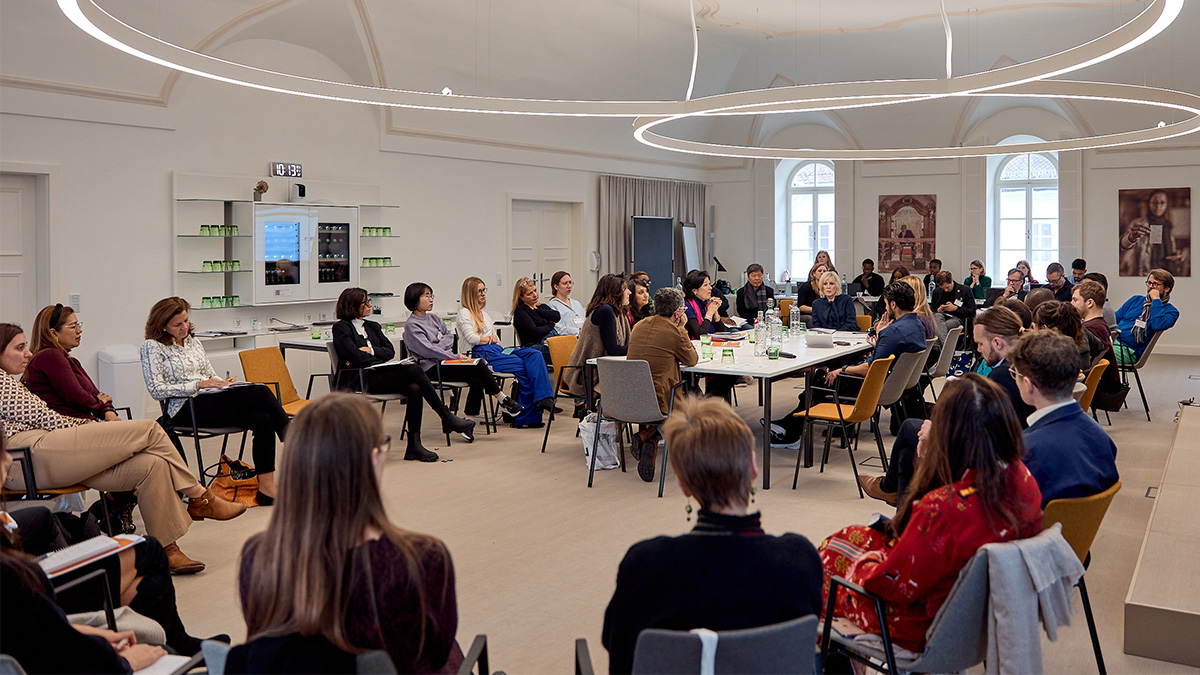
 

Seroshi Nandasiri is part of the inaugural cohort of Fellows in the KFAS-Salzburg Global Leadership Initiative. This year’s cohort focused on the theme of "Uncertain Futures and Connections Reimagined: Connecting Generations". We talked to her during the first in-person gathering of KFAS-Salzburg Global Leadership Initiative Fellows from October 9-13, 2023, at Schloss Leopoldskron in Salzburg, Austria.

The KFAS-Salzburg Global Leadership Initiative is a multi-year program that annually brings together an international, intergenerational, and interdisciplinary network of Korean and global thought leaders to create new connections and tackle global challenges.


Salzburg Global Weekend 2023: Democracy on the Front Lines

This year, for our annual Salzburg Global Weekend, Democracy on the Front Lines, we dove deeply into how democracies – and their citizens on the front lines – are responding to these existential threats, how we can support them, and whether our democratic societies are on the brink of disaster, or on the verge of resurgence

By Benjamin Glahn

In 2023, our annual Salzburg Global Weekend addressed the theme of "Democracy on the Front Lines". From June 30 to July 2, 2023, our special annual weekend program reflected on Salzburg Global’s historical roots of democratic dialogue and reconciliation in the post-World War II. Founded with the intention of fostering open discourse, creating the conditions for lasting peace, and supporting the establishment of a just and democratic post-war global order, our annual weekend program in 2023 took place at a time when democracies around the world were confronting existential challenges, including the rise of authoritarianism, populism, polarization, and a major land-war in Europe for the first time since the Second World War.

This escalation of conflicts between authoritarian and democratic systems, particularly with Russia's military invasion of Ukraine in February 2022, as well the rise of political violence in numerous democratic societies around the world, prompted a reevaluation of the capacities of democratic systems to defend themselves against both external and internal threats. Against this backdrop, our annual Salzburg Global Weekend sought to address the future trajectory of democratic societies and the role of citizens in defending and upholding democratic principles.

Our "Democracy on the Front Lines" program explored how democracies and their frontline citizens were confronting these existential threats, and how international support could strengthen their efforts. With a high-level group of speakers, including Timothy Snyder and Oleksandra Matviichuk, as well as numerous Salzburg Global Fellows from around the world, our annual program addressed how citizens on the front lines of democratic societies were helping their societies – many confronting the brink of disaster – ensure a democratic resurgence.

The Power of Ordinary People: Upholding Democracy and Defending Human Rights in Ukraine

Ukrainian Nobel Peace Laureate Oleksandra Matviichuk explains the important role of citizens on the front lines in Ukraine’s fight for freedom

BY AUDREY PLIMPTON - July 28, 2023

Oleksandra Matviichuk, a human rights lawyer and the first Nobel Peace laureate from Ukraine, delivered the annual Salzburg Lecture during Salzburg Global Weekend on July 1, 2023. The Salzburg Lecture was inaugurated in 2017 to mark Salzburg Global Seminar’s 70th anniversary, and it recognizes the extraordinary contribution of citizens that take personal responsibility for shaping a more peaceful and thriving world, often at great risk.

Oleksandra leads the human rights organizations Center for Civil Liberties, which she established in 2007 to advocate for democratic reforms and protect human rights in Ukraine. As a human rights lawyer, Oleksandra defends people and human dignity. She has received a Nobel Peace Prize for her work and hopes that her documentation of Russian war crimes in Ukraine for the past 9 years will enable “all the Russians who committed these crimes with their own hands, as well as Putin, Lukashenko, and senior political leadership and high military command of [the] Russian state [to be] held accountable.”

Following Salzburg Global Weekend’s theme of Democracy on the Front Lines, Oleksandra’s lecture focused on the role of citizens in upholding democratic values. She dedicated her Salzburg Lecture to the “power of ordinary people,” saying “when you can't rely on legal instruments, you still can rely on people.” The efforts of everyday Ukrainians in “these dramatic times provide us an opportunity to reveal the best in us, to be courageous, to fight for freedom, to make difficult but right choices, and to help each other. Now, maybe like never before, we are acutely aware of what it means to be a human.”

Throughout her lecture, Oleksandra shared several moving anecdotes with the audience about Ukrainian victims of Russian war crimes. She believes it is important to remember individuals because of “how quickly war turns people into numbers. Because the scale of war crimes grows so large that it has become impossible to recognize all the stories.”

Oleksandra highlighted three stories meant to demonstrate the role of citizens on the front lines throughout several major challenges for Ukraine. The first story centered around the Euromaidan protests and the 2014 Revolution of Dignity in which more than one hundred demonstrators “died under the flags of Ukraine and the European Union.” She recalled her efforts with other lawyers and volunteers to defend the human rights of the arrested protestors, despite being opposed by “the entire state machine that wanted to destroy us physically”. 

She took away from this experience that “in different countries of the world, every day, many people also fight for freedom and human dignity. However, the total history of humankind convincingly proved that people should not give up. Even when we have no tools, our own words and own personal stance always remain.”

The second story involved the Russian occupation of Crimea and Donbas. According to Oleksandra’s understanding, Putin initiated this “war of aggression” to thwart any chance of Ukraine’s democratic transformation. She explained, “Putin is afraid of the idea of freedom which came closer to Russian borders. And that is why it is not just a war between two states. This is a war between two systems: authoritarianism and democracy.” 

Despite documenting horrific war crimes occurring in Crimea and eastern Ukraine and sending reports to multiple international organizations, she recalled that “nobody cared” and “nothing has stopped”. Nevertheless, it was ordinary people who participated in demonstrations across more than 35 countries calling for the release of Ukrainian political prisoners, including Ukrainian filmmaker Oleg Sentsov. The “huge impact of the collective action of thousands of people in different countries of the world” was that Sentsov and dozens of other Ukrainian political prisoners were released from Russian captivity in 2019. 

Oleksandra conveyed with this story that “there are a lot of things which have no limitation in national borders. Freedom is such a thing, but human solidarity is also such a thing. The mass mobilization of a huge amount of people in different countries of the world can change this story quicker than UN intervention.”

The large-scale war of Russia against Ukraine was the subject of Oleksandra’s final story. When the Russian invasion started in February 2022, “international organizations and foreign governments evacuated their personnel. But ordinary people remained, and ordinary people started to do extraordinary things.” The power of people was miscalculated by both Putin and the West, as Oleksandra explained that Ukraine has never enjoyed the luxury of well-functioning state institutions, so “when challenges emerge, people get used to taking responsibility on their own shoulders.” 

When the large-scale war started, Ukrainian civil society expanded rapidly, and “suddenly it appeared that ordinary people who are fighting for their freedom and for their human dignity are more significant than [Russia’s] army number two in the world.” This experience proved that “ordinary people's efforts have practical impacts and determine the outcome of this war.”

Oleksandra ended by raising several questions for the audience to consider, asking “How will we protect people, their dignity, their rights, and their freedom in the 21st century?” She emphasized that “human rights, progress, and peace are inextricably linked. Freedom and human rights can't be achieved once and for all. We make our own choice every day.” 

Global challenges are only getting worse, and we need “a new humanist movement” that would “engage people in the protection of rights and freedom and demand the cardinal reform of the entire international system of peace and security” because “freedom and human rights are universal and have no state borders.” Oleksandra’s words serve as a powerful reminder that, whether living under foreign occupation or in a developed democracy, ordinary people are the ones who must take responsibility and fight for their future.

Read the full transcript of Oleksandra Matviichuk's speech here.


Resilience, War, and Trauma: In Conversation With Nobel Peace Prize Laureate Oleksandra Matviichuk

Human rights lawyer and Nobel Peace Prize Laureate Oleksandra Matviichuuk opens up about her ongoing fight for Ukraine's freedom and reconstruction

BY AURORE HEUGAS - July 10, 2023

The Kite Runner is the story of twelve-year-old Amir in 1970’s Kabul, and recounts traumatic events of his childhood in the backdrop of Russia’s invasion of Afghanistan and the rise of the Taliban. This book, by Khaled Hosseini, is a story of redemption amidst generational trauma in times of war. This book is also the one Oleksandra keeps coming back to, in life, and in this interview. 

Storms have a way of exposing the fragility of our foundations. And when stripped of everything, humans are just that, human. 

“War is a huge test for your beliefs. We live in this contrast. We see the best part of human nature, and the deepest cruelty. And it’s very hard,” reflected Oleksandra. 

On Sunday, July 2, I sat down with Nobel Peace Prize laureate and Ukrainian human rights lawyer Oleksandra Matviichuk. Oleksandra gave the Salzburg Lecture as part of the Salzburg Global Weekend, an annual weekend program meant for the organization’s board members, Fellows, and invited guests. This year’s theme was Democracy on the Front Lines. Throughout our conversation, I saw in Oleksandra the duality of war; the pragmatic, task-oriented determination of ending a conflict and rebuilding a country, along with the pain and suffering that comes with an endless fight.
 

“It may be unfair, but what happens in a few days, sometimes even a single day, can change the course of a lifetime.” – The Kite Runner


On February 24, 2022, Russia’s large-scale invasion of Ukraine started. Oleksandra’s fight, however, started long before that. “I have been documenting war crimes for nine years already and when we started our recommendations in February 2014, we had no idea that a war had begun. And now, in a large-scale invasion, we’re faced with unprecedented numbers of war crimes, which means unprecedented level of human pain… I have never been faced with such pure and intensive human pain before. It's very difficult, not just from a professional point of view, because when you have everyday fires, you ask yourself … ‘who will provide justice for all the victims?’ … But it's also very difficult from a personal point of view, because we're all human beings. And with all my experience, with all my knowledge, with all my work in the field for the previous years, I wasn't prepared for this,” said Oleksandra.

In 2022, Oleksandra and the non-profit organization she leads, the Centre for Civil Liberties, won the Nobel Peace Prize. This was the first Nobel Prize awarded to a Ukrainian citizen or organization. With this award comes sudden international attention. For decades, the voice of human rights defenders in the region were left unheard, in the vicinity of the international human rights community, but not in the room where decisions were being made. 

“For decades, Russia persecuted their own civil society, killed journalists, jailed activists, dispersed peaceful demonstrations. Russia committed horrible war crimes in Chechnya, in Moldova, in Georgia, in Syria, and Libya. But the civilized world turned a blind eye to this. They continued to shake hands with Russian leadership and build gas pipelines, did business as usual. This led Russians to think that they can do whatever they want. The Nobel Peace Prize makes the voice of human rights defenders stronger,” said Oleksandra.

Being in the limelight does not come without risk. The enforced disappearance of Ukrainian human rights defenders, journalists, activists, politicians, and other civilians by Russian forces have been part of a systemic effort to terrorize the Ukrainian population and break local resistance. Even then, Oleksandra refuses to back down.

“I have no fear. When the large-scale invasion started, I didn't evacuate from Kiev… We don't know whether or not Russian soldiers will be on the streets of Kiev next morning. And because I work since 2014, I know what it will mean for active people and for me particularly. Life is very fragile. I'm afraid only that I'm not guaranteed to live 200 years. If I had these 200 years, I would feel more secure because I think I will have a huge chance to complete my tasks. Because life is fragile, I have to run very fast.”

While fearless, in February 2022, Oleksandra had two other emotions; “the first was anger, such huge anger. Nine years ago, we fought with the whole state corruption and with the authoritarian regime just for a chance. Just for a chance to build the country where the rights of everybody are protected, the government is held accountable, judiciary is independent, and the police don't beat students in the street. When we got this chance, Russia started this war of aggression [and] occupied Crimea, [and] parts of Lugansk and Donetsk regions. And all these years, we have had no luxury to concentrate on democratic transitions because we have to defend ourselves from Russia. And now they decided that we had no right to have a democratic choice. I was so angry.”

Oleksandra however also felt love. Love because while war tends to destroy everything in its path, it also unites. “Ordinary people started doing extraordinary things. They risked their lives to save others whom they had never met before. I felt so proud to belong to this people. And I feel so much love to be part of this people. This pushed out the fear.”

During the Salzburg Global Lecture, Oleksandra mentioned she “doesn’t know when her story will end”. She seems so absorbed by her mission, she forgets about her own existence. 

“Four days ago, my friend Victoria Amelina was hit in a cafe in Kramatorsk by a Russian rocket. Now she is in a coma, and we don’t know what's going to be the future. It happened so suddenly, and so unexpectedly. It's once again reminded us that we never know how much time we have.”

Victoria Amelina was an award-winning Ukrainian writer. Since this interview, she has unfortunately died from her injuries, becoming the 13th casualty of this attack. 

A sociological survey conducted by the Kyiv International Institute of Sociology revealed that 63% of Ukrainians have at least one close relative or friend who was killed by Russians. 

When asked if she has time to pause or get mental health help, Oleksandra quickly responds: “We are in a marathon, and we have to do this marathon with the speed of a sprint. We have no time because time for Ukrainians converts in numerous deaths… That is why I need it, but I can’t allow myself to make a pause.” 

For a lot of people, it seems unfathomable to exist for one purpose only, without an ounce of joy or distraction. If Oleksandra has any, she wouldn’t tell me, and for good reasons. “I remembered the words of my friend when the invasion started and Russian soldiers came to her native town. She took her two children, drove them to a safe place and lived in a new place for a long period before Russian troops withdrew from her region. In this new place, she tried her best to organize her children a happy childhood and she told me something very important. ‘Russians came to get everything we have. It’s not just territories. It’s joy, it’s love, it’s family, it’s future, it’s education.’ And I decided I wouldn’t provide them any chance.”
 

“I didn’t remember what month that was, or what year even. I only knew the memory lived in me, a perfectly encapsulated morsel of a good past, a brushstroke of color on the gray, barren canvas that our lives had become.” – The Kite Runner


Oleksandra is already thinking ahead to the reconstruction of Ukraine into a better place than it was before the war even started. “I understand that it’s very difficult to speak during the war, but we will have no time to discuss when the war will end. And so we have to be prepared.”
 

“Huddled together in the dining room and waiting for the sun to rise, none of us had any notion that a way of life had ended. Our way of life.” – The Kite Runner


Oleksandra wants to change the angle. Post war reconstruction is not just about rebuilding the physical ruins but modernizing a system that was already broken, focusing on people.

“People affected by this war have to be a priority. (We also have to) speak how to provide psychological and other assistance to victims or how to create compensation mechanisms for people … how to develop programs to support people who return into destroyed territories, how to provide additional stimulus for Ukrainian businesses who lost their assets during the war, how to work with the environment, which is severely endangered. And in order to do it, I think it's a necessity for international partners to work not just with the Ukrainian government, but with civil society, which means local mayors, local communities, civil society organizations, businesses, etc.”

Many human rights advocates have little education in or support for the mental health impacts of their work. In an international survey conducted in 2018 by Columbia University’s Human Rights Law Review, alarming proportions of respondents met criteria for post-traumatic stress disorder (PTSD), sub-threshold PTSD, depression, and burnout. Even more alarming is that 83% of participants had access to little, to no counseling.

Post war, Oleksandra’s work will have to tackle not only the country’s reconstruction and her role within it, but also the damage war has caused for herself. That work still seems a long way ahead, and until then, Oleksandra is realistic about her prospects; “we have no other choice. We will continue our fight. If we stop fighting, there will be no more us.”


Democracy on the Front Lines: Timothy Snyder’s Reflections on Freedom, Ukraine, and the Challenges Ahead

Timothy Snyder explains four major problems for freedom and what these mean for Russia’s war in Ukraine

BY AUDREY PLIMPTON - July 26, 2023

Timothy Snyder, the Richard C. Levin Professor of History at Yale University, delivered the annual Henry Brandon Lecture during Salzburg Global Weekend on June 30, 2023. Since 1994, the Henry Brandon Lecture has taken place at Salzburg Global Seminar in honor of the renowned journalist and author Henry Brandon, whose international relations collection has been housed in Salzburg Global’s library since then.

Read the full transcript of Timothy Snyder's speech here.

Timothy Snyder, an acclaimed historian with expertise in the history of Central and Eastern Europe, lectured on the topic “Democracy on the Front Lines”. He focused on the future of democracy, the meaning of freedom, and the historical and long-term significance of the war in Ukraine. 

In approaching the question of the future of freedom and democracy, Snyder first established that freedom is “the value of values” because it is a “condition in which you are able to make choices among other values and realize those choices.”  He outlined four major problems of freedom for the world today, which he used to share his reflections on the war in Ukraine. 

“Nihilism of both facts and values” is a tremendous problem for freedom because “if freedom is the thing that allows us to make choices among values and there are no values, then there isn't any freedom.” This state of nihilistic indifference can also be called pre-fascism, as “once you get to the point where you are saying that there are no facts and there are no values, you are just one little step from the fascist position… the truth is the same thing as power.” In the war in Ukraine, the enormous scale of lying and propaganda undertaken by the Russians has contributed to this indifference toward facts. Snyder recalled the most interesting part of Yevgeny Prigozhin's June 24 march on Moscow when Prigozhin momentarily told the truth and “allowed us to see that this was always a colonial war, which was always about destroying Ukraine, [and] always about installing a Russian leader.”

Inequality is a challenge for freedom, as it “stops social mobility [and] makes it hard for people to think about the future” in addition to creating clientelism and preventing cooperation across society. Describing Russia as “a country of incredible economic inequality”, Snyder characterized the war in Ukraine as a “war of inequality” and an “oligarchical war”. The wars that Russia undertakes, in Ukraine but also in other places like Syria, are “wars of spectacle abroad” which allow the government to stay in power by drawing citizens’ attention towards external enemies to distract them from domestic issues. 

Snyder’s concept of “futurelessness” occurs when people have no hope for a better future, and it becomes meaningless for them to make free choices or believe in freedom. Additionally, “when there is no future, a certain myth of the past rushes in to fill the gap.” These historical myths can dangerously distort a country’s self-image and have contributed to Russia’s misguided justification for its war in Ukraine. The Russian political leadership, including Putin, does not talk about the future and is instead guided by the sense that “it's all about the past. It's all about things repeating themselves.” In stark contrast, “the Ukrainian discussion of this war is almost entirely about the future. It's about getting through this to that world we were supposed to have.” In explaining this, Snyder pointed to the generational difference between the Russian and Ukrainian leadership, as those in power in Russia are around the age of 70 while those leading Ukraine are closer to 40. He blames the older Russian generation, as they have “crushed the next generation” and continue to do so by sending their young citizens to die “senselessly” in Ukraine. 

Empire poses problems for freedom, as the last several hundred years of history have involved colonialism where “freedom generally means an exploitative condition in which I am free because I can get you to do stuff for me.” Russia’s war on Ukraine shows similar logic to the past three centuries of colonial war, particularly by denying the legitimacy of the Ukrainian people and state, placing blame for Ukraine’s existence on an “international conspiracy”, and pursuing racially motivated demographic changes. Critiquing Russian tactics, Snyder observed that “when [Russia] invaded Ukraine, they said ‘There’s not really a state there’, and when it turned out there was a state and there was a people, then the next move was to say, ‘Well, it's an international conspiracy.’ Depending on what social media channels you follow, that international conspiracy is NATO and EU and Americans, or it's the Jews.” 

According to Snyder, the most important thing to understand about empires is that they must lose their last imperial war. He urged Europeans against giving peace to Russia, saying that the Russian empire would instead have to be defeated in Ukraine, as “the idea of victory is very important for freedom”. To this point, Snyder reminded his audience that “the reason the European Union could come about is because the Europeans lost their colonial wars.” In the case of Europe, “European empire ended as European integration started” and for Ukraine, it should be “more like the story of what happens to other post-imperial states… Freedom for Ukraine involves these moral issues. It involves a sense of the future.”

Snyder praised the “human courage” and “moral commitment” in the Ukrainian resistance, encouraging Ukrainian civil society, government, and European countries to work towards making Ukraine free. He left the audience contemplating how to achieve “a non-exploitive idea of freedom, not just because the Ukrainians need it, but because we all need it.”

Read the full transcript of Timothy Snyder's speech here.


Centering Our Fellows in Our Work: Residencies & Exhibitions

Through Fellow-driven exhibitions and residencies, we are blending Salzburg Global history with inclusive, forward-thinking engagement to create a dynamic space for global dialogue

BY FAYE HOBSON

Since 2018, Salzburg Global has embarked on an ambitious journey to redefine the curation of its historic home, Schloss Leopoldskron, guided by a deep understanding of the importance of place in fostering exchange and transformation. Recognizing the need to adapt to the social, political, and technological shifts of our time, Salzburg Global has been proactive in ensuring that the space not only honors its complex history but also represents Salzburg Global's inclusive and forward-thinking values.  

A standout example of this curatorial vision is the Fellowship Curation at Schloss Leopoldskron, which has enriched spaces with contributions from Fellows around the world. The transformation of Parker Hall to Fellows Hall, complete with artworks, underscores the vital role of these individuals in organizational history. The acquisition of artworks that reflect a myriad of global perspectives are displayed throughout the Meierhof building.  

Salzburg Global's curatorial approach is also marked by a willingness to take risks and experiment, adding a "21st century layer" to the historical narrative of Schloss Leopoldskron. The "Here You Can Be Whatever You Want" exhibition, which was displayed for several months of 2023 in the Great Hall, exemplified this ethos, celebrating the power of individual expression through a series of documentary portraits from Afropunk festivals around the world. This exhibition not only challenged visitors to consider the role of art in societal change but also reinforced the palace as a space where every individual is free to be themselves. For more information on these exhibitions, please refer to Curating Schloss Leopoldskron.

The "Visualizing Translation: Homeland and Heimat in Detroit and Dortmund" exhibition captures the essence of multilingual communities, and "Cultivating History, Documenting Dreams", curated by Salzburg Global Fellows, welcomes visitors with a message of hope and connection. 

Photographs in the "Capturing Legacy" series by Richard Schabetsberger, on display on the walls of the Meierhof building, offer a glimpse into the experience of being a part of the unique inspiring convenings that Salzburg Global hosts. Through this project, Fellows are photographed throughout the Schloss grounds and Salzburg, and remain, through portraits, present in our place. The selection of Fellows seeks to showcase Salzburg Global’s international Fellowship and diverse network and will be updated as years pass and more individuals are welcomed to Schloss Leopoldskron. 

These curatorial initiatives are part of a broader strategy to ensure that Schloss Leopoldskron remains a dynamic and inclusive space that respects its past while embracing the future. Through these efforts, Salzburg Global Seminar continues to foster a sense of belonging and inspiration among its Fellows and guests, proving that even the most historic spaces can evolve to meet the demands of our ever-changing world. 

As Salzburg Global looks to the future, it remains committed to reimagining the role of Schloss Leopoldskron in global dialogues. By continuously engaging with its history and curating spaces that reflect the diversity of human experience, the organization ensures that its home will remain a place of inspiration and transformation for generations to come.

Artistic Residencies

Since 2013, the Cultural Innovators Forum has brought together cultural innovators and creative practitioners from around the world. The artistic disciplines they represent range from the visual and performing arts, literature, and cultural heritage, to food, fashion, architecture, and design.

Reflecting this broad range, and to support and deepen connections within the network and facilitate inter-hub exchange, Salzburg Global Seminar, with support from the Bush Foundation and the McKnight Foundation, was able to support selected Fellows from the Upper Midwest Hub by inviting them to undertake an artistic residency at Schloss Leopoldskron. The selected artists represented diverse creative practices and artistic expressions, from poetry to nature and technological interventions.

Read about the experiences of artists-in-residence Lukas Koski, Siphiwe Ngwenya, Amanda Lovelee, Carl Swanson, Dina Mousa, Adrienne Benjamin, and Moira Villiard.

Writing Residencies

The Salzburg Global Center for Education Transformation offers three writing residencies per year to thought leaders and educationalists working to advance the agenda of education transformation. Our inspiring home at Schloss Leopoldskron allows people from across the globe to work in a new environment, away from the restrictions and pressures of their everyday lives. It provides the time and space for individuals to develop their work and creatively explore new ideas.

We welcomed three writers in residence in 2023: Rena Deitz, Franco Mosso, and Hoang Viet Nguyen.

How To Transform School Climates With Classroom Circles

Writer in residence Hoang Viet Nguyen explores how Circles can incorporate restorative justice into classroom dynamics

BY HOANG VIET NGUYEN

Viet was a writer in residence at Schloss Leopoldskron in April 2023. He is a teacher, teacher educator, social justice advocate, restorative justice trainer, and a Fulbright scholar, who has spent over a decade working with children, youth, and teachers in Vietnam for the empowerment and liberation of individuals and communities. Since 2022, he has joined a pioneering initiative in transforming the Vietnamese school climate named The Classroom Circles as a restorative justice training coordinator.

During my four-week writing residency at Schloss Leopoldskron, I was intrigued by groups of tourists passing by the window daily. It did not take long for me to discover the fact that they were here for the Academy Award-winning movie “The Sound of Music”. As I delved deeper into the film, I was struck by the scene in which Maria taught the “Do Re Mi” song to the Von Trapp children on a hill. Seeing them grounding on grass, singing musical notes in turn, and finally joining together in a melody, I thought about “Lớp học Vòng tròn”, or The Classroom Circles, an educational project in Vietnam that I am involved in. The project aims to transform public school culture and climate through the introduction of restorative pedagogies. What are these Circles, and how could they transform the culture and climate of a school?

Starting from Indigenous roots

Originating from cultural practices of many Indigenous groups worldwide, in a Circle, community members come together to tell stories, listen actively to each other, collect ideas for crucial community decisions, resolve conflicts, and, more importantly, remind each other of their interconnectedness with other human beings and natural beings.

A Circle is comprised of three essential elements: the centerpiece, the talking piece, and the people. While the centerpiece transforms the space where people gather, the talking piece moderates the pace of conversation. In the educational context, a Circle becomes a very potent way to build up community and dismantle structural, systemic violence in schools. The next question to consider is how we, as educators, can use Circles in powerful ways.

Challenging colonial ideologies and power hierarchies in schools

Influenced deeply by colonial ideologies and historical collective traumas from many wars, the Vietnamese education system inadvertently reproduces violence and perpetuates social inequalities instead of promoting healing or nurturing social transformations. For so long, our schools have failed to rightfully name and handle the misconduct and misbehavior of students, as well as bullying, stereotypes, stigma, and other types of violence. Without understanding thoroughly the structural, institutional, or historical root of harm and violence, schools maintain non-tolerant punitive discipline policies which end up reproducing social inequities. 

Many classroom discourses reflect power imbalances in teacher-student relationships in which teachers are usually positioned higher than students. In conventional classrooms, teachers mostly stand and students mostly sit, teachers look down on students from a higher concrete podium and students look up, teachers speak and students listen or repeat. To express their opinions, students have to raise their hands to be called on by teachers.

A Circle can change that power hierarchy by inviting everyone into a space where there are no physical barriers between people and everyone is seen and heard. The talking piece ensures the active participation of all members. Through fostering meaningful dialogues, mutual understanding, and community building, a Circle not only transforms the teacher-student relationship but also promotes collaborative knowledge production. A Circle can transform the one-way knowledge transmission into a “new” one in which teachers and students co-construct new knowledge together. “New” is in quotation marks as a reminder that it’s not a modern innovation but rooted in the Indigenous way of being and doing.

Integrating restorative practices into the (Vietnamese) school system

As Circles can be powerful in dismantling colonial discourses in schools, how do we integrate restorative practices into the Vietnamese school system?

As restorative justice entails a paradigm shift to see people as interconnected beings and view conflicts as opportunities for critical transformation, it can be a helpful approach in addressing school issues at different levels. Educators can consider applying it in schools through the following three tiers.

The first and most foundational tier is focused on community building and handling minor classroom-based conflicts. In this tier, a Circle could be a regular classroom practice in which students’ personal stories are shared and listened to. In case of conflict, the teacher could host a Circle with the participation of the student who caused harm, the student who was harmed, and other affected students. In this way, all students will be given a safe space for expressing their needs and a brave space for actively taking accountability for their mistakes. 

The second tier targets examining and adjusting Vietnamese school disciplinary policies that rely intensely on punitive, non-tolerant, and even corporal methods. In this tier, the key is introducing the concept of the school-to-prison pipeline and whole-school change approach. Schools have to revise their discipline policies, which might be outlined in official documents such as the Student Code of Conduct, and evaluate all current policies in terms of collaborative decision-making, addressing harms and needs, and relational focusing. A policy is identified as “restorative” if it is made through a bottom-up approach that involves diverse stakeholders and invites collaboration.

The third tier concerns addressing systemic inequities in the education system. Under the oppression of institutional powers and discourses created by majority groups, they are underrepresented in curriculum and school policies but overrepresented in other dehumanizing, segregating settings like special education or the juvenile justice system. In this context, restorative justice philosophies and Circle practice could help educators recognize the multiple, intersectional oppressions that disempower minority students as well as our complex positionalities in interacting with students. The land acknowledgment, labor acknowledgment, and personal acknowledgment in hosting a Circle can be a powerful tool for teachers. Lastly, to sustain the practice, there is a need for teachers to come together as a professional learning community.

At the end of the day, transforming a school climate means confronting systemic, structural harm and violence inherent in the entire education system. No matter how challenging and painful the mission is, the community is always the cure.

The Nuts and Bolts of Becoming a Writer in Salzburg 

Writer in residence, Salzburg Global Fellow, and CEO & Co-founder at Enseña Perú reflects on his unexpected path to becoming a writer in Salzburg

BY FRANCO MOSSO COBIÀN

Franco was a writer in residence at Schloss Leopoldskron in 2023. He is the CEO and co-founder of Enseña Peru. He is also a co-founder of Ayni, which brings together more than 1,300 leaders in education from all roles to reimagine education. In addition, he has served as a member of the Network Advisory Council of Teach for All and has been a jury member in several national teacher prizes in Peru.

It’s hard to be alone inside a castle.  

On May 4th, 2023, I sat on a metal bench a few feet from the driveway of Salzburg Global Seminar, watching my colleagues leave the building with their bags to return to their countries. We had finished an exceptional three-day gathering to discuss education. There were people in this group whom I had seen two years in a row, the kind of people with whom you talk about your kids. A couple of them came out of the building with their bag, and I waved to them from afar, smiling as if they were just going to buy some groceries and come right back. I took a deep breath to smell the grass behind me and felt the sun upon me. When nobody else came out, I looked to my left at the whooshing trees. Then, my eyes went to that standalone bench looking towards the lake, at its edge, with three hundred meters of oval-shaped, dark-green water surrounded by 30-foot trees. If you had a video camera capturing that bench, even without a person sitting on it, you could consider that image a movie scene. During the previous days, I wouldn’t sit there because it was too much of an exposed place. I prefer places with more solitude, partly because I tend to talk to myself out loud, and my wife says that people could start asking questions about who I am talking to.

A few hours later, I was finally alone, starting my three-day life as a Writer in Residence. God. I had a broken teenager, a guilty father, an optimistic educator, and a frightened aspiring writer all inside me. Here is what you do in that kind of situation: find a chair you are not supposed to move, go out to the rustic wooden swing under a tree in front of the lake, place your computer on top of the seat of that swing, and get ready to do some serious “Salzburg-castle-level” writing. I felt like a mixture of Edgar Allan Poe and Kung Fu Panda.  

 I opened Word to an empty page, looked at the lake, and started typing, “I’ll be honest,” the first line of my first article. Then, it happened. I appreciated the family of ducks beside me; I embraced the gentle trees that embraced me. While I have enormous attention problems elsewhere, I wrote nonstop from within me—no filter or shame in me. Then I stopped. 800 words. It was the best time ever.  

 With the last word of the draft, I looked at the time. 20 minutes only? God. What did writers do when they were not writing? Do not tell me more writing. So, I went inside the palace, sat on the piano, and played. I stopped every time I felt people coming. Then, I got up and went to the Schloss Chapel with the super high ceilings. I went up and down the stairs multiple times that day. Then I thought about my daughter, my happy place when I feel lonely. I took pictures of the purple flowers, which I sent to her and my wife. This became a routine.  

At the end of two and a half days, I had written six articles, the most productive I’ve ever been. I decided to sit on the bench before the lake to celebrate. After a few minutes there, I began crying. It didn’t matter who was looking; it never mattered. I know that I take my time in places like the bench of Salzburg to express gratitude to the universe for having this fantastic opportunity, but I think that day, I also felt the nostalgia of leaving and guilt to want, perhaps for one more day, to extend my stay, and to magically bring my family to show them how I, unexpectedly, became a writer.

Schloss Leopoldskron Renovation and Infrastructure Projects 2022-2023

Over the years 2022 and 2023, a lot has changed at Schloss Leopoldskron. Salzburg Global is ever growing and learning from its Fellows and the world around us, which means adapting the space to reflect those changes. Many developments have taken place over the past two years.

BY DANIEL SZELÉNYI

2022

Mansbach Garden Parterre
In the summer of 2020, the redesign of the Garden Parterre, the section between the palace and lake, began. The Royal Garden Academy Berlin was commissioned with the project, in which over 17,000 plants have been planted so far, including more than 3,000 flowering perennials, such as peonies, grasses, asters or catnip, 1,660 new trees, 100 roses (in 12 different varieties), and nearly 12,000 spring bloomers, including tulips, ornamental onions, daffodils and crocuses were planted. By now, a sea of flowers with a true explosion of color has emerged. In June 2022, the parterre was officially renamed the “Mansbach Garden Parterre”.


2023

Red Salon
On February 15, 2023, Schloss Leopoldskron unveiled its new rendition of the Red Salon. What used to be four white walls have become the focal point of the room, with thin wood panels now attached to them, displaying a hand-painted fantasy landscape.

The Red Salon renovations were conceived by renowned interior designer Ken Fulk and London-based brand de Gournay.

The physical renovations and historic preservation of the Red Salon were made possible through the generous contribution of U.S. Ambassador Trevor D. Traina as well as former U.S. Ambassadors to Austria, Ambassador Alexa Wesner, Ambassador Bill Eacho and Donna Eacho, Michael Huffington and Terry Huffington (son and daughter of former U.S. Ambassador to Austria, Roy Huffington), Ambassador Lyons Brown, Ambassador Susan McCaw, Ronald Abramson, and the Austrian Historic Monuments Office (Bundesdenkmalamt). 


Seminar Rooms 1-3
In May 2023, we completed a soft renovation of our three seminar rooms. With fresh paint, new carpet, new furniture (folding desks with wheels and sleek chairs from the Austrian company Selmer), a new coffee station with lake views and modern, flexible tech, the three seminar rooms perfectly complement our existing conference space offering (including Fellows Hall and the Gallery), both for our Sessions and Fellows, as well as outside guests and clients. Each of the three rooms features artworks from our “Cultivating History, Documenting Dreams” series by Salzburg Global Fellows Jose Cotto and Yasmine Omari. In addition, we have created a new exhibition space in the hallway outside the Seminar Rooms, the now-called Seminar Room Lounge. 
 

Garden Parterre Fountains
With an ambitious goal of less than four weeks, we successfully completed the construction of the two fountains in the Mansbach Garden Parterre in August 2023. Thanks to the support of Grant and Peggy Cambridge, we managed to realize this project ahead of the summer for our guests to enjoy when sitting in or walking around the Mansbach Garden Parterre.

Bathroom Suite 521
As part of our DEI initiatives, we completed the bathroom renovation in the Sir David Gore-Booth Suite (521) in December 2023. The new bathroom is now wheelchair accessible and features dedicated installations, such as handlebars, and a seat in the shower, so guests with mobility challenges – whether in a wheelchair or simply elderly guests – can feel secure while using the bathroom.

Looking Ahead

Masterplan and Conservation Management Plan 
In 2021, we started preparations for an extensive facilities masterplan with the goal of providing Salzburg Global with a “Conservation Management Plan”, a proof of concept for how we can make informed decisions for future renovations. Throughout 2022 and early 2023, detailed surveys were taken of all relevant critical areas. These included electrical infrastructure surveys, conservation surveys (glass, ceramics, paintings, wood, lamps and chandeliers, stucco, furniture, paper, mirrors), house technical surveys (heating, plumbing, piping, etc...), structural assessments, and measurement surveys. In the process, we evaluated and planned next steps on critical campaign-funded renovations. With all surveys completed throughout 2023, we are using this relevant information to compile the Conservation Management Plan throughout 2024.

Green Energy and Cooling
We are currently working on making the Meierhof carbon neutral. As a first step, we disconnected the Meierhof heating from natural gas and connected to the city’s district heating network in January 2023. In the next phase, a solar powered heat pump to heat (and later cool) the Meierhof rooms and spaces was installed in 2024. 


Meierhof Lobby Lounge and Bar
We decided on a new concept for a Meierhof Lobby Lounge and Bar in 2024 and it is planned to be built in early 2025, allowing for an enhanced guest experience in the Meierhof, as well as an increase in revenue and reputation.
 

Diversity, Equity, and Inclusion at Salzburg Global


Salzburg Global is working to institutionalize diversity, equity, and inclusion into our people, programs, and place, including through the release of our inaugural DEI report in 2023


BY BETH PERTILLER

Over the past 76 years, Salzburg Global has been committed to peace, reconciliation, and renewal. To meet our aims, we have always sought to embrace diversity and allow for an authentic exchange. We believe that peace and reconciliation can only happen in an atmosphere of understanding, recognition, and true appreciation of different perspectives and opinions. To this end, Salzburg Global has embraced diversity, equity, and inclusion (DEI) throughout its history. Needless to say, our understanding of DEI has broadened over time. It is a journey that unfolds day by-day, step-by-step, as we continue to learn from our Fellows, partners, and diverse voices.  

Over the last few years, we have taken stock of our journey so that we can learn from our history, develop a forward-looking vision, and pursue initiatives to help fulfill that vision. Our work in DEI is led by our Board Working Group and a DEI staff taskforce. These two groups include Salzburg Global board directors, Fellows, employees, and contractors. This work could not have been done without the support of institutional partnerships and donors who often have DEI-related issues at the core of their mission and values.  

At Salzburg Global, our journey on issues related to DEI continues to strive to incorporate practices that promote belonging, accessibility, and decolonization, amongst others. As we continue to evolve our understanding and approach, we also seek to garner feedback from our Fellows and partners.

At Salzburg Global, we define the terms “Diversity”, “Equity”, and “Inclusion” as follows:   

  • Diversity is the presence of differences that may include race, gender, religion, sexual orientation, ethnicity, nationality, socioeconomic status, language, (dis)ability, age, religious commitment, or political perspective. This encompasses populations that have been and remain underrepresented among practitioners in the field and marginalized in the broader society. 
  • Equity is promoting justice, impartiality, and fairness within the procedures, processes, and distribution of resources by institutions or systems. Tackling equity issues requires an understanding of the root causes of outcome disparities within our society and finding ways to distribute power and agency to marginalized groups. 
  • Inclusion is an outcome to ensure those that are diverse actually feel and are welcomed. Inclusion outcomes are met when you, your institution, and your program are truly inviting to all. This applies to the degree to which diverse individuals are able to participate fully in the decision-making processes and development opportunities within an organization or group. 

As we embarked on the most recent phase of our DEI journey, we undertook a consultative process, looking to both external and internal resources to help inform our forward-looking strategy. The first step we took was to develop a set of pillars to help guide our focus. Salzburg Global’s people, program, and place were identified as key in creating change and effectively executing our DEI initiatives and corresponding vision statements.

People

  • Diversity – We aim to reflect the world that we see, both internally with our staff, and externally, with the Fellows who partake in our programs.  
  • Equity – We strive to provide our staff access to resources and opportunities, as well as giving them the agency to flourish in their role.  
  • Inclusion - We recognize that all people involved with the organization have different needs and we strive to understand those needs and create an equitable environment.  
  • Belonging - We strive to create a culture of belonging for all of our people to feel included in organization decisions regardless of the role and location they are in. 

Program

  • Diversity – We endeavor to assemble a globally diverse group of people to co-create program strategies, develop ecosystems and theories of change. 
  • Equity – We aim to promote the idea that meaningful change is only made when different voices, including those often marginalized in formal decision-making or policymaking, have agency and can contribute to the discourse. 
  • Inclusion – We strive to find or create and implement best practices to give a voice and agency to Fellows who attend our programs, considering their lived experiences. 

Place

  • Inclusion - We commit to evolving our understanding of our history and place in a transparent and consultative manner that represents different interpretations and viewpoints. 
  • Communication - We strive to communicate about the evolution of Schloss Leopoldskron, how this evolution speaks to DEI, and invite participation from all those who engage with the space. 
  • Access – We aim to become certified according to Austrian standards as an accessible hotel and convening venue wherever possible. 
  • The Salzburg Global Mission – We strive to use the physical space to facilitate an increased understanding of Salzburg Global, our mission, our programs, and our values by all guests that visit Schloss Leopoldskron. 

Alongside the development of vision statements, we sought out to catalog the practices in place to recruit, support, and develop our people; make significant visible changes in our facilities to better reflect our organization and our global Fellowship; and take stock of our program design, recruitment, and delivery to incorporate best practices and communicate about our principles of the “three Is”: interdisciplinary, international, and intergenerational. The following sections detail our ongoing efforts in the areas of people, program, and place.

People

In our organizational journey, we have taken steps to integrate our values into our institutional fabric, a process that commenced with identifying these values through a collaborative process with staff in 2021. These institutional values are now not only articulated on our website but also woven into our organizational policies and practices.  

Concurrently, we have embarked on a deliberate path towards increasing the diversity of our team, aiming to mirror the global landscape within our internal workforce and the Fellows who attend our programs. To this end, we have invested resources to partner with recruitment firms with a global reach and supported a number of international staff members in joining our team. 

Our commitment to diversity, equity, and inclusion (DEI) has been further reinforced through a workshop attended by senior management, led by facilitators Rina Alluri and Litha Sokutu, both Salzburg Global Fellows and DEI Board Working Group members. This workshop facilitated self-reflection and enhanced our collective understanding of DEI challenges within our workforce, paving the way for effective strategies to address them.  

To gauge our progress in fostering an inclusive culture, we have initiated a cultural identity survey, which was disseminated among board directors and staff and will take place every two years going forward. Additionally, a comprehensive survey conducted among staff members in 2022 provided valuable insights into the geographic diversity within our team. This survey helped us to identify the key demographics that our staff members represent and is illustrated below through a heatmap showcasing staff countries of birth. 

Amongst staff members, a remarkable diversity is evident, encompassing proficiency in 31 languages, including two members with advanced sign language skills. We aim to leverage these skills in future recruitment and information dissemination. A substantial majority of our staff (83%) agree or strongly agree that they feel valued in the workplace, including 85.7% of those with disability and those who identify as LGBTQ+. Moreover, our commitment to educational parity is underscored by a consistent post-secondary education (or higher) rate across genders, which we plan to sustain. We recognize the imperative to continue addressing any gaps in cultural diversity representation within our leadership ranks to ensure diverse perspectives are considered in decision making.


Furthermore, we conducted salary benchmarking by comparing positions and salaries with external benchmarks from the tourism and NGO sectors; this process was facilitated through an external benchmarking firm. 

Over the last several years, Salzburg Global has been taking steps to unify different departments within the organization and codify our one institution approach through the development of our organizational values, introduction of a new branding strategy, and organizational restructuring. As a result, a department for organizational development was created. In addition to adopting the vision statements of the DEI people pillar, it seeks to build and reinforce a culture that is welcoming and open to exchange and ideation; treat our staff and one another fairly and seek to support growth and transformation among our staff and Salzburg Global; and cultivate a culture where our team feels empowered and can grow personally and professionally while working at Salzburg Global. 

Programs

In our recruitment efforts for Salzburg Global programs, we initiated collaborations with new partners to bolster program outreach and recruitment. Some notable examples include Restless Development, Tobitate! and YouthxYouth. 

To ensure diversity and inclusivity within our programs, we have undertaken several initiatives. Firstly, we have expanded our advisory committees by appointing several new members, with a focus on identifying existing gaps and amplifying a diversity of voices and perspectives. 

Additionally, our commitment to fostering diverse leadership is exemplified by the Salzburg Global Center for Education Transformation's success criteria, which includes participation from leaders under 30 at its programs. To gather vital demographic insights, we have piloted a demographics survey with select groups of 2022 Fellows, with plans for further implementation in 2023. The data gleaned from this survey will inform and refine our recruitment strategies moving forward.  

We have seen a dedicated focus on diversity, equity, and inclusion (DEI) across several programs such as “Health and Economic Well-being: Gender Equity in Post-Pandemic Rebuilding” and “Public Policy Innovations for Inclusive Communities” and are testing several DEI best practices and methodologies in our fall programs.  

The integration of Qualtrics, a sophisticated survey tool implemented earlier this year, has enhanced our evaluation process by allowing for the comparison of evaluation results with basic demographic data. It also provides a feedback loop from Fellows to the program team. By using this tool for each program, we are identifying learnings specific to our DEI goals and finding new ways to embody our organizational values in our programs.  

We have now published our inaugural DEI Report, marking the first installment in a comprehensive series of four reports. This document includes a detailed historical overview of our institutional endeavors concerning Diversity, Equity, and Inclusion; our DEI institutional philosophy; and an introduction to how our People, Program & Place pillars inform our DEI strategy. 

Place

As highlighted in various sections of this report, DEI principles have been integral to the meticulous curation efforts and ongoing renovations of our Schloss. These endeavors underscore our commitment to ensuring that our spaces are reflective of our values and accessible to all.

Several exhibitions containing artwork which aligns with our DEI strategy were showcased throughout the Schloss and Meierhof in 2022 and 2023. A painting from Salzburg Global Fellow Louisa Whettam, a descendant from the Wiradjuri tribe in New South Wales, Australia, hangs in the reception area of the Meierhof and is meant to represent, according to Whettam, “people from all different countries coming together and being a part of a Salzburg Global program”. 

Several photographic exhibitions have set the tone for all visitors to feel welcome and free to be themselves at the Schloss. These include “Capturing Legacy” by Richard Schabetsberger, “Visualizing Translation: Homeland and Heimat in Detroit and Dortmund”, which reveals multilingual communities in Southwest Detroit and Northern Dortmund, and “Here You Can Be Whatever You Want”, which shows people from all walks of life who celebrate unadulterated expression and joyful individuality. For more information on these exhibitions, please refer to the section on Centering Our Fellows in Our Work: Residencies & Exhibitions or Curating Schloss Leopoldskron.

The experimental curation initiatives at the Schloss give us a chance to talk about the history of the building, to unpack the narratives behind that history, and to discuss what types of artwork people expect to see in spaces such as this. This prompts visitors to consider the social, political, and economic underpinnings of that and the issues that it raises in terms of systemic racism, representation, and histories of erasure from the dominant narratives of art history. 

Acknowledging the urgent need for action regarding certain spaces within the Schloss, Salzburg Global implemented placards providing historical context in 2019 as an interim measure while creating more permanent signage. The permanent, detailed signage was installed in July 2023, allowing guests to undertake self-guided tours with QR codes providing more detail into the history of the Schloss. 

Related to these efforts was the renaming of the Chinese Room to the Green Salon in 2023 following valuable criticism and feedback from Fellows. Originally installed by Max Reinhardt in 1927, the room underwent a detailed process involving external experts who investigated the connection of objects in the room to the style of chinoiserie. 

In our ongoing commitment to accessibility, we have identified key long-term priorities and completed several projects within our facilities. To ensure a comprehensive approach, we conducted meetings with various external stakeholders to conduct audits of the Schloss facilities as they relate to accessibility. A suite in the Schloss was remodeled to ensure wheelchair accessibility, facilitating greater mobility and comfort for visitors. Additionally, we have invested in acquiring additional equipment to enhance the accessibility of existing rooms on an as-needed basis. 

Looking ahead 

As we look forward to the year ahead, we are excited about the opportunities it presents for building on the work that has taken place over the past two years. As we continue to make visible changes within our people, programs, and place pillars, in 2024 we institutionalized many of the ongoing projects as well as identified new partnerships that align with our mission and vision. This holds immense promise for solidifying our efforts and expanding our reach, as we continue our journey towards creating positive, lasting impacts within our organization and beyond.
Salzburg Global at Home

BY SALZBURG GLOBAL

Toward the end of April 2022, Salzburg Global Seminar made history by electing its first non-American president. Martin Weiss, a veteran diplomat who served as Austrian Ambassador to the United States, accepted the role with “humility and enthusiasm.” Building on the work of his predecessor, Stephen L. Salyer, Martin has sought to increase the organization’s visibility both in Austria and abroad. Before his arrival, work had already begun in this regard.  

Following Russia’s invasion of Ukraine in February 2022, Salzburg Global offered free accommodation for the entire month of March to Salzburg Global Fellows and their families fleeing the war, serving as a place of refuge and safety. Hotel Schloss Leopoldskron was part of the Austrian National Hoteliers Association’s #HotellerieHilft, coordinating with local authorities to provide assistance. 

During this time, more businesses were also beginning to open again after getting through the worst of the COVID-19 pandemic. After reopening following the lockdowns, Hotel Schloss Leopoldskron sought to expand its reach to non-hotel guests, including local residents interested in having breakfast at the palace. New partnerships with local tourism agencies, such as Salzburg Tourism Agency and the Austrian Convention Bureau, meanwhile, led to more media visits and greater exposure in key markets. 

In May 2023, Schloss Leopoldskron staged a high-level conference called Global Europe Seminar. Initiated by EU Commissioner Johannes Hahn, the event brought together thinkers and leaders from politics, academia, business, and culture to Salzburg. Speakers included several Salzburg Global Fellows, including Kristalina Georgieva, managing director of the International Monetary Fund, who joined via video call.  

In the same month, the palace co-hosted the third annual friends’ reception for Mozarteum University and Schloss Leopoldskron patrons. This reception included a naming ceremony for a breed of rhododendrons called “Schloss Leopoldskron,” produced by Bruns, one of Europe’s most renowned tree nurseries. May also saw the return of Shakespeare in the Park: Golden Lads & Girls, a continuing collaboration with Salzburger Landestheater.  

In June, Salzburg Global’s 75th-anniversary celebrations started early. At the Board Weekend, congratulatory messages were shared from President of Austria Alexander Van der Bellen, U.S. Secretary of State Antony Blinken, and U.S. Ambassador to Austria Victoria Reggie Kennedy, highlighting the impact the organization had made within Austria and afar. In addition, the Salzburger Nachrichten marked the occasion with a special edition supplement. 

There were plenty of reasons to celebrate that month, as it was also revealed Salzburg Global had met its goal of raising $18 million through its Inspiring Leadership campaign. Contributions towards the organization’s largest-ever fundraising campaign have enabled Salzburg Global to continue to invest in its programs, people, and place. 

One of those places is Schloss Leopoldskron’s Gallery. Following its recent renovation, the Gallery hosted its first exhibition. Trevor Traina, former U.S. Ambassador to Austria, had his high-profile American Photography collection on display, curated by Austrian art historian Carl Aigner.  

In addition to this curator role, Aigner also edited Salzburg Global’s 75th-anniversary book: Schloss Leopoldskron – Past and Present. This book, which documents the history of the palace and its owners, was launched on Salzburg Global Day (July 15) at an event attended by more than 100 people.  

The same day, a new video documenting the organization’s impact was published - Salzburg Global Seminar: Home to Changemakers for 75 Years. This video features Fellows past and present, including US politician Stacey Abrams, and has since gone on to have thousands of views, raising further awareness of the organization’s impact.  

Ahead of his official start on August 1 as Salzburg Global’s new president and CEO, Martin Weiss used the summer as an opportunity to network, speaking with journalists about his new role and attending local events. Having already participated at the June Board Weekend, meeting staff, Fellows, and Salzburg dignitaries, Martin returned to Schloss Leopoldskron in July to meet Ambassador Victoria Reggie Kennedy and Ambassador Mordechai D. Rodgold.   

In August, Schloss Leopoldskron hosted a conference led by Karoline Edtstadler, Austrian Minister for European Affairs. The conference – The Next Generation is Female – sought to look at the challenges in Europe from a female perspective and come up with solutions. In September, film director, writer, and film producer Doris Dorrie gave an exclusive reading in the Max Reinhardt Library for a selected group of Salzburg locals and hotel clients.  

Now officially in his new role, Martin continued to represent the organization at home and abroad in the following months. This included a meeting with Salzburg Governor Wilfried Haslauer, attending an event marking Salzburg Global’s inclusion in Harvard University’s Archives, and speaking at the Österreichisch Amerikanische Gesellschaft’s panel discussion on US midterm elections. 

He was also present at the launch of a new photo exhibition in December, held in cooperation with the Ukrainian Institute of Public Diplomacy. The exhibition, Children in War, was on display in Schloss Leopoldskron’s Max Reinhardt Library and highlighted the lives and experiences of children in Ukraine affected by war. It was curated by Salzburg Global Fellow Olena Prokopenko and open to the public.  

As 2022 came to a close, Salzburg Global kicked-off a new tradition at Schloss Leopoldskron. Members of the Salzburg community were invited to a Winter BBQ to enjoy hot drinks, Grillwürstl, and a bit of holiday magic. At this time, discussions were already taking place as to how to celebrate Max Reinhardt’s 150th anniversary in 2023. 

The festivities began in February when Schloss Leopoldskron unveiled its new rendition of the Red Salon, formerly known as the McGowan Room. With other financial supporters, Trevor Traina, former U.S. Ambassador to Austria, collaborated with renowned interior designer Ken Fulk and London-based brand de Gournay to restore the room. The new Red Salon, which honors Reinhardt’s legacy, received coverage in several international outlets, such as Town & Country, as well as Austrian media, like the Salzburger Nachrichten. 

In 2023, Salzburg Global sought to strengthen its relationship with the Salzburg Festival by finding new meaningful ways to collaborate. Schloss Leopoldskron is alleged to be the location where the idea for the Salzburg Festival was conceived. With that in mind, a suite of tailor-made events celebrating the heritage of Reinhardt and the significant role of Schloss Leopoldskron in the Festival’s history were planned.  

The first of these events was the inaugural Max Reinhardt Symposium. In cooperation with the Vienna Theatre Museum, Hollitzer Verlag, and Salzburg Festival, the Schloss hosted a two-day event in May with academics and experts focusing on Reinhardt’s final Salzburg production: Goethe’s Faust (1933-7). In addition, the Symposium examined Reinhardt’s international artistic network.  

In July, Salzburg Global joined the official opening celebration of the Salzburg Festival for the first time. Schloss Leopoldskron staged two concerts by an ensemble of the Vienna Philharmonic and a performance featuring the stars of that year’s Jedermann (Everyman) play: Valerie Pachner and Michael Maertens. Nearly 1,000 visitors came together throughout the day to revel in the world of music, literature, and history.  

An exhibition titled “Please keep at it!” showcased Reinhardt’s creative process in August. On display in Schloss Leopoldskron’s Max Reinhardt Library was Reinhardt’s original director book for his production of Faust, letters, and a sketchbook featuring designs of the library itself. This exhibition was held with support from the Salzburg Festival, Austrian Theatre Museum, and the Vienna City Library.  

On September 8, the inaugural Max Reinhardt Lecture took place in Fellows Hall and was delivered by esteemed professor Oliver Rathkolb. Professor Rathkolb delivered a lecture titled Max Reinhardt and Austrian Memory Politics from Habsburg to the Present. The goal of this lecture was to reflect on Reinhardt's enduring influence and legacy in the theater world, as well as on Austrian cultural memory at large. 

All these events led to a grand Reinhardt Celebration on September 9: Max Reinhardt’s 150th birthday. That evening, the Schloss came alive a captivating theatre performance by director Michael Sturminger “immersed guests in a theatrical world in the style of Reinhardt’s legendary parties.”  

Guests were taken through the Schloss to watch performances such as Shakespeare’s Twelfth Night, Strauss’ Ariadne auf Naxos, and Mozart’s Le Nozze di Figaro. A gala dinner followed, featuring performances by Michael Maertens, Valery Tscheplanowa, and Camilla Nylund. Notable attendees at the Celebration included Max Reinhardt’s three grandchildren.  
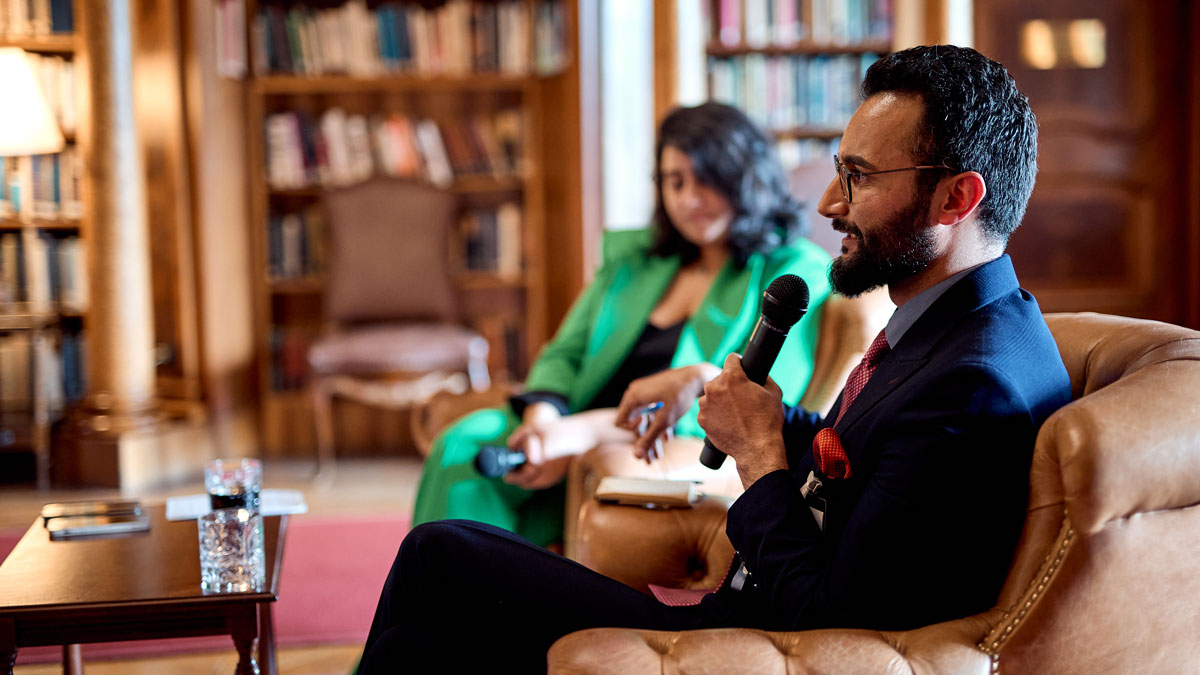
In the background of these activities, Salzburg Global and Hotel Schloss Leopoldskron continued to make its presence known more widely in Austria throughout 2023. Martin appeared regularly on Austrian media outlets, in addition to meeting ambassadors – past and present, and members of Salzburg’s community. News of Victoria Mars’ generous donation to Salzburg Global also made headlines in Austria. 

Schloss Leopoldskron continued to serve as a venue for significant external events. In June, the EU Directorate-General for Competition chose Salzburg as one of five cities to host a “Markets for People” debate. Schloss Leopoldskron was the venue for the second debate, which was titled “Markets for people – or vice versa?” and President Weiss was among the speakers. 

In September, the palace also participated as a venue in the well-established “Austrian Monument Day” for the first time ever, providing members of the public further opportunity to explore the grounds with tour guides.  

The Winter BBQ in December capped off a busy but exciting year at Schloss Leopoldskron. As friends of Salzburg Global gathered around the fire, there was a moment to be thankful. In addition to its Fellows and partners, Salzburg Global recognizes it is the support of its local community and its friends within Austria that ensures it can continue to undertake its mission.  

There are now more opportunities than ever for people to visit Schloss Leopoldskron and learn about the organization’s history. Salzburg Global will seek to strengthen these relationships in the years ahead as it continues to challenge current and future leaders to shape a better world. 
Our Supporters: An Overview of Salzburg Global's Campaign and Partnerships

Our donors and partners allow us to enact positive change in the world, here is an overview of the organization's fundraising efforts

BY KRISTINA VER FOLEY, JANE OWEN, AND NANCY SMITH - July 26, 2023

Salzburg Global Seminar is an independent, not-for-profit organization with global reach. However, none of our work would be possible without the many and varied donors, supporters and partners we have from around the world. 
The 2022-2023 period was transformative for Salzburg Global Seminar's fundraising efforts. A key achievement was the successful completion of the 75th Anniversary Inspiring Leadership Campaign, raising $18.3 million for our people, programs and place. This success reflected the enduring vision of Salzburg Global Seminar and the generous support from its global network of donors and partners. Here are a few examples of the campaign’s impact: 

People: 

A priority of the campaign was increasing participation through a $1 million endowed scholarship program, enriching the experience of all participants by creating more diverse cohorts of Fellows. The Impact Fellowship Program, another initiative, allows young leaders to work with Salzburg Global staff, developing skills and expertise across various program areas. 

Programs: 

The Inspiring Leadership Campaign funds launched the Center for Education Transformation, focusing on system transformation in areas like social, emotional, and creative skills, education in emergencies, regenerative education, language policy, education leadership, and inclusive futures. The Center exemplifies the campaign’s success by holding public events, hosting residencies for innovative thinkers, and supporting the publication of Fellows’ research. 

The campaign also bolstered the growth of the Cutler Center for the Rule of Law. The Cutler Fellows Program nurtures young leaders in international law, and the Center is set to launch the Rising Lawyers Network for early- and mid-career lawyers to address threats to the Rule of Law and strengthen supportive institutions globally. 

Place: 

This period marked a leadership transition from Stephen Salyer to Martin Weiss. A mini-campaign honoring Stephen's leadership raised over $900,000, pushing the campaign to surpass its $18 million goal. As a parting gift, Stephen and his wife, Susan Moeller, joined by family and friends, donated 17 cherry trees to Schloss Leopoldskron, symbolizing their years of service. 

The Inspiring Leadership Campaign not only met its financial goals but also catalyzed future transformative giving. The success and impact of this campaign have inspired confidence and enthusiasm among donors and stakeholders, setting the stage for continued philanthropic support and engagement. The funds raised have enabled Salzburg Global Seminar to expand its programs, support a more diverse Fellowship, and continue its mission to inspire leaders to shape a better world. 

Partnerships: 

Institutional partnerships are essential to the work of Salzburg Global. Even as the Inspiring Leadership Campaign was successfully concluding, our institutional partners provided the backbone of support for our programs, representing approximately 40% of our annual operating budget. These partners enabled us to develop and implement high impact programs, helping us to identify and engage with well over 1000 emerging and established leaders per year, our Fellows, from around the world. Our partnerships also span the globe, span decades, and span sectors. Institutional partners provide essential resources, including funding, but they are also partners in our mission, essential collaborators in our work, and champions of the positive change that we strive to produce. 

Our deepest thanks goes to each and every partner, donor, contributor and Fellow. Your support truly means everything to Salzburg Global Seminar.  

Find the list of our donors, funders, and board directors 2022-2023 here.

Historic $11 Million Gift Launches “Pathways to Peace Initiative" at Salzburg Global Seminar 

Salzburg Global Seminar announces largest single gift the organization has ever received

Jun 30, 2023

On Friday, 30 June, Salzburg Global Seminar received a gift of $11 million to advance its mission and impact.

This extraordinary contribution from Salzburg Global’s Chairwoman of the board and former Corporate Ombudsman and Chairwoman of the board of Mars, Incorporated, Victoria B. Mars, will enable the launch of the ground-breaking “Pathways to Peace Initiative (P2P)".  

Established in 1947 as a lever for post-war reconciliation, Salzburg Global Seminar has since grown into a renowned international organization dedicated to fostering dialogue and collaboration on global issues. Through its interdisciplinary and intergenerational programs, Salzburg Global brings together experts from across the fields of peace and justice, education, culture, health, and finance and governance to inspire, inform, and challenge one another. 

These program funds will be allocated beginning this year for programs at Schloss Leopoldskron, Salzburg Global’s home, which will enable high-level dialogue on issues critical to global dialogue and collaboration. This includes topics like the future of Russia, a country where previous hopes for liberalization and Europeanization have rapidly faded, making the question of “What is to be done about Russia?” increasingly pertinent.  

Benjamin Glahn, Salzburg Global’s Deputy CEO and Managing Director for Programs, explains the importance of this gift for the organization: "In an era of major political, strategic, economic and cultural shifts, this extraordinary and historic gift will enable Salzburg Global to make a sustained and lasting contribution to new thinking on the issues and challenges that will define the coming decades of global cooperation and collaboration. Open and critical dialogue in ways that can spark new ideas and new pathways toward peace has been at the heart of Salzburg Global for the last 75 years, and this will ensure we can continue this important mission for the next 75 years and beyond.”  

"We are immensely grateful to Victoria Mars for her trailblazing leadership and exceptional generosity," said Salzburg Global President and CEO Martin Weiss. "An annual program designed to respond swiftly to emerging challenges on the global stage has been an ambition of ours for decades, but the long-term funding required to make this become a reality has been elusive until now. Being able to launch P2P is a dream come true!” 

Reflecting on her decision to contribute to Salzburg Global Seminar, Victoria Mars shared, "As we conclude our 75th anniversary year, I am deeply inspired by Salzburg Global’s enduring commitment to fostering global understanding and collaboration. Now, more than ever, we must unite in our commitment to peace and justice, forging a collective resolve to overcome division and build bridges of cooperation. It is through these tireless endeavors that we can pave the way for a better tomorrow, where conflict gives way to understanding, and peace prevails over discord."    


Our Financial Information

Our audited financial information from 2020 to 2023 at a glance


On to the Next 76 Years!

As we look back on these two years, we see that the future of Salzburg Global has never looked brighter.
 
We completed the most extensive fundraising campaign in our history, announced the largest single gift, expanded our programs, found new ways to support and engage our Fellows, and made significant new investments in our people, place, and programs.
 
With this extraordinary period now behind us and as we look ahead, we are reminded of all the staff, Fellows, directors, friends, and supporters who have been stewards of this extraordinary institution for so long and have worked to build solid foundations for the future.
 
We find ourselves in this position today because of the tireless and extraordinary work of those who committed themselves to the evolution of Salzburg Global Seminar over so many years.
 
We remain grateful to all who have contributed to our mission and look forward to building on this success in the future.
 
Now, on to the next 76 years!