KFAS-Salzburg Global Leadership InitiativeUncertain Futures and Connections Reimagined: Connecting Technologiesexplore |
Introduction
Intersecting Challenges: Connecting Technologies
Proposals for Action
Authors: Jasvin Bhasin, Carolina Chambel, Aditi Chaturvedi, Jake Effoduh, Deeksha Goel, Pedro Antonio Gonzalez Martinez, Ayako Hatano, Eunbee Jang, Ieva Keskine, Gowun Kim, Min Seung Kim, Neville Lai, Kun Lee, Sanghyun Lee, Daeyeol Lee, Jung Woo Lee, Jennifer Lee, Bittna Lee, Jongwon Lim, Clarity Mapengo, Marisa McPherson, Chimin Oh, Steve Park, Hyeyeon Park, MinChi Park, You Won Park, Kelly Park, Sungyeon Park, Shaurya Patel, Audrey Plimpton, Jehan Salim, Yuki Satake, Clare Shine, Felipe Suarez Giri, Alexia Tassios, Kevin Wei, Hong Xu, Pauline Yeung, Eugene Yi, Chang-Dong Yoo, Sunghee Yun, Helen Zhang,
Editor: Louise Hallman
Director – Culture, Salzburg Global: Faye Hobson
Impact Fellow – Culture, Salzburg Global: Surya HK
Head Manager of Educational Partnership Team, Korea Foundation for Advanced Studies: Nuri Kim
Associate Manager, Korea Foundation for Advanced Studies: Chaeyoung Lee
Korea Foundation for Advanced Studies (KFAS)
To see all the Fellows of the KFAS-Salzburg Global Leadership Initiative, please visit: www.salzburgglobal.org/multi-year-series/kfas/
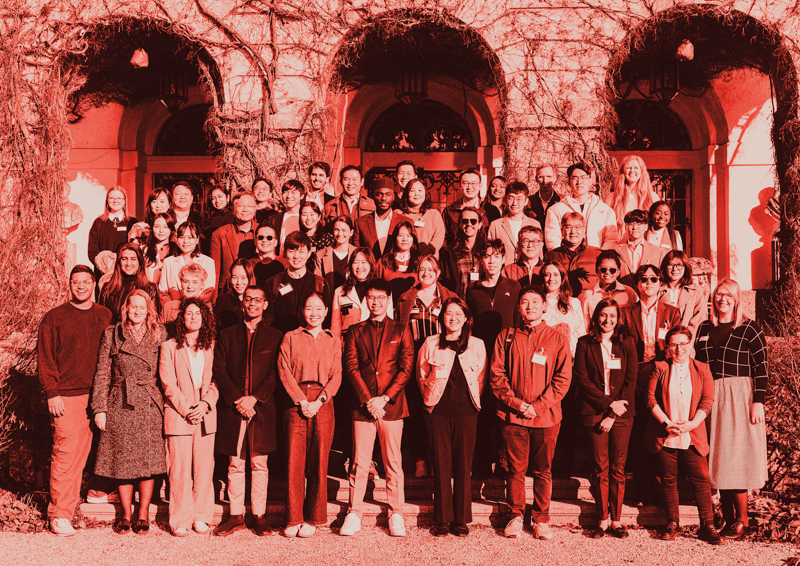
In 2024, the Korea Foundation for Advanced Studies (KFAS) and Salzburg Global Seminar convened the second cohort of the the KFAS-Salzburg Global Leadership Initiativeto equip Korean and global leaders with the necessary skills to address the challenges posed by our rapidly changing world.
The multi-year initiative will consider our shared uncertain futures and reimagine the connections needed for our societies to continue to thrive—connecting generations, technology and cultures.
Each year will follow one of those key themes, convening a new cohort of Korean and global leaders poised to address the complex and intersecting challenges. The first edition of this report was published following the 2023 program on Connecting Generations. This second year's report, published in 2025, collects the perspectives and proposals of the 2024 program on Connecting Technologies.
For the first year of the Initiative, the theme was Uncertain Futures and Connections Reimagined: Connecting Generations.
There is a pressing global need to better connect generations as we navigate the complex challenges of the modern world. Through a year-round series of virtual sessions and an annual gathering in Austria, the KFAS-Salzburg Global Leadership Initiative is a global knowledge platform for mutual learning and exchange, where leaders at junior and senior levels, can share the current global and local issues they are facing, and develop and disseminate innovative action plans.
The failure to better connect generations poses significant risks and challenges for individuals, communities, and societies at large. By not prioritizing intergenerational connections, there is a risk of deepening generational divides and conflicts, hindering social cohesion and collective progress. The lack of understanding and communication between generations can lead to missed opportunities for learning, mentorship, and the transfer of valuable knowledge and experiences. Moreover, failing to bridge the gap in diverging values may result in increased polarization, intolerance, and social fragmentation.
This program aimed to equip leaders with the necessary skills to address the rapidly changing world and the major global challenges we face today, including geopolitical tensions, climate change, demographic changes, and technological advancements.
By better connecting generations, we can ensure a transference of diverse perspectives and ideas to foster innovation, and the development of sustainable solutions to global challenges. We can harness the wisdom and experience of older generations while empowering younger generations with the tools and knowledge to shape the future. Ultimately, by better connecting generations globally, we can work towards a more harmonious and sustainable future that leverages the strengths and perspectives of all age groups.
To read the full report from Year 1: Connecting Generations, please visit: reports.SalzburgGlobal.org/connecting-generations
For the second year of the Initiative, the theme was Uncertain Futures and Connections Reimagined: Connecting Technologies.
Building on the learning shared during Year 1 of the KFAS-Salzburg Global Leadership Initiative, which focused on Connecting Generations, for Year 2, a new cohort of competitively selected Salzburg Global-KFAS Fellows explored how technology forms a complex web influencing economic growth, governance, societal equity, security, and environmental sustainability in an era of rapid technological advancements.
The integration of AI and other technologies across all spheres of life presents unparalleled opportunities for progress. However, it also raises critical questions about the distribution of these advancements and their impacts on social equity.
Policymakers and leaders face the dual challenge of catalyzing innovation while ensuring that the fruits of technological progress contribute to a fair and just society. This calls for visionary leadership and inclusive policies that bridge the gap between technological potential and equitable access and benefits for all.
This program aims to equip leaders with the necessary skills to address the rapidly changing world and the major global challenges we face today, including geopolitical tensions, climate change, demographic changes, and technological advancements.
Skills required for leaders to navigate these challenges include visionary thinking, cross-cultural communication, interdisciplinary awareness, digital literacy, collaborative leadership, and global citizenship.
Leaders with these skills can bring together diverse groups of people, bridge gaps between different disciplines, cultures, and ways of thinking, anticipate future challenges, and develop robust strategies to address them. They can also promote mutual respect, harness the power of technology, foster partnerships and alliances, navigate uncertainty, embrace change, and work towards the common good. By developing these skills and working together, we can build a better future for ourselves and future generations.
The goal of this Initiative is to convene a network of Korean and global thought leaders to:
Uncertain Futures and Connections Reimagined: Connecting Generations addressed the following intersecting five themes:
The advent of Artificial Intelligence (AI) has been a double-edged sword in terms of economic growth and societal inequality. While AI has significantly contributed to productivity improvements and innovation, leading to economic growth, it has also exacerbated income and wealth disparities. Studies indicate that AI-driven automation favors high-skill over low-skill labor, leading to a polarized job market and widening the income gap. According to the World Economic Forum, AI and automation are set to create 58 million new jobs by 2022, but the distribution of these opportunities often reflects existing inequalities. Furthermore, AI’s impact on inequality is global, with developed nations harnessing more benefits than developing countries, potentially widening the global digital divide.
The dominance of Big Tech companies in global markets has raised significant governance and regulatory concerns. These entities, including Amazon, Google, Facebook, Apple, and Microsoft, have amassed considerable market power, influencing economies, societies, and even political processes. The European Union has been at the forefront of regulating these giants, implementing the General Data Protection Regulation (GDPR) to protect consumer data. Additionally, there’s a growing call for antitrust actions to curb their market dominance, as seen in the U.S. with the House Judiciary Committee’s investigation into Big Tech’s market power. This tension highlights the challenge of governing entities that transcend national borders and have the power to influence both the economy and the information ecosystem.
The talent flow in the technology ecosystem is characterized by a global migration towards innovation hubs. Silicon Valley, for instance, draws skilled professionals from around the world, contributing to its dynamism and diversity. However, this flow also creates challenges for countries losing talents—often referred to as “brain drain”—impacting their potential for innovation and economic development. In response, countries and regions are developing new industrial policies to cultivate their innovation ecosystems. These policies range from investments in education and research to creating favorable tax and regulatory environments to attract startups and tech companies.
The competition in technology, especially in fields like AI, cybersecurity, and telecommunications (e.g., 5G), has become a pivotal aspect of global economic security. Nations are increasingly viewing technological advancement as a strategic asset, leading to the weaponization of technology in geopolitical conflicts. The U.S.-China tech rivalry, encompassing issues from trade to technology transfer and the race for 5G supremacy, illustrates this trend. This competition raises concerns about the fragmentation of global tech standards and the emergence of “tech blocs”—potentially hindering global innovation and cooperation.
The relationship between technology and the environment is complex, as technological advancements can both harm and help sustainable practices. On one hand, technologies like blockchain and AI offer innovative solutions to environmental monitoring, energy efficiency, and resource management, potentially aiding in the fight against climate change. On the other hand, the production and disposal of electronic devices pose significant environmental challenges, highlighting the need for sustainable manufacturing practices and circular economy principles. The United Nations Sustainable Development Goals (SDGs) emphasize the role of technology in achieving environmental sustainability, calling for a balanced approach that harnesses technology’s potential while mitigating its ecological impact.
There is no denying technology’s role in driving human progress, but who do these innovations serve—and who do they leave behind?
Over four days together in Salzburg for the second program of the Salzburg Global-KFAS Leadership Initiative—Uncertain Futures and Connections Reimagined: Connecting Technologies—one recurring theme emerged: technology is never neutral. It carries the weight of power structures, economic disparities, and governance choices. AI is transforming labor markets—yet often reinforcing global inequalities. Digital platforms create opportunity—yet also deepen the divide between the digitally savvy and those less skilled. Interconnected smart devices are making our lives easier and work more efficient—but also drain resources of precious metals and generate vast amounts of e-waste. Big Tech is driving economic growth—but its unchecked power raises serious governance concerns. That economic growth is being dispersed as new “tech middle powers” emerge—but they remain vulnerable to long-held great power rivalries. The challenge, then, is to explore how to harness technology’s immense potential for progress—and to counter its troubling capacity to deepen inequality.
AI has reshaped entire industries, promising efficiency, automation, and now general intelligence at scale. Yet, as Fellows explored in Salzburg, this progress is a double-edged sword. According to the World Economic Forum, broadening digital access is the #1 global macrotrend shaping the world labor market and expected to generate 19 million new jobs by 2030—and replace 9 million. Who gets those new jobs—and who will lose their existing ones? Wealthier nations with advanced digital infrastructures stand to gain the most, while developing economies risk falling even further behind.
AI’s benefits—and its economic dislocations—are rarely distribute evenly. AI-driven recruitment systems disproportionately disadvantage non-conventional candidates and marginalized groups, embedding instead of mitigating existing biases into hiring processes. Meanwhile, in regions with low digital literacy, workers are often reduced to performing invisible “ghost work”, such as tagging AI datasets for low pay on platforms that offer no protections or career mobility.
Discussions in Salzburg highlighted how AI education initiatives, regulatory frameworks, and ethical oversight could help mitigate these disparities. One innovative proposal involved gamified educational toolkits, designed to teach AI ethics and fairness through interactive simulations, making these concepts more accessible for younger generations. But how do we reach those already in the workforce?
Innovation hubs like Silicon Valley, Hong Kong, and Berlin thrive because they attract top minds from across the world. Yet, this flow of talent has a cost for the nations left behind. Countries experiencing brain drain—losing skilled professionals to better-paid, more-mobile opportunities abroad—are often left struggling to build their own innovation ecosystems. Universities and formal degrees are also failing to keep pace with the skills needed by the rapidly changing tech industry. Alternative talent models, such as Preface, a Hong Kong-based tech education platform that operates like a decentralized talent incubator, are much needed—offering flexible, globally recognized training without forcing talent migration.
Another pressing concern in Salzburg was the growing dominance of Big Tech—and the question of whether governments could, or should, regulate their power—and Big Powers—and how less digitally dominant countries could, or should, band together to mitigate the hegemony of the U.S. and China.
The European Union’s GDPR is often lauded as a gold standard for data protection, but this landmark legislation has struggled to keep pace with the speed of innovation with some detractors blaming it for stifling the EU’s startup culture and holding back its tech industry. Meanwhile, in the U.S., antitrust investigations into Amazon, Google, Apple, and Microsoft have reignited debates about breaking up digital monopolies—and the need to hold them accountable.
A promising approach discussed at Salzburg is the concept of “Tech Middle Powers”—nations that lack the global influence of the U.S. or China but still hold significant technological weight thanks to their pivotal role within the global tech supply chain. The “Tech Middle Power Forum”—an independent international biannual gathering of industrialists, innovators and regulators from countries such as Korea and Taiwan—could provide an alternative to the U.S.-China digital hegemony, ensuring that innovation remains a global, rather than regionally concentrated, endeavor—and resilient to major policy shifts to either pole.
In connecting technologies—and making them more equitable, global and resilient—we also need to address its sustainability. As the world races toward more connected devices, more AI training models, and more digital consumption, the environmental consequences remain largely ignored.
Only 22% of global e-waste is properly recycled. The remaining 78%? Much of it is shipped to developing countries, where workers—often marginalized women and children—are exposed to toxic chemicals as they dismantle the discarded electronics. Meanwhile, only 1% of global demand for rare earth minerals—the precious metals needed for lasers, semiconductors, batteries and more—is met by e-waste recycling, despite the growing global need for these metals and their concentration in a small number of countries. New regulations that force tech companies to track and recycle their materials responsibly are urgently needed.
It is possible that even more tech could solve this tech issue: blockchain technology could be used to track the lifecycle of tech components, ensuring that companies remain accountable for their environmental impact and helping to track rare earth material such as lithium and cobalt so they can be reused instead of only freshly mined. Such a system would also allow consumers to see the full history of their devices—from production to disposal—empowering them to make more sustainable choices.
Technological change is—for now at least—still shaped by human choices. The systems built now will define who benefits in the future from the digital age and who gets left behind. And the regulations we put in place will ensure human—not artificial—intelligence remains in control of those systems.
The Salzburg Global-KFAS Leadership Initiative made one thing clear: our biggest risk is complacency. Technology’s impact on governance, labor markets, migration, and sustainability is intertwined, and tackling these challenges requires collective leadership, interdisciplinary collaboration, and bold policy action. The future of technology is not just about innovation—it is about equity. The question is: how do we ensure that the benefits of digital transformation reach everyone, not just the privileged few?
The advent of Artificial Intelligence (AI) has been a double-edged sword in terms of economic growth and societal inequality. While AI has significantly contributed to productivity improvements and innovation, leading to economic growth, it has also exacerbated income and wealth disparities. Studies indicate that AI-driven automation favors high-skill over low-skill labor, leading to a polarized job market and widening the income gap. According to the World Economic Forum, AI and automation are set to create 58 million new jobs by 2022, but the distribution of these opportunities often reflects existing inequalities. Furthermore, AI’s impact on inequality is global, with developed nations harnessing more benefits than developing countries, potentially widening the global digital divide.
From healthcare diagnostics to personalized learning tools, artificial intelligence (AI) has become a cornerstone of modern innovation and research, transforming industries and revolutionizing daily life. AI’s potential to enhance human capabilities is unparalleled—but it also poses significant ethical, social, and economic challenges. If we are to address these challenges, we need to embrace the principles of AI fairness, digital ethics, and equitable access. Together, these principles serve as the foundation for building a technological future that prioritizes social justice and inclusivity
Supposedly free of human sensibilities, AI systems should operate without bias, ensuring impartial and fair outcomes for all. While it sounds straightforward, achieving fairness in AI is anything but simple. Biases in AI systems often stem from training data, algorithms, and design practices that reflect our unconscious biases and societal inequities, which humans inevitably possess, thus perpetuating systemic injustices—from generating images of CEOs who are only white, middle-aged and male to more devasting implications such as sentencing Black convicts to longer jail terms.
AI systems learn from data that often include historical biases. For instance, hiring algorithms may favor certain demographics due to previous discriminatory practices, thus amplifying rather than eradicating human biases.
Algorithmic biases can also emerge from the assumptions and perspectives of AI developers, particularly if development teams lack diversity. A notable example is facial recognition technology, which has been found to misidentify individuals from minority groups at significantly higher rates—especially when developed by majority-white teams. Such disparities underscore the urgent need for fairness in AI design and deployment to prevent exacerbating existing inequities.
Digital ethics encompasses the moral principles and frameworks that guide the development, deployment, and governance of AI technologies. These principles extend beyond mere compliance with regulations to address fundamental questions about human autonomy, dignity, and well-being in an AI-driven world.
AI systems must be transparent and explainable—designed to provide clear explanations for their decisions, especially in high-stakes contexts like healthcare, criminal justice, and financial services. This includes making algorithmic decision-making processes interpretable and providing mechanisms for users to understand and challenge automated decisions.
Organizations developing and deploying AI must establish clear lines of accountability and responsibility for AI-driven outcomes. This includes implementing robust testing protocols, conducting regular ethical audits, and maintaining human oversight of critical AI systems.
AI systems must respect individual privacy and data protection rights while balancing the need for data access. This involves implementing privacy-by-design principles, ensuring informed consent for data collection, and protecting against unauthorized access or misuse of personal information.
AI should augment human capabilities rather than replace human agency and autonomy. This principle requires careful consideration of when and how to implement AI decision-making systems, ensuring that humans retain meaningful control over important decisions affecting their lives.
The Hamburg Declaration on AI and Sustainable Development Goals (SDGs), set to be signed in 2025, exemplifies a global initiative aimed at addressing these ethical concerns. The declaration focuses on bridging the gap between AI development and sustainability, with specific attention to governance structures, equitable access to AI infrastructure, and environmental impacts.
While AI has the potential to bridge societal gaps, it also risks exacerbating inequalities if access is unevenly distributed. Equitable access ensures that all individuals, regardless of socio-economic status, can benefit from AI technologies.
The digital divide remains a significant barrier to equitable access. Factors such as income, education, and geography influence whether individuals can access digital tools and services. For example, rural communities often lack high-speed internet, limiting access to essential services like telemedicine and online education.
Innovative solutions, such as portable Wi-Fi-enabled batteries and solar-powered micro-data centers, are emerging to boost connectivity for underserved populations. However, these efforts must contend with challenges like the increasing prevalence of internet shutdowns, which have risen by 41% since 2022, further isolating vulnerable communities.
The challenges of AI fairness, ethics, and access are amplified by global disparities. Wealthier nations and organizations have the resources to develop advanced AI systems and regulatory frameworks, while low-income countries often lack the infrastructure and expertise to participate in the AI revolution.
The Hamburg Declaration emphasizes the importance of international collaboration to address these disparities. By promoting equitable access to AI infrastructure and fostering sustainable development, global initiatives can help bridge the gap between developed and developing nations.
AI’s dual nature—as both a driver of progress and a potential exacerbator of inequality—requires careful management.
On one hand, AI can enhance efficiency, improve decision-making, and foster creativity. AI-powered translation tools break down language barriers, enabling cross-cultural collaboration. Similarly, AI algorithms have accelerated breakthroughs in healthcare, such as drug discovery and personalized treatment plans.
On the other hand, AI poses risks such as job displacement, environmental impact, and the spread of misinformation. AI-driven automation threatens to displace workers in low-skill jobs, widening income gaps. Furthermore, the computational resources required for AI development contribute to carbon emissions, raising environmental concerns.
But there are possible solutions…
PATHWAYS FORWARD: BUILDING A FAIRER AI FUTURE
To address these challenges, a multi-faceted approach is essential.
Education plays a pivotal role in addressing AI biases and ethical concerns. Policymakers, developers, and the public must be informed about the implications of AI technologies. Accessible tutorials and game-based learning tools can engage diverse audiences, from students to policymakers, fostering a deeper understanding of AI ethics and fairness.
Interactive games and simulations with real world scenarios and dilemmas have proven effective in educating diverse audiences about AI ethics. For instance, gamified learning modules can teach students about algorithmic biases and their real-world consequences, fostering critical thinking and ethical awareness.
Governments, private organizations, academia, and civil society must collaborate to create and enforce regulations promoting fairness and ethics in AI. Initiatives like the Hamburg Declaration provide a model for such partnerships, emphasizing shared responsibility in addressing global challenges.
Open data frameworks and corporate social responsibility initiatives demonstrate the potential for participatory governance in AI. By involving multiple stakeholders, these approaches ensure that AI development aligns with societal needs and values.
Bridging the digital divide requires substantial investment in digital infrastructure, particularly in underserved areas. Portable and renewable-powered solutions can provide connectivity to remote regions, ensuring broader access to AI-powered services.
Diversity among AI developers and stakeholders is crucial for reducing biases and enhancing inclusivity. By incorporating a broader range of perspectives, AI systems can better reflect the needs and experiences of diverse populations.
Continuous monitoring and adaptation of AI systems and policies are necessary to address emerging challenges. Regular audits can identify and mitigate biases, ensuring that AI technologies align with ethical and equitable principles.
Ultimately, achieving fairness, ethics, and access in AI will require sustained effort. We need rigorous interdisciplinary academic research that can illuminate the complex relationships between AI and inequality, guiding policy and practice and help narrow a perception gap among researchers. We also need to engage with policymakers and decision-makers to ensure that AI governance frameworks prioritize fairness and transparency. Promoting public awareness through educational campaigns and resources can empower individuals to participate in the AI revolution and discussion responsibly. Initiatives like the KFAS-Salzburg Global Leadership promoted by Salzburg Global can facilitate this much-needed global dialogue and cooperation on AI-related challenges by joining multiple perspectives from people with different backgrounds.
The transformative power of AI offers both immense opportunities and significant challenges. Ensuring that AI serves as a force for good requires a steadfast commitment to fairness, ethics, and equitable access. By fostering collaboration across sectors and nations, society can harness AI’s potential to create a more just and inclusive future. Through initiatives like the Hamburg Declaration and the KFAS-Salzburg Global Leadership Initiative, we can address one of the most pressing issues of our time: ensuring that AI benefits humanity as a whole, guided by robust ethical principles and a commitment to equity.
The robots aren’t coming—they’re already here, and millions of workers could soon pay the price
In 2023, Hollywood became a microcosm of a broader, global challenge: negotiating the place of artificial intelligence (AI) systems in the workforce. Strikes led by the Writers Guild of America (WGA) and Screen Actors Guild (SAG-AFTRA) were not just about better pay and working conditions; they tackled the existential threat posed by AI to creative professions. Writers feared algorithms capable of generating scripts could devalue human storytelling, while actors pushed back against the use of AI to replicate their likeness without consent or compensation. The eventual agreements included groundbreaking protections, such as restrictions on generative AI use and clear frameworks for its deployment, setting a precedent for industries grappling with similar disruptions.
But Hollywood’s high-profile battle is a stark exception. Most industries affected by AI lack the powerful unions or organizational clout to push back against the tide of automation. For sectors like manufacturing or customer service, where workers are often less unionized and more vulnerable, the risks are far greater, and the pathways to negotiation much murkier. The challenges posed by AI demand an approach as organized and deliberate as Hollywood’s but far more inclusive and far-reaching. One such approach is the concept of a modern “social contract”: a shared agreement between governments, private industry, and stakeholders in society to balance the benefits and risks of technological progress. In the context of AI, this could include commitments to reskilling displaced workers, implementing ethical guidelines for AI deployment, establishing enforceable accountability measures for companies, and ensuring that the economic gains of AI are equitably distributed.
A notable example of a successful social contract is the Nordic model, where collaboration between governments, trade unions, and businesses has safeguarded workers’ interests during periods of economic transition. Denmark’s “flexicurity” system combines flexible labor laws with robust social protections, including unemployment benefits and government-funded reskilling programs. This approach has helped reduce job losses during industrial shifts, maintaining an unemployment rate as low as 4.8 percent in 2022, even during global economic turbulence. Similarly, Germany’s Kurzarbeit program, implemented first during the 2008 financial crisis and then again during the 2020 COVID-19 pandemic, subsidized wages to prevent mass layoffs, saving over 500,000 jobs in 2008 and supporting 50 million workers in 2020. These examples demonstrate the power of collective action in shielding vulnerable populations from the adverse effects of economic and technological disruption.
Without such a framework, the risks of job displacement and inequality will far outweigh the benefits of innovation, especially for countries with vulnerable economies. For instance, in nations such as Bangladesh, where the textile industry accounts for a significant portion of GDP and employs millions of low-wage workers, the rapid adoption of AI-powered automation in manufacturing poses a significant threat to jobs. Factories may increasingly rely on robotic assembly lines, displacing human labor in favor of cheaper or more efficient technology. Without access to education and training programs to help workers transition to other industries, these individuals could face long-term unemployment and deepening cycles of poverty. Similarly, in countries across sub-Saharan Africa, where agriculture remains the dominant sector, AI-powered tools and drones could transform farming efficiency. However, this progress risks displacing large portions of the labor force, particularly smallholder farmers, if governments fail to plan for equitable technology adoption. The lack of investment in digital literacy and rural infrastructure could exacerbate the problem, leaving entire communities without viable economic alternatives.
The Industrial Revolution of the 18th and 19th centuries caused profound disruption, leading to widespread job losses among artisans, weavers, and farmworkers as mechanization reshaped entire industries. In the textile sector alone, the introduction of mechanized looms and spinning machines reduced the demand for handweavers, displacing an estimated 220,000 workers in the British cotton industry by the early 19th century. Similarly, agricultural innovations like the mechanical reaper and seed drills slashed the need for manual labor, with agricultural employment in England declining from 36 percent of the workforce in 1800 to just 20 percent by 1850. These technological advances forced millions of rural laborers to migrate to urban centers, swelling the populations of cities like Manchester and Birmingham, which grew by more than 150 percent between 1800 and 1850.
Nonetheless, while the Industrial Revolution ultimately spurred extraordinary economic growth (tripling global GDP between 1820 and 1900), it also created significant social and economic upheaval for workers whose skills became obsolete. Yet, history reveals society’s capacity for resilience and adaptation during periods of disruption. The rise of labor unions, the expansion of public education systems, and the implementation of worker protections mitigated many of the era’s harshest effects, laying the groundwork for more equitable growth. These interventions remind us that systemic responses are vital to ensuring that technological progress benefits all, not just a privileged few.
By 2030, AI could add a staggering $19.9 trillion to the global economy and drive 3.5% of global GDP in 2030, making it one of the most impactful technological forces of the 21st century. However, a report by the World Economic Forum estimated that AI and automation could replace as many as 85 million jobs globally by 2025. These losses will predominantly impact sectors reliant on repetitive or routine tasks, such as manufacturing, customer service, and transportation. A McKinsey report estimates that by 2030, up to 375 million workers (14 percent of the global workforce) may need to switch occupations or acquire new skills to remain employable. The Global South (especially parts of Asia and Africa) may experience more severe disruptions due to factors like economic instability, weaker labor protections, and limited access to advanced education and reskilling opportunities. To prevent these scenarios, governments and corporations can prioritize solutions that include funding reskilling programs for at-risk workers, creating public-private partnerships to upskill labor forces, and implementing fair labor policies that address AI-induced disruptions. These solutions can be initiated by a social contractual agreement. Countries like Singapore and Finland have already implemented such policies, providing models for how to handle technological shifts responsibly.
It has been rightly noted that the impact of any technology largely depends on who holds the authority to shape its development. This is especially critical for AI, given its versatility across various industries and its capacity to quickly influence nearly every sector of the economy and daily life. Labor unions have historically led efforts to protect workers during technological shifts, advocating for safer conditions, fair wages, and reasonable hours during the Industrial Revolution. Today, unions are well-positioned to represent workers in industries impacted by automation, pushing for reskilling and fair treatment. However, their reach is mostly limited to unionized sectors, leaving non-unionized industries and the informal economy, especially in the Global South, without strong representation. Governments hold the regulatory power to drive systemic change but often struggle with bureaucratic inertia and competing priorities. They must balance innovation with worker protection, a growing challenge as technology rapidly evolves. Meanwhile, tech companies, as the main force behind AI disruption, have the resources to support reskilling and ensure ethical AI deployment. Yet, their efforts are often met with skepticism due to potential conflicts between profit motives and social interests.
Historically, social contracts have balanced power, responsibility, and benefit in society, from the ideas of Hobbes, Locke, and Rousseau to managing industrial transitions. Today, AI presents a shift comparable to the Industrial Revolution, demanding a similar recalibration of societal norms. Germany’s “Work 4.0” Framework exemplifies collaborative efforts to manage technological shifts. It promoted lifelong learning and enhanced co-determination (Mitbestimmung), enabling dialogue on workplace changes. It also encouraged public-private partnerships without imposing new legal requirements. Germany’s AI Strategy expanded on this by encouraging company-worker dialogue and funding upskilling initiatives, with tech firms actively contributing, though without binding retraining mandates.
A formalized agreement between key stakeholders could drive these broad benefits, especially in jurisdictions that are yet to formalize agile regulation on labor and AI. There may be issues around conflicting interests and perhaps tokenism, as stakeholders may prioritize their own agendas over collective goals, or agreements may serve as mere symbolic gestures without a genuine commitment to meaningful action. Addressing these requires clear objectives of the terms of the contract and some level of enforceable accountability. For example, implementing a global reskilling fund that will be jointly financed by tech companies and governments should have a clear timeline for implementation, roles and responsibilities for each stakeholder, mechanisms for regular monitoring and perhaps incentives to ensure compliance. This fund could also incentivize collaboration by tying financial contributions to measurable outcomes, such as job placements or certification completions, thereby aligning stakeholder interests with tangible progress.
Without bold, collective action to rewrite the rules of the AI-driven economy, the future won’t just belong to the machines, it will betray the millions of workers left behind in their shadow.
Carolina Chambel, International Cooperation Officer, Techo International, Portugal
Jake Okechukwu Effoduh, Assistant Professor, Lincoln Alexander School of Law, Toronto Metropolitan University, Canada
Ieva Keskine, Gender Equality, Disability Inclusion and Intersectionality Consultant, UN Women, Lithuania
Kun Lee, PhD Research Associate, Luxembourg Institute of Socio-Economic Research and Luxembourg Income Study Cross-National Data Center, Republic of Korea
Chi-Min Oh, DPhil Student, University of Oxford, United Kingdom
Shaurya Patel, Policy Officer, Delegation of the European Union to India, India
Sunghee Yun, Co-founder and CTO - AI Technology & Product Strategy, Erudio Bio, Inc., Adjunct Professor, Sogang University, Advisory Professor, DGIST, United States of
America
Chang Dong Yoo, Professor, Korea Advanced Institute of Science and Technology (KAIST)
The Technology, Growth, and Inequality: The Case of AI working group has created a dedicated website to serve as a central collaboration hub on AI fairness and digital ethics. This website will track our progress, share resources, and foster collaboration among KFAS-Salzburg Global Leadership Initiative Fellows and beyond with other communities and stakeholders.
Please visit and collaborate with us here:
Empowering Humanity for the Future Enriched by AI
The dominance of Big Tech companies in global markets has raised significant governance and regulatory concerns. These entities, including Amazon, Google, Facebook, Apple, and Microsoft, have amassed considerable market power, influencing economies, societies, and even political processes. The European Union has been at the forefront of regulating these giants, implementing the General Data Protection Regulation (GDPR) to protect consumer data. Additionally, there’s a growing call for antitrust actions to curb their market dominance, as seen in the U.S. with the House Judiciary Committee’s investigation into Big Tech’s market power. This tension highlights the challenge of governing entities that transcend national borders and have the power to influence both the economy and the information ecosystem.
Can regulation protect society without stifling progress? Big Tech’s past failures and successes reveal the path forward.
In 2017, Facebook found itself at the center of a humanitarian crisis. The social media platform designed to connect billions became a tool for spreading hate speech in Myanmar, fueling violence against the Rohingya minority. Algorithms optimized for engagement amplified harmful content. Meanwhile, the company failed to act swiftly.
The result? Meta, the since-renamed parent company of Facebook, profited from an echo chamber of hatred created by its algorithms while the Myanmar military launched a brutal ethnic cleansing campaign. This tragic failure in content moderation and accountability underscores the dangers of insufficient regulation for tech companies wielding immense influence in all corners of the world.
In contrast, Apple’s introduction of its Buy Now, Pay Later (BNPL) service tells a different story—one where flexible regulations fostered innovation and consumer benefits. With Apple Pay Later, the company prioritized transparency and consumer protection, showing how thoughtful oversight can enable responsible innovation.
These two contrasting case studies raise a critical question: how can we craft regulations that hold Big Tech accountable without stifling their innovative potential?
The Myanmar-Meta saga was not just a technological failure, it was a human rights catastrophe that could have been prevented if the right guardrails had existed. Military officials and extremists weaponized the social media platform to spread targeted misinformation about a minority. Investigations later revealed Meta had only two Burmese-speaking moderators for a country with 18 million users and this systemic failure allowed unchecked hate speech to quickly spiral into violence eventually leading to 700,000 Rohingya people fleeing Myanmar.
By 2018, United Nations investigators declared Meta played a “determining role” in spreading anti-Rohingya rhetoric, functioning as an unregulated propaganda machine. This example demonstrates that technological neutrality is a dangerous myth when platforms are allowed to prioritize revenue over their ethical duties.
For years, platforms like Meta have operated under Section 230 of the Communications Decency Act, which absolves them of liability for user-generated content. This rather relaxed framework allows tech companies to prioritize their interests while the users, like the Rohingya people, bear the fallout.
This was not an isolated incident but a stern warning about the real-world consequences of unregulated tech platforms and surveillance-based business models. Despite repeated warnings from human rights groups, Meta overlooked the importance of content moderation. The Myanmar case serves as a wake-up call: without proactive regulation, algorithms can amplify real harm on an unimaginable scale.
In stark contrast to Meta’s failures to protect its users, Apple’s launch of Apple Pay Later in 2023 showed how innovation can thrive under flexible regulatory frameworks and also offer a valuable product. In an industry often criticized for predatory practices, Apple stepped in with a refreshing take on BNPL services that put consumers first.
Apple Pay Later allows users to split purchases into four interest-free payments without late fees or hidden charges, which is a stark departure from many competitors’ models. By requiring debit cards for repayments, Apple steered users away from credit card debt traps that often plague BNPL services. This thoughtful design not only protects consumers but also sets new standards for responsible lending in the fintech space.
Also, the integration within Apple Wallet offered a seamless way of managing payments: users could track payment schedules and receive reminders, empowering them to stay on top of their finances. And most importantly, unlike many BNPL providers operating outside traditional credit systems, Apple decided to report transactions to credit bureaus, which helps users build credit scores rather than encouraging risky spending habits.
While companies like Klarna and Afterpay paved the way for BNPL, Apple utilized its brand trust and vast ecosystem to introduce healthier industry standards. Unlike smaller players that often rely on aggressive marketing and opaque practices, Apple built its BNPL service around transparency and financial health for its users.
The contrasting tales of Meta in Myanmar and Apple Pay Later reveal a fundamental truth about Big Tech: regulation can either be the missing safety net or the flexibility for responsible innovation. When platforms like Meta are left unregulated, the consequences ripple far beyond the digital realm, impacting lives, societies, and even democracies. Conversely, Apple’s case exemplifies the power of innovation for social good when left flexible.
However, the mandate of governance calls for striking the right balance between just enough regulation and flexibility. How does one dispel the fear against regulations? The answer lies in starting with shifting mindsets around regulation—away from a means of containment but rather implementation of responsible practices.
The industry is currently regulated by a patchwork of laws and self-regulation with sufficient gaps to let accountability slip by. The need of the hour is to shift towards smart regulation, which ensures accountability of Big Tech while allowing them the upside to foster innovation.
Laws governing social media platforms too need to be revisited to ensure content moderation and algorithmic transparency while having sufficient guardrails to ensure privacy. Meanwhile, sectors like fintech often require sandbox regulatory environments that encourage experimentation while safeguarding consumers.
Technology will continue reshaping industries and societies at an exponential pace. The complexity of dictating what is the “optimal” amount of regulation will vary and will seldom be straightforward. For most times, regulations will also have to be based on factors such as demographics, socio-political context of specific markets, and geopolitical realities. However, as we evolve into a species more dependent on technology, we will also have to periodically health-check this dependence in the interest of global social balance.
It is time to stop viewing regulation as a roadblock and start recognizing it for what it truly is: a vital tool for guiding responsible innovation.
Too little oversight invites chaos, too much stifles innovation—how can we craft AI policies that protect society while advancing this paradigm-shifting tech?
From the eradication of smallpox to protein research enabled by artificial intelligence (AI) systems, scientific breakthroughs over the past 70 years have reshaped our social fabric. Today, the most advanced AI systems are achieving performance on par with experts on graduate-level science questions and computer code generation while inching towards general reasoning capabilities. These developments have put humanity on an accelerated trajectory towards futures defined by unprecedented technological advancement.
But rapid progress presents its own set of challenges: tools like AI that enable medical marvels and economic growth can also be misused by malicious actors. Indicators of such misuse are already surfacing: generative AI systems have been already been abused to create child sexual abuse materials, write propaganda for extremist groups, facilitate financial frauds and scams, and plan an explosive attack. As systems become more capable, the prospects of AI-enabled cyberattacks and bioweapons development also grow. The ethical implications of data collection, user privacy, and equal access to technology’s benefits further underscore the need for careful consideration and responsible innovation.
Governments and companies alike are taking note of these trends. Leading AI companies such as Google DeepMind, OpenAI, and Anthropic have committed to establishing internal risk management plans, collaborated on security and safety research, and cautioned against societal risks from advanced AI systems. Similarly, governments extensively debated preemptive regulation while working with industry to build regulatory sandboxes to enable testing in controlled environments, as well as consensus around security and watermarking, establish regulatory sandboxes.
The wide-ranging implications of AI have led to calls from nearly all sides about “balancing” innovation, privacy, growth, inclusion, bias, transparency, usability, and a whole host of other factors—though nobody seems to agree on how to strike that balance in practice. Governments are also aware that a complete absence of regulation can lead to harmful consequences due to misuse and the unpredictable consequences of new technologies. Conversely, policymakers want to avoid overly strictive measures that can stifle innovation and impose unreasonable costs—such as, for instance, an early ban on cryptocurrency in India that was struck down only two years after its announcement because of its disproportionate effects on industry. They are also rightfully wary about the potentially counterproductive effects of early policies enacted without sufficient evidentiary support. The lesson of the U.S.’s encryption backdoors—intentional flaws in security algorithms to preserve law enforcement access—serves as a stark warning after they were hijacked by Chinese hackers to attack American companies.
What can governments do to mitigate misuse and societal harms at this stage of AI development—and to strive for balanced AI policy?
One action that can be taken now is to heavily invest in research about AI’s capabilities and broader effects. Existing methods for measuring how well AI performs on important tasks is known to be flawed, especially as experimental progress in AI proceeds more quickly than the pace at which rigorous scientific work can be completed. Public investments in research to understand AI risks and develop technical mitigations against those risks (including misuse) would go a long way towards building better, evidence-based AI policy. Where national security is at stake, policymakers can also look towards government-industry partnerships to advance risk management and security practices.
At the same time, governments must simultaneously build out technical AI expertise of their own. Industry organizations unsurprisingly possess the most up-to-date information about how the most advanced AI systems are developed and deployed today. Without in-house expertise, governments have difficulties coordinating balanced AI regulation and independently assessing AI’s societal effects—especially as large technology firms may not always be as open about their platforms as policymakers would like. That companies sometimes have misgivings about sharing information with public actors is understandable, but the scope and complexity of AI’s impacts mean that governments must foster AI readiness and build regulatory capacity. Jurisdictions around the world may want to closely monitor the implementation of the UK’s AI Opportunities Action Plan, which has outlined a preliminary vision for economic growth and public investment.
Finally, a multi-stakeholder approach to AI policy will help ensure that views from all stakeholders are considered. For instance, public and private players of all shapes will be affected as AI agents begin to be adopted in economically valuable applications. Bringing together industry, civil society, and the public to deliberate on our AI futures will help decision makers build balance and democratic inclusion into the policy process itself.
There is no doubt that the path forward lies in striking a balance that fosters innovation while safeguarding societal interests. Achieving these goals will require a nuanced approach, informed by data, collaboration, and commitments to ethical considerations. By navigating this complex landscape responsibly, we can harness the full potential of technology to create a more prosperous and equitable future for all.
Aditi Chaturvedi, Head of Government Affairs and Public Policy for Platforms and Devices, Google, India
Deeksha Goel, Deputy Director, India Foundation, India
Ayako Hatano, PhD Candidate, University of Oxford, Japan
Hyeyeon Park, Assistant Manager, Chey Institute for Advanced Studies, Republic of Korea
MinChi Park, Head of Business Development, HyperPlay, Republic of Korea
Steve Park, Senior Director and Head of Asia-Pacific Public Policy, Roblox, Republic of Korea
Alexia Tassios, Senior Public Policy Analyst, Deloitte, Australia
Kevin Wei, Technology and Security Policy Fellow, Harvard Law School, USA
Sanghyun Lee, Director, Google, Singapore
From responsible AI to Big Tech accountability, these bold policies are reshaping how we live with technology.
Public policy shapes almost every aspect of our daily lives, from education and healthcare to infrastructure and digital rights. At its core, public policy is what a government chooses to do—or not do—in response to issues that affect society. While governments are the final decision-makers, activists, businesses, and the public all influence the direction of these laws, regulations, and funding decisions.
Technology is evolving at breakneck speed, bringing both exciting innovations and complex challenges. Governments worldwide are now developing policies to harness the benefits of technology while managing its risks—whether it’s keeping humans in the AI driving seat, holding Big Tech accountable, or ensuring digital access for all.
Here are seven policies that are reshaping our relationship with technology, showing how smart governance can help build a fairer, more sustainable, and more inclusive digital future.
Artificial Intelligence is developing at breakneck speed, and some governments are struggling to keep pace. Signed into law in January 2025, shortly after the KFAS program, and due to take effect in 2026, South Korea’s new “Act on the Development of AI and Establishment of Trust” is the first law of its kind in Asia.
The AI Basic Act emphasizes safety, reliability, and transparency in using AI, while trying to avoid excessive regulation that might stifle further AI development—a key criticism of similar legislation in the EU.
Companies that operate in Korea (regardless of where in the world they’re based) must notify their users when using AI, clearly label any AI-generated content, establish risk-management systems, and most importantly: keep maintain human oversight.
In an age of “planned obsolescence” and in the home of Silicon Valley, California’s Right to Repair Act, signed into law in July 2024, marks a major victory for consumer rights and sustainability.
The law requires manufacturers of electronics and appliances to provide consumers and independent repair shops with access to necessary parts, tools, and manuals—making repairs easier and more affordable, reducing electronic waste and extending the lifespan of devices.
However, some critics argue that increased access to repair components could raise security and safety risks, particularly for complex electronics like smartphones and medical devices. As other US states and countries consider similar measures, the right-to-repair movement could reshape the future of consumer technology.
Taiwan is a global semiconductor powerhouse, but staying ahead means investing in talent. To address the growing need for skilled professionals in critical sectors, Taiwan enacted the “Act for National Key Fields Industry-University Cooperation and Skilled Personnel Training” and “Act for the Recruitment and Employment of Foreign Professionals” in 2021.
By encouraging the creation of new research institutes and graduate programs in key fields like semiconductors and AI at national universities to increase the supply of high-level talent to industry leaders like TSMC, Taiwan’s biggest company and the world’s biggest semiconductor foundry, this legislation sought to not only improve the talent pipeline to secure Taiwan’s tech workforce and continued economic growth but also its national security. Its “silicon shield” as the world’s leading semiconductor producer and its related importance to the US tech industry has protected it (so far) from Chinese aggression. But these efforts might be about to be undermined by a new $100bn deal for TMSC to start producing chips in the USA—demonstrating the importance of alignment in public and industrial policies.
India’s vast population and bureaucratic inefficiencies have historically made access to government services challenging. In 2009, India introduced Aadhaar, a biometric-based digital ID system. Today, it’s used by over 1.3 billion people to access banking, social services, and mobile networks. By linking Aadhaar to bank accounts, mobile phones, and government services, the government has reduced fraud and ensured benefits reach those who need them most as well as helping millions join the formal economy.
But Aadhaar isn’t without controversy. Privacy advocates warn that biometric data collection could enable mass surveillance. Others fear that technical issues could continue to exclude people from essential services. Despite these concerns, Aadhaar remains a model for digital public infrastructure, inspiring similar initiatives in other countries and offering valuable lessons on scalability, inclusion, and the power of large-scale, tech-driven public policy.
Big Tech platforms influence what we see, read and believe, impacting how we communicate, shop and vote. In an effort to make the digital realm safer for consumers and fairer for providers, the European Union adopted the Digital Services Act (DSA) and Digital Markets Act (DMA) in 2022.
Now, platforms must be transparent about content moderation, explain their algorithms, and tackle misinformation head-on, as well as allow interoperability with third-party services, provide users with more control over their data, and avoid engaging in anti-competitive behavior, like self-preferencing. There are also serious fines for companies that don’t comply, especially for the “VLOPs” (very large online platforms) and “VLOSEs” (very large online search engines) with over 45 million users.
While not without controversy—some critics worry they stifle innovation, limiting the ability of platforms to experiment with new services or business models, and free speech, encouraging platforms to over-censor content to avoid legal trouble—these acts are game-changers for Big Tech accountability.
As AI becomes more powerful, concerns over bias, privacy, and human rights grow. In response, UNESCO’s Recommendation on the Ethics of Artificial Intelligence provides a global framework for the ethical development and deployment of AI.
Central to the Recommendation is the protection of human rights and dignity, underpinned by fundamental principles such as transparency, fairness, and human oversight of AI systems. In an effort to make the guidelines as widely applicable as possible, UNESCO included extensive “Policy Action Areas”, enabling policymakers to translate them to their work in “data governance, environment and ecosystems, gender, education and research, and health and social wellbeing.” The text also calls for safeguards against discrimination and the misuse of AI in areas like surveillance and automated decision-making. While it lacks any enforcement mechanism, UNESCO’s recommendations could influence future policies, legislation and regulations in countries worldwide.
The digital divide, online misinformation, and the growing influence of Big Tech have made global internet governance a pressing issue. To address these challenges, the United Nations’ Global Digital Compact—an annex to the UN’s longer Pact for the Future—commits to “design, use and govern technology for the benefit of all.”
The Compact promotes digital inclusion and connectivity, online safety (especially for children), more open-source data models, stronger data protection, and responsible AI governance, as well as encouraging cooperation between governments, businesses, and civil society to ensure recognition of digital technologies as a global public good. However, some worry that balancing diverse national interests has weakened the Compact’s impact, leading to vague commitments rather than enforceable policies. Despite this, the initiative represents a significant step toward a more equitable and responsible digital future.
From tech talent development to Big Tech regulations and ethical AI governance, as these policies show, reimagining our relationship with technology requires smart, forward-thinking public policy.
But who’s shaping these policies? Historically, governments and large institutions have dominated the conversation—often excluding the diverse voices needed to create truly inclusive policies.
That’s where Public Policy New Voices Asia comes in. Launching in Fall 2025 and following the success of Public Policy New Voices Europe, this new Salzburg Global program will bring together 30 early-career professionals from across Asia, empowering them to explore how public policy can drive change for social good and ensuring that new perspectives, new ideas, and new voices help define the future of public policy.
Because when it comes to tech’s future, policies matter—but so do the people making them. If we want a fairer, more sustainable digital world, it’s time to bring new leaders to the table.
To learn more about Public Policy New Voices Asia, please contact Faye Hobson, Director - Culture, Salzburg Global: fhobson@salzburgglobal.org
The talent flow in the technology ecosystem is characterized by a global migration towards innovation hubs. Silicon Valley, for instance, draws skilled professionals from around the world, contributing to its dynamism and diversity. However, this flow also creates challenges for countries losing talents—often referred to as “brain drain”—impacting their potential for innovation and economic development. In response, countries and regions are developing new industrial policies to cultivate their innovation ecosystems. These policies range from investments in education and research to creating favorable tax and regulatory environments to attract startups and tech companies.
The global talent ecosystem is undergoing seismic shifts, driven by rapid advancements in emerging technologies.
In today’s dynamic employment market, AI, automation, and data-driven industries have rendered many traditional roles obsolete while creating entirely new job categories. This is not a new development, but the recent pace of change is accelerating; the World Economic Forum predicts that nearly a quarter of all jobs globally will change in the next five years. Indeed, automation is displacing workers faster than they can be retrained, leaving organizations struggling to find future-ready talent. Some countries, like Spain and New Zealand, have already witnessed growth rates of over 150% in job postings requiring AI expertise.
The global digital skills gap that threatens to leave millions of workers unemployable in a tech-driven economy goes hand in hand with the global digital divide.
According to the World Bank’s Digital Progress and Trends Report, low-income countries trail behind high income countries in digital adoption due to a lack of sufficient digital infrastructure, governance frameworks, and skills development programs. Although global talent migration enables economic mobility for individuals, this results in a vicious cycle of brain drain and talent redistribution as skilled workers from less developed economies move to advanced economies.
Education must serve as the foundation for equipping talents with the skills needed to thrive in the tech era—but traditional models are failing to keep pace with these demands.
For much of the 20th century, education was synonymous with formal degrees obtained through a linear, multi-year process that brought job security and career advancement. Today, however, educational institutions are constrained by outdated curricula that limit their ability to fully address the demands of the digital economy or to effectively reskill the existing workforce to adapt to rapidly changing technological landscapes.
There is a pressing need for an agile education system that complements the traditional degree-centered model with a learning plan that spans the entire career of global talents. The format of education also needs to emphasize real-world curricula and hybrid learning models that combine online platforms and in-person training. Companies could build personalized learning platforms for the next generation of tech-ready talent, and governments could develop policies such as tax benefits and subsidies to support skilling and reskilling programs for the public good.
There are already changes that are taking place to redefine what it means to be “educated” by embedding continuous learning, flexible credentials, and direct employer engagement into the very fabric of talent development.
First, large corporations have stepped up with skilling and reskilling programs, fueling the rise of micro-credentials, which cost a fraction of a college education and are gaining traction as top-ups to college degrees. For example, in 2020, Google launched its Google Career Certificates, encouraging their staff to “grow with Google” by offering short, skill-based courses in high-demand areas like IT support and data analysis. IBM’s SkillsBuild platform also offers free courses in tech skills such as AI and cybersecurity, targeting job seekers, students, and career changers. And in 2023, Amazon announced AI Ready, a new initiative designed to provide free AI skills training to 2 million people by 2025. Microsoft’s Global Skills Initiative on Digital Literacy also provides industry-specific skilling through free or subsidized certification courses to address the changes in the rapidly evolving job market.
Apart from Big Tech, other industry leaders have also rolled out comprehensive digital reskilling programs. Maersk, Denmark’s global shipping leader, is actively preparing its workforce for automation and data-driven operations through personalized learning journeys. These include platforms like myLearning, digital learning tools such as VR-based training modules, and collaborations with external partners like Korn Ferry to align talent strategies with digital transformation goals. By focusing on areas such as logistics analytics, AI, and cloud technologies, Maersk ensures its employees are equipped to thrive in an evolving industry.
Secondly, governments are recognizing the need for digital education. In Japan, the Ministry of Education, Culture, Sports, Science and Technology (MEXT) is making efforts to promote ICT education, developing training programs and teaching materials for teachers. Through the GIGA School Initiative, MEXT is also promoting the provision of a high-speed internet environment by providing one computer per student at all elementary and junior high schools. In Mexico, “Internet Para Todos” is a government initiative led by CFE Telecomunicaciones e Internet para Todos (CFE TEIT) to ensure nationwide access to the Internet and broadband, especially in public sites. The program promotes digital inclusion by offering free internet services in underserved and marginalized areas, enhancing access to technology, education, and communication resources.
Government initiatives have also gone beyond the provision of digital infrastructure. The Ministry of Education in Singapore (2024) launched the SkillsFuture Level-Up Programme to provide comprehensive upskilling support for mid-career Singaporeans aged 40 and above, offering financial assistance, course credits, and training opportunities to enhance employability in a rapidly changing economy. In Germany, Founders Foundation and EDUvation are supporting founders to set up education technology start-ups in Bielefeld;this initiative, aptly called EdTech Next, was made possible by funding from the North Rhine-Westphalian Ministry of Economics, Innovation, Digitalisation and Energy.
Thirdly, traditional universities and research institutes are implementing a variety of talent strategies. In Denmark, Aarhus University partnered with Grundfos, a global leader in advanced water pump solutions, to allow employees to drive digital transformation and innovation through customized training modules that are a combination of education, research, and real-world application. This collaboration includes engaging over 100 students annually in practical projects, supporting the Centre for Water Technology’s global summer school, and contributing to the development of cutting-edge solutions like the Centre for Digital Twins funded by the Grundfos Foundation. Additionally, Aarhus University benefits from Grundfos’ active participation in curriculum design and guest lectures and its partnership with Aarhus Vand’s Water Living Lab to refine intelligent software solutions. These initiatives strengthen the academic-industry connection while enhancing employee upskilling at Grundfos, fostering a skilled talent pipeline adept at addressing technological and sustainability challenges.
Meanwhile, the Canadian Institute for Advanced Research (CIFAR) drives Canada’s Pan-Canadian Artificial Intelligence Strategy, which provides local and international talents with practical training in cutting-edge AI technologies and applications. This is achieved through the Next Generation Training Programs, which include the Deep Learning and Reinforcement Learning (DLRL) Summer School, Quantum Materials Summer School, and the Neuroscience of Consciousness Winter School. Through partnerships with the machine-learning research community, including Mila in Montreal, the Vector Institute in Toronto, and the Alberta Machine Intelligence Institute (Amii) in Edmonton, the program also provides training for professionals seeking to upskill in areas such as machine learning, ethical AI, and applied AI solutions.
While initiatives by large corporates, governments, and traditional universities and research institutes are welcome developments in transforming the education system for the age of AI and technology, there are also a plethora of disruptive and forward-thinking initiatives in the private and nonprofit sectors that represent new types of schools, universities, and educational institutions.
These examples from Korea, Hong Kong, Germany, and Mexico have the potential to be trailblazers at a time when more and more people are recognizing the need to rethink and redefine the rules of education, skilling and reskilling.
The future of talent and innovation ecosystems is rooted in flexibility, adaptability, and collaboration. As technological advancements and global shifts redefine the workforce, traditional education and training models must evolve into interconnected ecosystems that prioritize skill agility, innovation, and inclusivity. This transformation requires seamless partnerships among governments, businesses, and academia to cultivate a workforce equipped to meet the demands of a technology-driven future.
We envision a robust talent ecosystem where continuous learning is the foundation, empowering individuals to acquire, adapt, and refine skills in alignment with emerging technologies. AI-powered personalized learning tools, and industry-aligned training programs, along with the rise of disruptors and game-changers in the ed-tech space, will drive this paradigm, ensuring talent remains relevant and competitive. Governments will lead large-scale skilling initiatives, while businesses will champion innovation-driven reskilling strategies, embracing their role as key enablers of lifelong learning.
The urgency to redefine talent development strategies cannot be overstated. Outdated frameworks are insufficient in a rapidly evolving landscape where technology integration and skills alignment are paramount. By embracing innovation, fostering cross-sector collaboration, and ensuring inclusivity, we can future-proof talent, bolster innovation ecosystems, and drive sustainable economic growth. Acting now allows us to create a world where talent flourishes, industries innovate, and societies thrive in an era of unprecedented technological connectivity.
Jasvin Bhasin, Founder and CEO, bridge.the.NEXT( ), Germany
Pedro A. Gonzalez, Tech Entrepreneur, Mentor, Developer, Kaanbal, Mexico
Eunbee Jang, Responsible AI Architect, Telus Corporation, Republic of Korea
Gowun Kim, Advisor, Embassy of Denmark, Republic of Korea
You Won Park, Program Manager, Choi Jong-hyun Academy, Republic of Korea
Yuki Satake, MBA Student, IE Business School, Japan
Pauline Yeung, Author, Hong Kong University Business School, Hong Kong SAR
Daeyeol Lee, Bloomberg Distinguished Professor, Johns Hopkins University, USA
The competition in technology, especially in fields like AI, cybersecurity, and telecommunications (e.g., 5G), has become a pivotal aspect of global economic security. Nations are increasingly viewing technological advancement as a strategic asset, leading to the weaponization of technology in geopolitical conflicts. The U.S.-China tech rivalry, encompassing issues from trade to technology transfer and the race for 5G supremacy, illustrates this trend. This competition raises concerns about the fragmentation of global tech standards and the emergence of “tech blocs”—potentially hindering global innovation and cooperation.
Two strategic solutions to contribute to a more collaborative, stable, and resilient future for global technology advancement
The U.S.-China strategic competition has become the defining geopolitical challenge of the 21st century. This hegemonic rivalry spans economic, technological, military, and ideological spheres. Among these confrontations of varying degrees and nature, the tech competition in the critical sectors—such as Artificial Intelligence (AI), semiconductors, 5G, quantum computing, and biopharmaceuticals—are arguably the most critical, as these technologies are directly related to national security and competitiveness, highlighting the significance of economic security.
Much of U.S. economic security policy is focused on limiting China’s access to advanced technology and upgrading American technology prowess. Considering the bipartisan consensus towards protectionism against China and the need to secure a strong lead in the global tech race, the U.S. approach will likely continue regardless of future administration changes in the United States.
Likewise, China has highlighted its four red lines of U.S.-China relations. These include China’s right to development, arguing that the United States reverse its export control measures in advanced technology space and its protectionist measures toward China. China remains committed to advancing its technology, despite the challenges presented by the U.S.-China tech rivalry, with heavy public investment in the tech space and expanding its influence in the Global South and other geographies.
This intense and multifaceted competition is reshaping global alliances, power dynamics, and governance structures, and the trajectory will likely stay the course despite potential ebbs and flows in bilateral relations. Amid intensifying technology rivalry between the United States and China, countries, especially the “tech middle powers”—key players in the advanced tech ecosystem such as South Korea, Taiwan, Japan, and the Netherlands—have been largely forced to either pick a side or navigate the increasingly dichotomous markets.
While it is useful to seek solutions at the national level to mitigate the implications of the U.S.-China tech competition, it is equally important to shift our perspective to the private sector. As the main driving force of the technology sector, it can play a pivotal role in driving innovation while ensuring compliance with evolving regulations designed to safeguard economic security. By proactively engaging in dialogues on policy, fostering research in critical technologies, and building resilient partnerships, the private sector can contribute to and benefit from a stable ecosystem that moves from a global separation into distinct “tech blocs”.
One effective solution for addressing the challenges faced by tech middle powers is to convene a forum in a safe, neutral location—such as Salzburg—to spur dialogue and provide a voice for these critical players in the global tech ecosystem. The neutrality of these locations will be conducive to open and unbiased discussions.
The Tech Middle Power Forum, a premier bi-annual event, would bring together global leaders from the tech sector, particularly from tech middle power countries. Participants would engage in critical discussions, allowing for the exchange of vital knowledge, information, and insights. The forum would allow stakeholders to share norms in shaping international tech standards, build alliances to strengthen cooperation, and establish peer-to-peer connections for meaningful professional networks. Interdisciplinary problem-solving will bridge tech, policy, and societal perspectives.
The forum would serve as a platform for candid conversations about navigating the complexities of the U.S.-China tech competition. With an expected attendance of 40 to 60 participants in an intimate setting, attendees will be encouraged to freely express their concerns and share innovative strategies for circumventing escalating tensions while pursuing success. This freedom of expression will empower the participants and foster a culture of open dialogue.
By creating a space for candid conversations, this forum will empower tech middle powers to collaborate effectively, exchange best practices, and develop better strategies for tackling the challenges they face in the global tech landscape.
Ultimately, this initiative aims to build stronger relationships among diverse stakeholders and promote a more stable, cooperative technology environment, fostering a future of shared progress and innovation.
Another solution is the “Double Edge Knowledge Platform”: a pivotal open-source platform currently in development and designed to empower tech middle powers and their enterprises with the tools, insights, and resources to navigate industrial policies, complex regulations, and fast-changing technological landscapes. Intended to be implemented alongside the Tech Middle Power Forum, the platform will support businesses in mitigating risks, identifying opportunities, adapting to rapid policy changes, and fostering resilience and growth.
At its core, Double Edge offers three features: Latest News, Search, and Resources. The “Latest News” will feature provides real-time, curated updates tailored to industries, countries, and topics, with multilingual support for assessing foreign-language articles. Critical updates will be enriched by expert analysis and optional alerts for timely notifications. The “Search” feature will employ advanced AI-driven filters to help users find information regarding specific industries, regulations, and countries. Lastly, the “Resources and Context” feature will offer detailed regulatory guides, interactive timelines, and case studies to help provide historical context and forward-looking strategies.
To ensure sustainability and continued relevance, Double Edge will invite subscribers to contribute by sharing industry-specific news, regulatory updates, case studies, and insights. Contributors would benefit from increased visibility, networking opportunities, and recognition as thought leaders with incentives such as early access to features or discounts on premium tools.
The platform will gather real-time updates from reliable online sources by leveraging web scraping techniques, covering industry news, regulatory changes, and technological advancements. The AI bot then processes, categorizes, and analyzes this data according to user preferences and past interactions. Using natural language processing and machine learning algorithms, the system would personalize news feeds, providing timely updates based on specific industries, countries, or topics of interest. Subscribers will receive relevant recommendations directly on their dashboards, ensuring they stay informed about critical developments in the U.S.-China tech rivalry and its impact on their sectors. This process will ensure each subscriber has a tailored experience, optimizing the platform's usefulness for their unique business needs.
The U.S.-China tech rivalry has created a deeply polarized global environment where countries and businesses must navigate a labyrinth of industrial policies, regulations, and alliances. In this challenging context, tech middle powers stand at a critical juncture. We believe that their ability to innovate, collaborate, and influence international standards will shape the future of the global tech landscape.
The Tech Middle Power Forum and the Double Edge Knowledge Platform present two transformative solutions to empower the private sectors within these nations. The forum offers a neutral space for open dialogue, fostering trust, collaboration, and actionable strategies among global tech stakeholders. Supplementing this in-person convening, the Double Edge Knowledge Platform equips businesses with cutting-edge tools and insights to adapt to a rapidly evolving tech environment.
Both initiatives are designed to address the challenges posed by the U.S.-China rivalry while promoting a stable, cooperative global tech ecosystem. We aim to ensure that tech middle powers have the resources, platforms, and networks necessary to navigate these shifts in technology and politics.
We invite policymakers, industry leaders, investors, and organizations to join us in making both initiatives a reality. Investing in these initiatives is a step towards building a collaborative and sustainable future for global technology. Together, we can ensure that innovation flourishes, alliances strengthen, and global progress is shared. To find out more, contact Faye Hobson, Director - Culture, Salzburg Global: fhobson@salzburgglobal.org
Minseung Kim, Program Manager, Chey Institute for Advanced Studies, Republic of Korea
Neville Lai, International Affairs Strategist, Independent, Hong Kong SAR
Jennifer Lee, Principal, The Asia Group, USA
Jung Woo Lee, Technical Director, Immerse, Republic of Korea
Marisa McPherson, Program Officer, National Committee on North Korea, USA
Sun Young (Kelly) Park, Emerging Leaders Fellowship Coordinator, Hawaii Asia Pacific Institute, USA
Audrey Plimpton, Communications Associate, Salzburg Global, Austria / USA
Eugene Yi, Chief Executive Officer (CEO), Loci, USA
Helen Zhang, Chief of Staff, Office of Eric Schmidt, USA
The relationship between technology and the environment is complex, as technological advancements can both harm and help sustainable practices. On one hand, technologies like blockchain and AI offer innovative solutions to environmental monitoring, energy efficiency, and resource management, potentially aiding in the fight against climate change. On the other hand, the production and disposal of electronic devices pose significant environmental challenges, highlighting the need for sustainable manufacturing practices and circular economy principles. The United Nations Sustainable Development Goals (SDGs) emphasize the role of technology in achieving environmental sustainability, calling for a balanced approach that harnesses technology’s potential while mitigating its ecological impact.
There is a growing crisis of e-waste. How we address it will have long-lasting global implications.

Image Prompt: "Create an image showcasing a massive hill of discarded electronics, including desktop computers, phones, and tangled cables, piled high in a dimly lit industrial warehouse. Soft greenish light glows from the screens and spills across the scene, giving it a futuristic, dystopian feel. The surroundings are shadowy, with metallic walls and overhead fixtures hinting at a high-tech junkyard environment. The overall atmosphere should feel futuristic, highlighting the concept of electronic waste transformation and sustainability."
Image Generated by Stable Diffusion XL V1.0
Credit: Hong Xu
Every second, about 800 laptops are discarded around the world. That’s over 53.6 million metric tons of electronic waste generated in a single year—and the number is only growing. From smartphones and laptops to household appliances, our homes are filled with devices we can’t live without. But what happens when they break or reach the end of their life? This is a question I’m wrestling with right now. My iPhone, which has served for four years, recently suffered a cracked camera. Now, I’m faced with a decision: what do I do with it?
I started by looking to Apple for their solutions: on their website, they offer a free recycling program and a trade-in service that gives old devices a second life. They even sell refurbished items made from these returns. It’s an approach more companies are adopting—and for good reason. Since the 1990s and early 2000s, the explosion of personal computers, mobile phones, and other electronic gadgets has transformed our lives for better and faster but also created a global electronic waste (e-waste) crisis.
Managing e-waste has become a huge challenge, mainly because electronics are packed with toxic materials such as lead, mercury, and cadmium. When these aren’t disposed of properly, they can seriously harm both the environment and our health. But here’s the thing—those same devices also contain critical minerals that could be reused if handled the right way. Of those 53.6 million metric tons of e-waste generated globally in 2019, only 17.4% officially recycled.
Achieving the Sustainable Development Goals (SDGs) by 2030—especially UN SDG 12, which focuses on responsible consumption and production—means tackling the growing problem of e-waste head-on. But it’s far from simple. Recycling, disposing of, or repurposing electronic waste might sound like the obvious solution, yet each approach comes with significant challenges.
E-waste not only affects the environment but also our health and economy. Understanding how we can address this issue is crucial for building a sustainable future.
As for my iPhone? I’ve decided to take advantage of the trade-in option to save up to $180 on the cost of a new device. It’s a win-win: I’ll upgrade when the time is right, and Apple’s free mail-in recycling ensures my old phone gets a second life. Small, thoughtful choices like this aren’t just about saving money—they’re steps toward tackling the e-waste crisis and building a more sustainable future.
In rural parts of India, where electricity is scarce and power cuts are a regular challenge, interruptions can bring work in small factories to a halt. But what if old battery packs could be refurbished to support these communities? That’s exactly what Nunam, a battery refurbishing company, has done in Kenchanahalli, India.
Nunam’s work to create a renewable energy storage system initially experimented with old phone batteries, but since 2019 they have been working on systems using retired laptop batteries, which are converted into new, mobile energy storage and charging stations.
By giving old electric vehicle batteries a second life, Nunam provided reliable power to a group of women working in a small garage. The batteries now keep their electric sewing machines running, allowing them to work uninterrupted, meet their orders on time, and support their families.
This simple yet impactful solution shows how innovative thinking can transform challenges into opportunities for underserved communities.
Electronics don’t have to be wasted; they can be repurposed and reused.
Consumer behavior plays a pivotal role in addressing the growing e-waste.
With hazardous substances like mercury and lead in e-waste, improper disposal poses significant environmental risks. Education can empower consumers to make responsible choices about recycling and disposal by highlighting the environmental impact and benefits of proper e-waste management. By increasing awareness of the materials within electronic devices and the consequences of poor disposal practices, education fosters more sustainable habits, encouraging consumers to recycle, reuse, and choose products with lower environmental footprints.
Effective educational approaches can reshape consumer behavior. Integrating e-waste topics into school curricula prepares future generations to handle electronics responsibly. Consumer education programs, led by governments, nonprofits, and businesses, can promote responsible recycling through workshops, campaigns, and accessible resources. Additionally, digital platforms like apps and social media can engage tech-savvy consumers with actionable information. Misinformation and marketing influence will still prove challenging but a well-rounded educational strategy can cultivate informed, confident consumers committed to sustainable e-waste management practices.
So what comes after empowering and reshaping consumer behavior? The next step is transforming legislation and e-waste management systems at the governmental level.
One of the more effective approaches to waste management is the Extended Producer Responsibility (EPR) policy. The EPR model holds producers accountable for the entire lifecycle of their products—from design to disposal. Introduced in the late 20th century in few European Member States for packaging waste, EPR has since spread across the EU and beyond. South Korea and Japan were among the early adopters of this framework, successfully implementing it for over two decades.
EPR policy incentivizes producers to take environmental considerations into account in product design. Unlike traditional waste management, EPR incorporates the “polluter-pays principle” (PPP), ensuring that producers share the burden of waste management through penalties and rewards. South Korea introduced its EPR system in 2003: the government sets recycling targets for each product and the producers face penalties when they cannot meet their recycling quota, while the manufacturers can choose to manage e-waste through in-house systems or accredited external facilities.
In 2008, South Korea improved its EPR framework with the Eco-Guarantee System/Eco-Assurance System, which extended producer responsibilities to eco-friendly production processes. This included limiting hazardous substances in products and requiring recycling through government-certified facilities. This improvement was an important step in e-waste management as e-waste is often more hazardous and complex to recycle compared to other waste.
It is crucial that recycling infrastructures have the capacity to safely and efficiently recycle discarded electronics. The UN’s Global E-Waste Monitor reports that global e-waste generation is rising by 2.6 million metric tons annually, projected to reach 82 million metric tons by 2030. Factors driving this increase include rapid technological advancements, rising consumption, limited repair options, shorter product life cycles, and inadequate e-waste management systems. To shift from a linear to a circular economy, we must look beyond simply recycling toward waste prevention and reducing consumption of new products.
Future development of the EPR system must mandate longer product life cycles. For instance, manufacturers should provide affordable repair options, so a cracked screen or slowing battery doesn’t require replacing the whole device.
Governments play a vital role in creating recycling infrastructure and repair systems, enabling manufacturers to fulfil their responsibilities while helping consumers extend product lifespans. The European Parliament is working on new consumer protections that would enshrine the “right to repair” and fight against the “planned obsolescence” increasingly common in the tech sector. The new directive on the “right to repair” adopted by the European Parliament last year mandates that manufacturers offer prompt and affordable repair services while also informing consumers of their right to repair. A similar law also came into force last year in California—home of Silicon Valley—which could have a profound impact on how we manufacture, consume and reuse our devices.
Products should be designed using single or compatible materials to simplify recycling and repairs. Most importantly, repairs must be affordable and accessible. By embracing sustainable design, extended lifespans, and responsible disposal, we can take control of a product’s lifecycle—ensuring it aligns with the principles of a circular economy, instead of a finite, linear one.
If we’re to build better e-waste management systems and enable evidence-based policymaking, we should look to new tech to offer sustainable solutions.
Currently, the lifecycle of electronic products is poorly monitored, leading to fragmented and inefficient management, especially during the recycling phase. E-waste systems often suffer from a lack of transparency, outdated technologies, and illegal practices, which result in the significant loss of valuable resources like precious metals and rare earth elements. These materials are frequently discarded or improperly recycled, posing risks to both environmental sustainability and economic growth.
Artificial Intelligence (AI) offers practical solutions to improve efficiency and transparency in e-waste management.
Machine learning algorithms and Internet of Things (IoT) sensors can analyze data to optimize waste collection routes, predict where e-waste will be generated, and improve the recovery of important materials. AI-powered sorting systems equipped with computer vision can also automate the identification and separation of recyclable items, which reduces processing time, increases accuracy, and lowers the need for manual labor. Predictive analytics can help streamline logistics, cutting costs and carbon emissions. By adopting AI tools, the e-waste industry can move toward a more organized and circular system, where valuable resources are recovered and reintegrated into production. This shift not only reduces environmental damage but also creates economic opportunities, particularly for countries that receive large volumes of e-waste.
Blockchain, with its nature of transparency, immutability, and tamper-resistance, offers a promising solution to enhance the transparency and security of the decentralized global e-waste supply chain. Several industry- and government-supported pilot projects have already been launched for evaluating their potential, such as the Australian-government grant of 3 million Australian dollars ($2.3 million) to develop blockchain-based digital certifications for critical minerals in July 2021, ensuring traceability across international supply chains. More recently, in August 2023, the European Union launched the Raw Materials Radar (RMR) Consortium, a project aimed at tracking small-scale, informal mining activities in Africa. Supported by EIT Raw Materials, this initiative combines blockchain with IoT technologies to monitor the origins, ownership, and flow of raw materials.
While these projects focus on different aspects of the supply chain, they share a common goal: building a reliable system that can trace materials at every stage of the electronic product lifecycle, from raw material extraction and production to recycling and e-waste management. A national or even global blockchain system like this would allow stakeholders to better manage sustainability efforts—while also providing policymakers with a powerful tool for informed decision-making.
While some solutions will be found on the local and national levels, to tackle e-waste, we need to look at it as a global problem—and address the global inequalities.
The global e-waste route, as revealed by UNITAR, travels in one direction: Countries in the Global South, such as China, Mexico, India, and Brazil, are the primary recipients of e-waste, while Global North countries, including those in North America, Western Europe, and Australia, are the major exporters.
In 2019, nearly 82.6% of global e-waste (44.3 megatons, roughly the weight of 100 Egyptian pyramids) was not reported as collected or recycled. This has huge environmental impacts on the Global South, where there is a lack of strict regulations, source transparency, and advanced processing technologies. Illegal e-waste processing practices harm not only ecological systems but also the well-being of those working in the industry.
Current international certifications for e-waste primarily focus on recycling and export licenses, which do not necessarily address the problem of responsible production and accountability in recycling.
We propose the introduction of a global e-waste certification that assesses both the sustainability of product design and the responsibility of recycling practices, both domestically and internationally. This certification would encourage major manufacturers to adopt more sustainable and responsible practices, while also providing consumers with an informed, eco-friendly choice when purchasing electronics.
E-waste is often viewed merely as pollutants and discarded material, but it also contains valuable, recoverable resources such as gold, copper, and platinum, along with critical minerals like gallium, germanium, and antimony. These materials have become key points of global tech competition and even sanctions between global economic powers.
For recipient countries, recycling e-waste provides an opportunity to access these valuable resources.
However, this potential alone is insufficient to address the broader challenges of “re-powering” the Global South. The negative socio-economic impacts associated with the transport, recycling, and storage of e-waste are not currently priced into the market. As responsible manufacturers of electronic products, companies should not only focus on sustainable design but also incorporate the currently hidden costs of e-waste into product pricing. Furthermore, when e-waste crosses borders, it should be subject to customs duties to account for the necessary costs of processing. This would share the responsibility in production and recycling, offering a practical approach to pricing in the full costs of e-waste.
Ultimately, this would help empower the Global South by ensuring fairer access to the resources within the e-waste management industry while addressing its broader environmental and socio-economic impacts.
The journey from e-waste to e-power is a multifaceted challenge that requires the concerted efforts of all stakeholders and systematic thinking.
As we’ve shown, tech innovations have broadly enhanced the integration of environmental management, processing, and consumer behaviour to boost efficiency in electronic industry supply chains. Technologies such as big data analytics, AI, and IoT applications are the key to improving production processes and reducing waste. But inadequate infrastructure, particularly in developing countries, coupled with limited internet connectivity and financial constraints, still pose significant barriers to recycling and the effective use of technologies such as blockchain.
Consumers, manufacturers, policymakers, and technology innovators must collaborate to create a sustainable electronic ecosystem. By fostering consumer awareness, reducing hyper-consumerism and encouraging responsible disposal practices, we can significantly reduce the environmental impact of e-waste.
The integration of conversational AI is already transforming how consumers engage with various products and brands. If used ethically, technology will foster a more personalized and conversational relationship between consumers and electronic brands and products.
The big manufacturing companies need to play their part in championing sustainability by prioritizing sustainable design, focusing on product life cycle to present challenges, such as small cities or communities burning e-waste. This shift not only minimizes waste but also promotes a circular economy where electronic components are reused and repurposed.
Technological advancements, particularly in AI and automation, offer promising solutions for optimizing the product life cycle (from cradle to grave, or from creation to destruction) helping to maximize profits, while benefiting every stakeholder involved in the supply chain—including our environment.
However, for all these solutions to be effective, we also need robust policies and mandated certifications that will ensure that companies adhere to best practices in e-waste management. These regulations can drive corporate accountability and foster a culture of sustainability within the industry.
Ultimately, the transition from e-waste to e-power is not just an environmental imperative but also an opportunity to harness the potential of discarded electronics. By working together, we can transform e-waste into a valuable resource, paving the way for a greener and more sustainable future.
Felipe Suárez Giri, Marie Skodowska-Curie Doctoral Fellow, Polytechnic University of Madrid, Uruguay
Bittna Lee, Consultant, UNDP, Republic of South Korea
Jongwon Lim, Graduate Research Assistant, UIUC, Republic of Korea
Clarity Mapengo, Lecturer, Teesside University, UK
Jehan Salim, Project Manager, UNDP, Canada
Hong Xu, Research Fellow, The Oxford Institute for Energy Studies, China
Clare Shine, Non-Executive Director, The Crown Estate; Senior Fellow, Salzburg Global, UK
The promise and pitfalls of digital solutions to digital problems.
As technology creates new challenges—from job displacement to privacy concerns and environmental damage—many believe that technology itself can offer solutions. AI-driven reskilling, blockchain for e-waste tracking, and Big Tech accountability measures are just some of the ways governments, corporations, and international organizations are trying to correct the unintended consequences of rapid technological change.
But can tech really fix tech? Or do these solutions create new problems of their own?
AI is transforming industries—but not always for the better. In many cases, automation has wiped out entry-level jobs, making it harder for young workers to gain experience. Low-income countries, once the backbone of the outsourced digital labor economy, are also suffering as AI takes over repetitive tasks like data tagging and content moderation.
In response, some governments are launching initiatives to reskill workers for AI-related careers. In Singapore, for example, workers over the age of 40 are eligible for a $3000 top-up to the universal $375 “SkillsFuture” grant to help them retrain and upskill. However, not everyone can transition successfully. Some workers struggle to adapt, and for industries where AI is advancing rapidly, job losses may still outpace reskilling efforts. Moreover, AI-driven job creation tends to favor high-skill workers, deepening inequalities rather than reducing them. While reskilling programs help, they may not be enough to prevent a growing divide between those who thrive in the AI economy and those left behind.
AI is also transforming how we learn. For example, in Brazil, schoolteachers are being trained to use AI to generate lessons plans and while their American peers are using AI to develop dynamic individualized learning plans for their students and grade their papers. While there is widespread concern that the increasing (mis)use of tools like ChatGPT is hindering students’ development of writing, comprehension and critical thinking skills, digital learning advocates argue that training students to use ChatGPT better—rather than discouraging its use altogether—could actually support their learning, such as by providing outlines or feedback. Meanwhile, AI tools are being deployed to detect plagiarism and AI-enabled cheating.
As AI becomes more embedded in both the workplace and the classroom, we still need to ask ourselves: Are we shaping AI to serve human potential, or are we reshaping human potential to serve AI?
Millions of people around the world lack formal identification, blocking them from essential services like banking, healthcare, and education. In response, governments—including Estonia, Singapore, Sweden and Nigeria—are introducing digital biometric ID systems to provide citizens with secure, verifiable identities. India’s Aadhaar system is the largest example, linking over 1.3 billion people to financial and social welfare programs. By eliminating fraud and inefficiencies, Aadhaar has streamlined government services and helped millions access bank accounts and subsidies.
However, these innovative ID systems have also raised serious concerns. Critics argue that biometric data collection could enable mass surveillance, particularly if misused by authorities. Cybersecurity experts warn that data leaks could expose millions of people to fraud. Meanwhile, those without stable internet, mobile devices, or reliable biometric verification—especially the elderly and people living in rural and socially marginalized communities or with disabilities—risk being excluded from the very systems meant to help them.
This raises another uncomfortable question: Are digital IDs truly empowering citizens, or are they creating new risks of government and corporate overreach?
While AI can be used for great environmental good—developing global climate change and weather models, predicting the paths of wildfires, forecasting floods, detecting endangered species in hard-to-reach locations to name but a few uses employed by tech giant Google—there is no denying that this tech comes with an enormous environmental cost: AI tools such as large-language models require vast amounts of computing power, with cloud computing data centers consuming more energy than entire nations.
But AI can in turn be used to reduce emissions and optimize energy management. For example, Google’s Green Light project uses AI to help optimize stop-light timings and manage traffic in major US cities, thus reducing car emissions and cutting fuel consumption. Its smart thermostat, Nest, monitors user behavior and environmental patterns to automatically adjust temperatures, reducing energy consumption in homes and offices, while larger scale systems employ similar techniques to optimize the energy efficiency of its data centers. Google has also invested research into reducing the memory needed to power its natural language processing (NLP) models, which drive its chat-based tools.
But some critics worry that these efforts amount to corporate greenwashing. As AI adoption grows, so does its energy consumption—and no optimization effort can fully offset the impact of training ever-larger machine learning models. Without systemic regulatory action, AI’s environmental footprint will continue to expand, despite these “green” initiatives.
The fundamental issue remains: Is AI making industries more sustainable, or is it just shifting the burden elsewhere?
E-waste is one of the fastest-growing environmental crises, with only 17% of discarded electronics properly recycled. Much of it ends up in low-income countries, where workers dismantle devices under hazardous conditions.
A proposed solution is using blockchain to track the lifecycle of tech components, ensuring companies remain accountable for recycling and disposal. This would create a transparent, verifiable record of where electronic waste goes, discouraging illegal dumping and encouraging reuse of precious rare earth minerals.
However, implementing blockchain-based tracking is expensive. Smaller businesses may struggle to comply, widening the gap between Big Tech and smaller manufacturers. There are also logistical challenges—not all countries have the infrastructure to enforce blockchain-based recycling standards.
While blockchain could revolutionize e-waste management, without global cooperation, might it become a costly burden that only wealthier companies can afford?
The discussions during Uncertain Futures and Connections Reimagined: Connecting Technologies made one thing clear: tech-based solutions have enormous potential—but they also create new risks.
While AI reskilling programs, digital regulations, and blockchain-based accountability systems are promising, they often come with unintended consequences. Who benefits? Who gets left behind? And who decides what is an acceptable trade-off?
The answer lies in inclusive policymaking. Governments, businesses, and civil society must work together to ensure that tech solutions are fair, ethical, and sustainable. That’s why initiatives like Public Policy New Voices Europe (PPNVE)—and its Asian counterpart launching in 2025—are essential. By bringing together emerging leaders in policy and sectors including tech, PPNVE aims to reshape our digital future with fresh perspectives and global collaboration.
Because if tech is going to fix tech, we need new voices at the table—before it’s too late.
Policymakers and leaders face the dual challenge of catalyzing innovation while ensuring that the fruits of technological progress contribute to a fair and just society. This calls for visionary leadership and inclusive policies that bridge the gap between technological potential and equitable access and benefits for all.
A key objective of the KFAS-Salzburg Global Leadership Initiative was to generate action-oriented recommendations during the in-person program in Salzburg that would develop into lasting impact. This was done by creating focused, small groups of value- and skill-aligned teams.
To this end, the Fellows were divided into groups based on their affinity for each subtheme and to work closely together throughout their time in Salzburg and beyond. These groups of five to seven people quickly aligned and generated meaningful action plans by drawing on each member’s strengths and unique experiences.
Critical to this process is understanding, from the start, participants’ goals and strengths, and matching them with the subtheme that aligns most closely with their impact goal and their work. Below is an introduction to the final plans of each group, summarizing their proposals and the reasoning behind them.
The Salzburg Global-KFAS Fellows welcome your input on and support for their projects and contact details are included for each.
If you would like to contribute to the project or get in touch for more details, please contact:
Faye Hobson
Director – Culture, Salzburg Global:
fhobson@salzburgglobal.org
AI presents a dual reality: it can amplify economic disparities by displacing jobs and limiting access, or it can bridge divides when implemented inclusively and ethically. Inequality in access to technology risks exacerbating existing social inequities.
Co-Chair: Chang Dong Yoo, Professor, Korea Advanced Institute of Science and Technology (KAIST)
Carolina Chambel, International Cooperation Officer, Techo International, Portugal
Jake Effoduh, Assistant Professor, Lincoln Alexander School of Law, Canada
Ieva Keskine, Gender Equality, Disability Inclusion and Intersectionality Consultant, UN Women, Lithuania
Kun Lee, PhD Research Associate, Luxembourg Institute of Socio-Economic Research and Luxembourg Income Study Cross-National Data Center, Republic of Korea
Chi-Min Oh, DPhil Student, University of Oxford, UK
Shaurya Patel, Policy Officer, Delegation of the European Union to India, India
Sunghee Yun, Co-founder and CTO - AI Technology & Product Strategy, Erudio Bio, Inc., Adjunct Professor, Sogang University, Advisory Professor, DGIST, USA
The group presented four solutions:
To host these resources and more, they built a website, which they hope will serve as a repository to share resources and promote ongoing collaboration: https://salzburgglobalseminar-ai.github.io
If you would like to contribute to the project or get in touch for more details, please contact: fhobson@salzburgglobal.org.
The tension between regulating big tech and fostering innovation has left a fragmented global governance landscape. While companies often lead responses to regional regulations, there is no unified forum addressing global standards or Big Tech and AI like there is in the climate or finance sectors.
Co-Chair: Sanghyun Lee, Director, Google, Singapore
Aditi Chaturvedi, Head of Government Affairs and Public Policy for Platforms and Devices, Google, India
Deeksha Goel, Deputy Director, India Foundation, India
Ayako Hatano, PhD Candidate, University of Oxford, Japan
Hyeyeon Park, Assistant Manager, Chey Institute for Advanced Studies, Republic of Korea
MinChi Park, Head of Business Development, HyperPlay, Republic of Korea
Steve Park, Senior Director and Head of Asia-Pacific Public Policy, Roblox, Republic of Korea
Alexia Tassios, Senior Public Policy Analyst, Deloitte, Australia
Kevin Wei, Technology and Security Policy Fellow, Harvard Law School, United States of America
The group proposed drafting a Salzburg Statement to guide future governance efforts, focusing on stakeholder involvement and proportional regulation. They emphasized the learning they had experienced in Salzburg through their difficult conversations and building trust.
Their next steps include drafting the Salzburg Statement within 100 days, identifying its audience(s), and mapping opportunities to share it.
The group seeks to inspire balanced governance frameworks that protect innovation while ensuring accountability.
If you would like to contribute to the project or get in touch for more details, please contact: fhobson@salzburgglobal.org.
As technology evolves, the traditional talent pipeline is struggling to keep pace. Over-reliance on academia and brain drain exacerbate global inequities, stalling innovation in under-resourced regions.
Co-Chair: Daeyeol Lee, Bloomberg Distinguished Professor, Johns Hopkins University, USA
Jasvin Bhasin, Founder and CEO, bridge.the.NEXT( ), Germany
Pedro A. Gonzalez, Tech Entrepreneur, Mentor, Developer, Kaanbal, Mexico
Eunbee Jang, Responsible AI Architect, Telus Corporation, Republic of Korea
Gowun Kim, Advisor, Embassy of Denmark, Republic of Korea
Steve Park, Program Manager, Choi Jong-hyun Academy, Republic of Korea
Yuki Satake, MBA Student, IE business school, Japan
Pauline Yeung, Author, Hong Kong University Business School, Hong Kong SAR
The group proposed redefining talent development by exploring alternative learning models outside academia, using examples like Hong Kong’s Preface, a five-story “coffee shop” that is “redefining the classroom”.
Outputs include an op-ed feature advocating for recognizing diverse educational pathways to nurture innovation across borders, accompanied by a series of mini-case studies and plans for a talent ecosystem assessment checklist.
Beyond their own work, they proposed tracking impact metrics for alternative training centers.
If you would like to contribute to the project or get in touch for more details, please contact: fhobson@salzburgglobal.org.
Geopolitical tech rivalries between major powers like the US and China create challenges for middle-power nations, which struggle to influence global tech governance or shield themselves from weaponization risks.
Co-Chair: Helen Zhang, Chief of Staff, Office of Eric Schmidt, USA
Minseung Kim, Program Manager, Chey Institute for Advanced Studies, Republic of Korea
Neville Lai, International Affairs Strategist, Independent, Hong Kong SAR
Jennifer Lee, Principal, The Asia Group, USA
Jung Woo Lee, Technical Director, Immerse, Republic of Korea
Marisa McPherson, Program Officer, National Committee on North Korea, USA
Sun Young (Kelly) Park, Emerging Leaders Fellowship Coordinator, Hawaii Asia Pacific Institute, USA
Sungyeon Park, PhD Student, Hungarian University of Agriculture and Life Sciences, Hungary
Eugene Yi, Chief Executive Officer (CEO), Loci, USA
The group introduced two solutions:
They coined the term “tech middle power” to highlight this overlooked group’s potential role and will be actively seeking funding for implementation.
If you would like to contribute to the project or get in touch for more details, please contact: fhobson@salzburgglobal.org.
E-waste, comprising discarded electronics rich in precious and hazardous materials, poses significant environmental and health challenges. Only 17% is currently recycled, with much shipped to developing nations unequipped for proper handling.
Co-Chair: Clare Shine, Non-Executive Director, The Crown Estate; Senior Fellow, Salzburg Global, UK
Felipe Suárez Giri, Marie Skodowska-Curie Doctoral Fellow, Polytechnic University of Madrid, Uruguay
Bittna Lee, Consultant, UNDP, Republic of South Korea
Jongwon Lim, Graduate Research Assistant, UIUC, Republic of Korea
Clarity Mapengo, Lecturer, Teesside University, UK
Jehan Salim, Project Manager, UNDP, Canada
Hong Xu, Research Fellow, The Oxford Institute for Energy Studies, China
The group outlined a four-stage approach:
Their output includes a handbook addressing these stages and strategies to counter planned obsolescence, aiming to advance a circular economy without marginalizing small-scale producers.
If you would like to contribute to the project or get in touch for more details, please contact: fhobson@salzburgglobal.org.
After their time together in Salzburg where they first developed their proposals, the latest cohort of KFAS-Salzburg Global Fellows will now continue to meet online—both through Salzburg Global’s online platform, Mobilize, and through quarterly virtual meetings. These virtual meetings and ongoing communications will enable the Fellows to develop their projects further as they seek external funding, disseminate their ideas out into the wider KFAS and Salzburg Global communities and beyond, and implement their projects.
To receive updates on this program and opportunities to apply, please sign up to the Salzburg Global Newsletter: https://www.salzburgglobal.org/newsletters